Minster Lovell: Old Swan & Minster Mill
A Brief Introduction To Minster Lovell
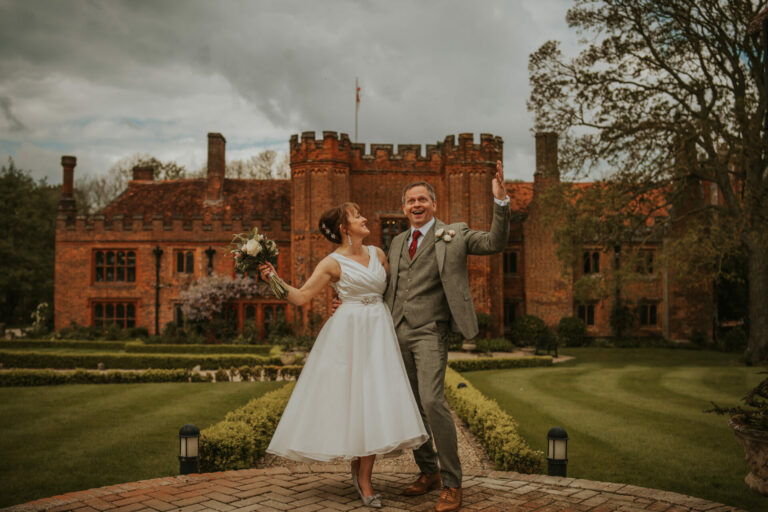
Cover image from minstermill.co.uk, © 2026 Andrew Brownsword Hotels. All Rights Reserved.
Minster Lovell is a picturesque village in West Oxfordshire, around 12 miles west of Oxford. Sitting on the banks of the River Windrush, it is quintessentially English, with honey-coloured stone cottages lining quiet country lanes, a medieval church and a traditional village green. Yet this small, unassuming village belies a dramatic Tudor story…
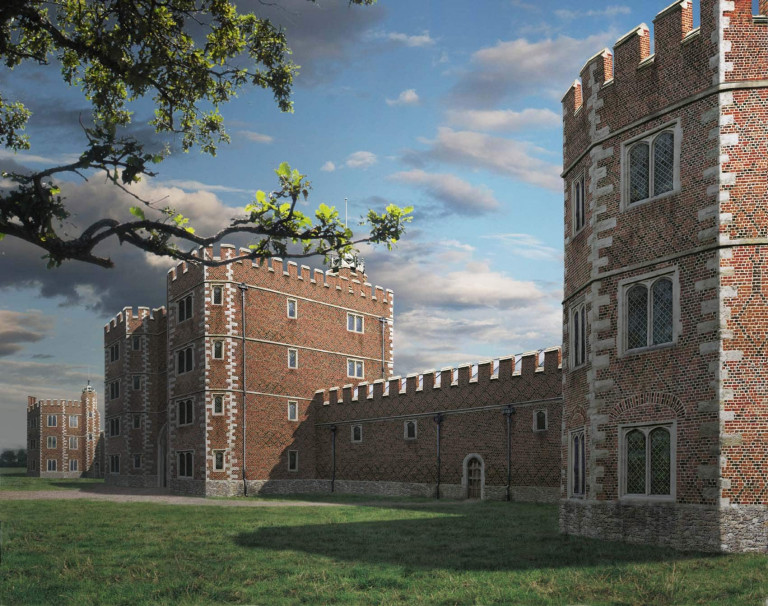
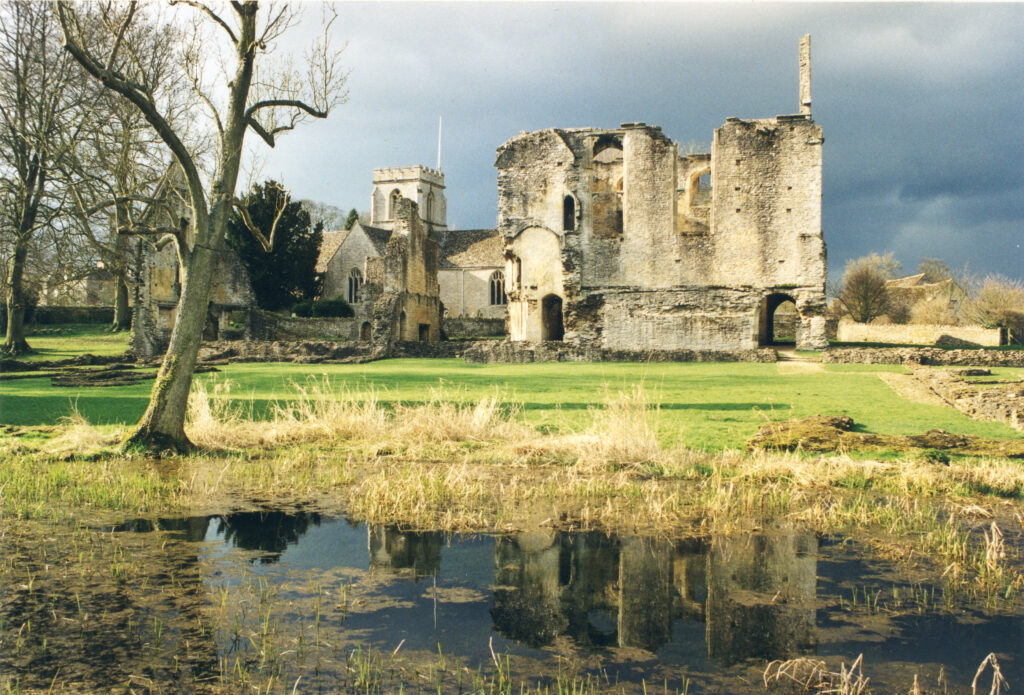
The story centres on Minster Lovell Hall, the village’s fine, late medieval manor house. Built in the 1430s by William, Baron Lovell, the house became the principal seat of the powerful Lovell family. Its most famous resident was Francis Lovell, 1st Viscount Lovell, one of King Richard III’s closest friends and most trusted advisers. The Ricardian Register records that Richard III stayed at Minster Lovell Hall from 28 – 30 July during his 1483 royal progress.
The hall’s Tudor connection begins with the Battle of Bosworth in 1485. Francis Lovell fought for Richard III against Henry Tudor and survived the battle, but with Richard dead and Henry VII on the throne, his fortunes changed overnight. Declared a traitor, Lovell’s vast estates – including Minster Lovell Hall – were confiscated by the Crown. The new Tudor King, Henry VII, granted Minster Lovell to his uncle, Jasper Tudor.
Minster Lovell became one of Jasper Tudor’s favoured residences, and he is believed to have entertained Henry VII there in the 1490s (Amin, 2017). As Bayani (2017) notes, “Early in 1494, Jasper entertained his nephew King Henry VII there, eating ginger, oranges, conserved lemon and marmalade…”
Stay At Old Swan & Minster Mill
If you’d like to stay in a village steeped in Tudor history, Old Swan & Minster Mill offers the perfect retreat. This charming, late fifteenth-century coaching inn, dating from around 1500, would likely have welcomed travellers during the early Tudor period, with its oak beams, open fireplaces and traditional timber-framed character. Today, it forms part of Old Swan & Minster Mill and has been sympathetically restored, while retaining the atmosphere and historic charm of its Tudor-era origins.
There are two distinct styles of accommodation available. At Minster Mill, the rooms are bright and spacious. In contrast, the rooms at the Old Swan are full of traditional character. Located above the historic inn, they combine original period features, including exposed oak beams and, in some cases, four-poster beds, with en-suite bathrooms.
Those looking for the ultimate indulgence can enjoy The Garden Spa. There is also a restaurant and a pub on-site, so you can choose from creative dishes at Wildling to hearty favourites in the historic pub. Expect welcoming spaces, generous hospitality and great food and drink.
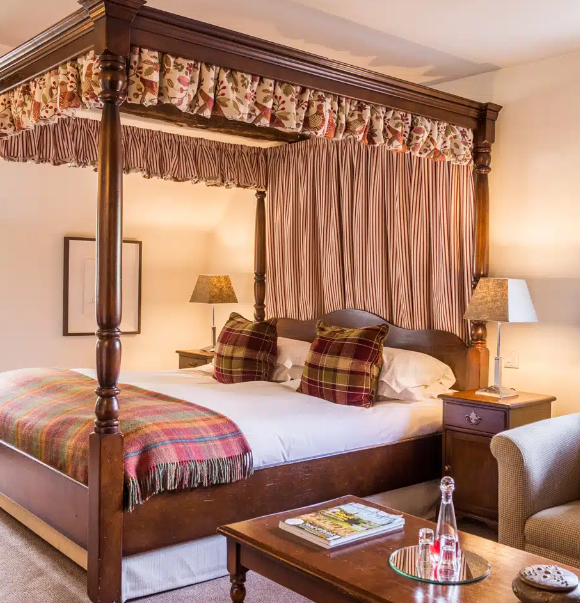
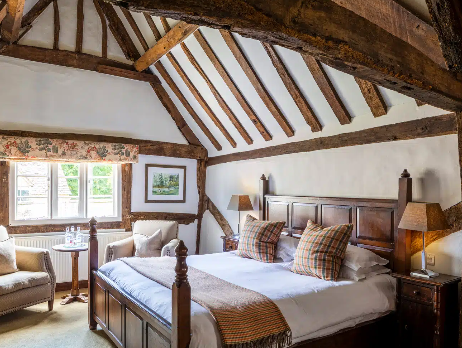
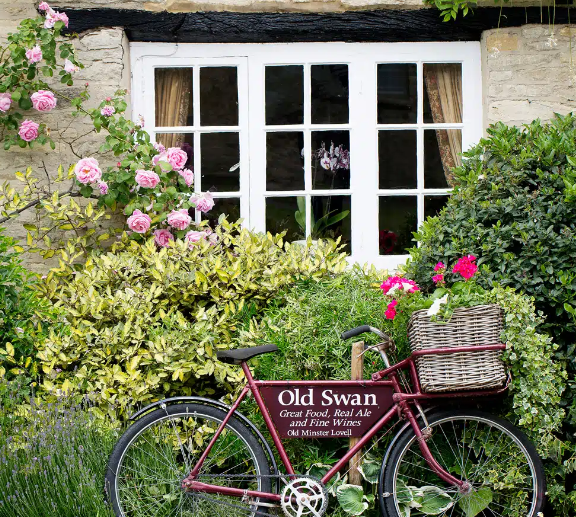
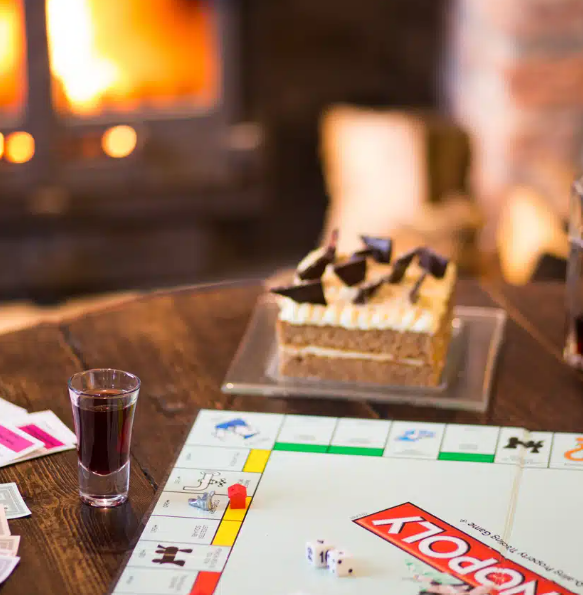
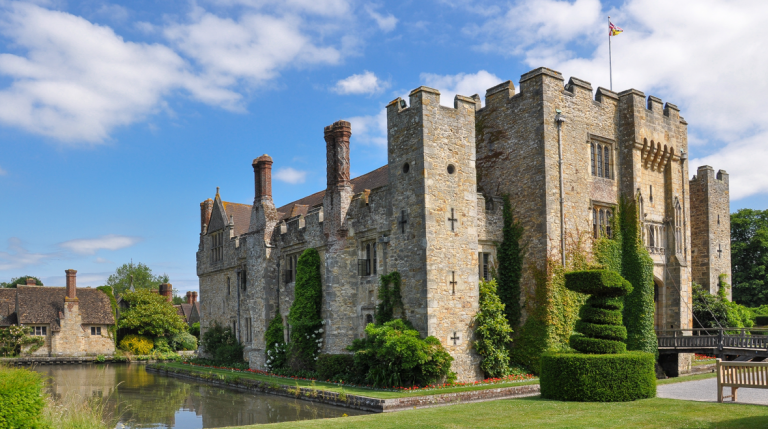
Guest bedrooms, exterior and bar area at Old Swan & Minster Mill.
Images from minstermill.co.uk, © 2026 Andrew Brownsword Hotels. All Rights Reserved.
Historic Properties Nearby
If you would like to explore the area, below are some Tudor places to visit near Minster Lovell:
- Minster Lovell Hall & Dovecote – (less than 1 mile)
- Blenheim Palace – (10 miles) – discover the site’s Tudor history here
- Oxford (12 miles):
- Christ Church Cathedral – founded by Henry VIII in 1546 as part of his reorganisation of the church and home to the famous Wolsey connections (Cardinal Wolsey founded Cardinal College on the site before his fall).
- Bodleian Library – Founded in 1602 by Sir Thomas Bodley, who served Queen Elizabeth I. Look out for Duke Humfrey’s Library, which opened in 1488, and is the oldest reading room of the Bodleian Library, and one of the oldest surviving library rooms in Britain. Today, the room remains a working reading room, and its historic atmosphere continues to evoke the scholarly world of the fifteenth and sixteenth centuries. You can book a guided tour of Duke Humfrey’s Library or 30, 60 or 90-minute tours of the Library here.
- University Church of St Mary the Virgin – a key Reformation site where figures such as Thomas Cranmer, Hugh Latimer and Nicholas Ridley were involved in the religious debates of the sixteenth century. Find out about the Oxford Martyrs (and The Martyrs’ Memorial) here.
Further Reading:
To discover more about Minster Lovell’s famous visitor, Richard III, and the events that led to the Battle of Bosworth, this blog (with links to three accompanying on-location podcast episodes) follows in his footsteps as he prepares for the battle in Leicester, travels to meet Henry Tudor at Bosworth Battlefield, and explores the aftermath of his defeat, when his body was taken back to Greyfriars in Leicester for burial.
You may also be interested in reading about two royal progresses that travelled through the area:
- The 1502 progress of Henry VII and Elizabeth of York
- The 1535 Progress of Henry VIII and Anne Boleyn
Visitor Information
Contact Details: You can book via the Old Swan & Minster Mill website here, and you can contact the property via email at info@minstermill.co.uk, or via phone on +44 (0) 1993 774441.
Address: Old Swan & Minster Mill, Minster Lovell, Oxfordshire, OX29 0RN.
STAYING HERE? LET US KNOW!
I hope you’ve enjoyed learning more about this charming accommodation.
If you visit Minster Lovell Hall or Old Swan & Minster Mill, please let me know in the comments below or via email at sarah@thetudortravelguidecom. I’d love to hear your thoughts!
References
Amin, N. (2017) ‘Minster Lovell Hall Becomes a Tudor Home’, Tudor Life Magazine, July 2017, pp. 22–25, available here.
Bayani, D. (2017) ‘Late Medieval and Early Tudor Residences: Minster Lovell Hall Becomes a Tudor Home’, Tudor Society Magazine, July 2017, pp. 22–25, available here.
Richard III Society, Inc. (2018) ‘The Royal Progress of Richard III’, Ricardian Register, 49(2), p. 12, available here.