
A Long Weekend in Tudor Pembrokeshire
The Making of Henry VII: A Welsh Beginning
Before we share with you our itinerary for exploring Tudor Pembrokeshire, we’d like to introduce you to a two-part podcast series that will be your perfect companion to exploring south-west Wales.
In this series, Sarah explores the rugged coast of Pembrokeshire to discover more about the Welsh beginnings of the man who would become Henry VII. Long before the Battle of Bosworth and the founding of the Tudor dynasty, Henry’s story began in the castles, towns and landscapes of southwest Wales – in places deeply connected to his family and his Welsh ancestry.
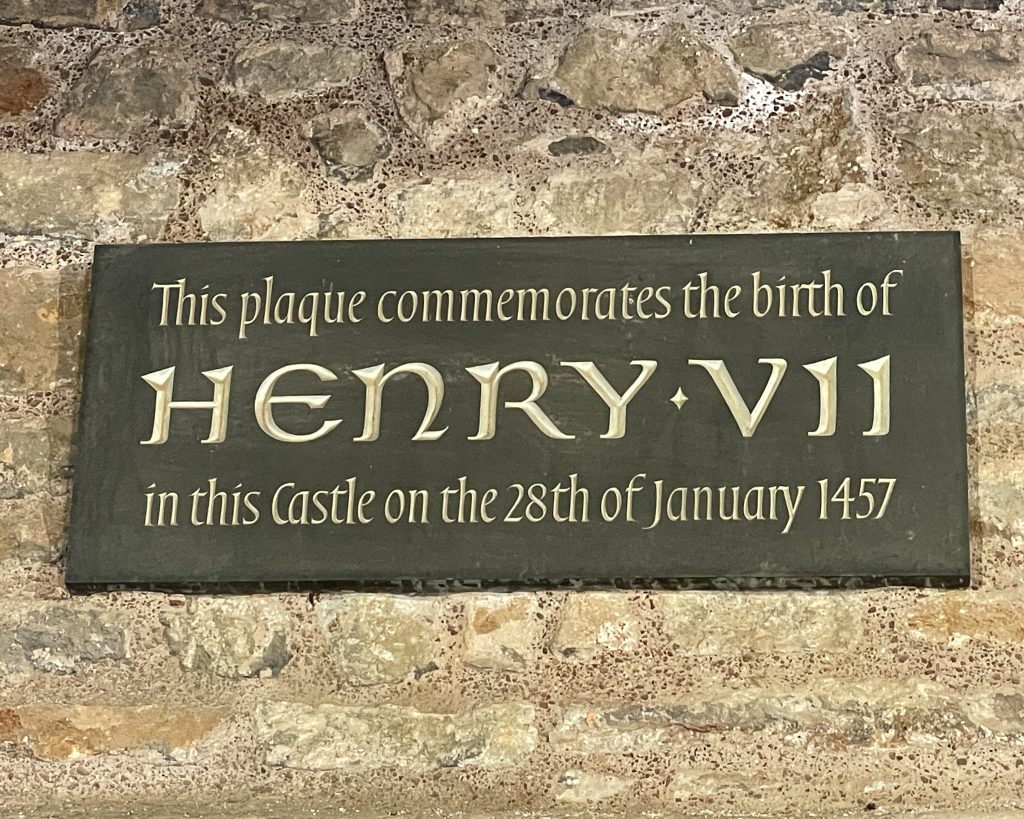
Our journey begins with a wonderful overview of Henry’s ancestry courtesy of author and historian Nathen Amin. We then travel to Lamphey Palace, once a grand medieval residence of the Bishops of St David’s. It was here, in 1456, that Margaret Beaufort, only a young teenager at the time, likely conceived the child who would go on to change the course of English history. From Lamphey, we move to the formidable Pembroke Castle, where, on 28 January 1457, Margaret gave birth to Henry Tudor. The birth was difficult and dangerous, but both mother and child survived – an outcome that would prove momentous for the future of the English crown.
Pembroke was no ordinary place for Henry to enter the world. The castle stood at the heart of a region strongly tied to the Tudor family through Henry’s father, Edmund Tudor, and his uncle, Jasper Tudor. Through this lineage, Henry could claim proud Welsh ancestry that traced back to the Tudors of Penmynydd in North Wales. Though he would one day rule as King of England, Henry’s roots and the identity he later embraced were firmly Welsh.
In the second episode in this series, we continue Henry’s story as it unfolds across the Pembrokeshire coast. From Pembroke Castle, we follow the trail to Tenby, a vibrant Tudor port town closely connected to his Uncle Jasper. From there, we conclude our journey through time at Mill Bay, the small cove where, in 1485, Henry’s fleet finally returned him to Welsh soil, setting in motion the campaign that would lead him to confront Richard III on the battlefield and claim the throne.
A gallery of images from my on-location visits is below. After this, there is a detailed itinerary for a three-day visit to Pembrokeshire. As part of this, images and information for each place featured in the podcast episodes are included.
Introducing Our On-Location Experts
Episode 1
I’m accompanied by several experts. Firstly, Nathen Amin, a best-selling author and Fellow of the Royal Historical Society from Carmarthenshire, West Wales, introduces this two-part series.
Secondly, Terry John, local historian, shows me around Lamphey Palace. Terry was a guide at the palace for many years, and shares his detailed research on Lamphey as we tour this site – alongside one or two ghost stories!
Last, but by no means least, our on-site expert, Gareth Mills, shows me around Pembroke Castle. A graduate in history, with many years’ experience in secondary schools across South and West Wales. Gareth is a tour guide at the castle. A friend of The Tudor History & Travel Show, this is Gareth’s second appearance on one of our podcasts. Back in summer 2023, we recorded an in-depth, on-location episode on the broader history of Pembroke Castle. In this instance, we returned to talk about Henry’s birth and earlier years at the castle. Our previous podcast episode from Pembroke Castle and a gallery of associated images can be accessed here.
Episode 2
At Tenby, I’m joined by Tony Ensom. Tony moved to the area fourteen years ago, and now volunteers for the National Trust at the Tudor Merchant’s House. Tony is an expert in Tudor Tenby, and he shows me around the town and its Tudor highlights.
Join us as we explore these incredible sites. Please also find below a gallery of images from my on-location visits. You can listen to the podcast episodes or by clicking the button below:
Listen to the podcast
Image Gallery
Episode 1
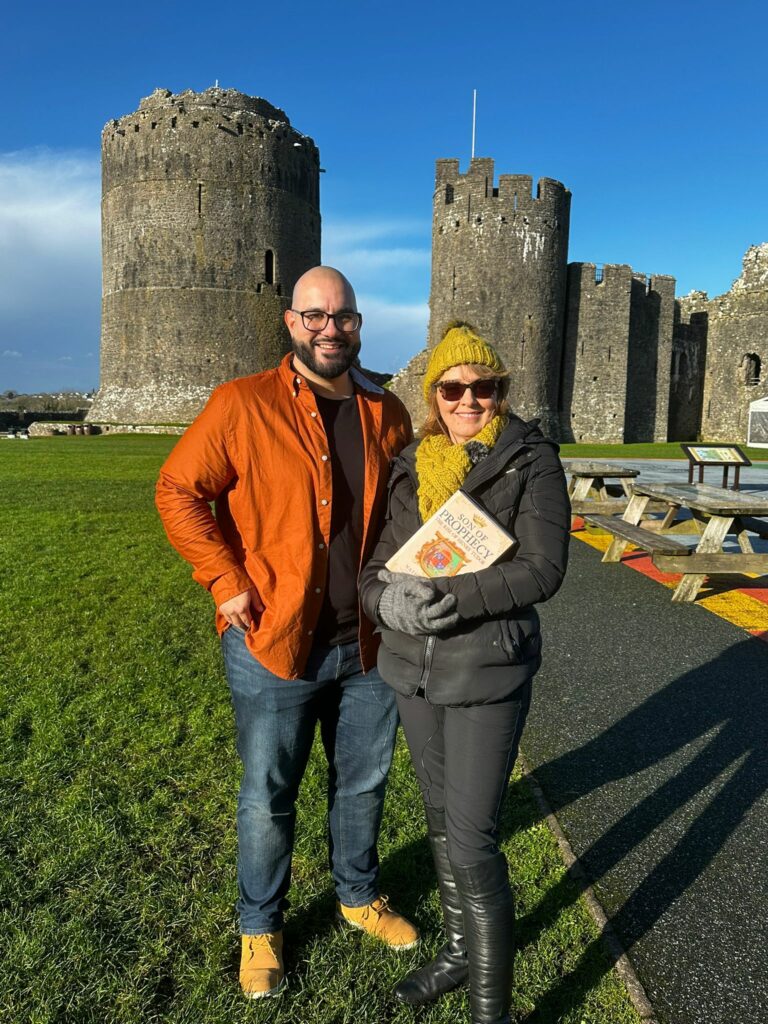
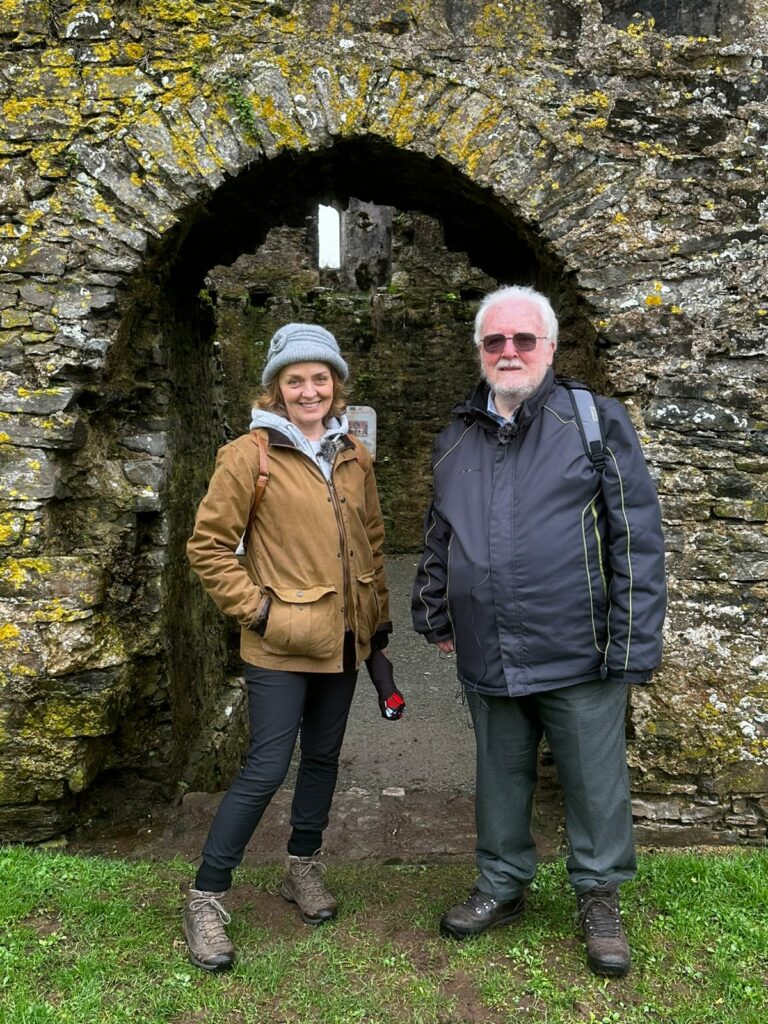
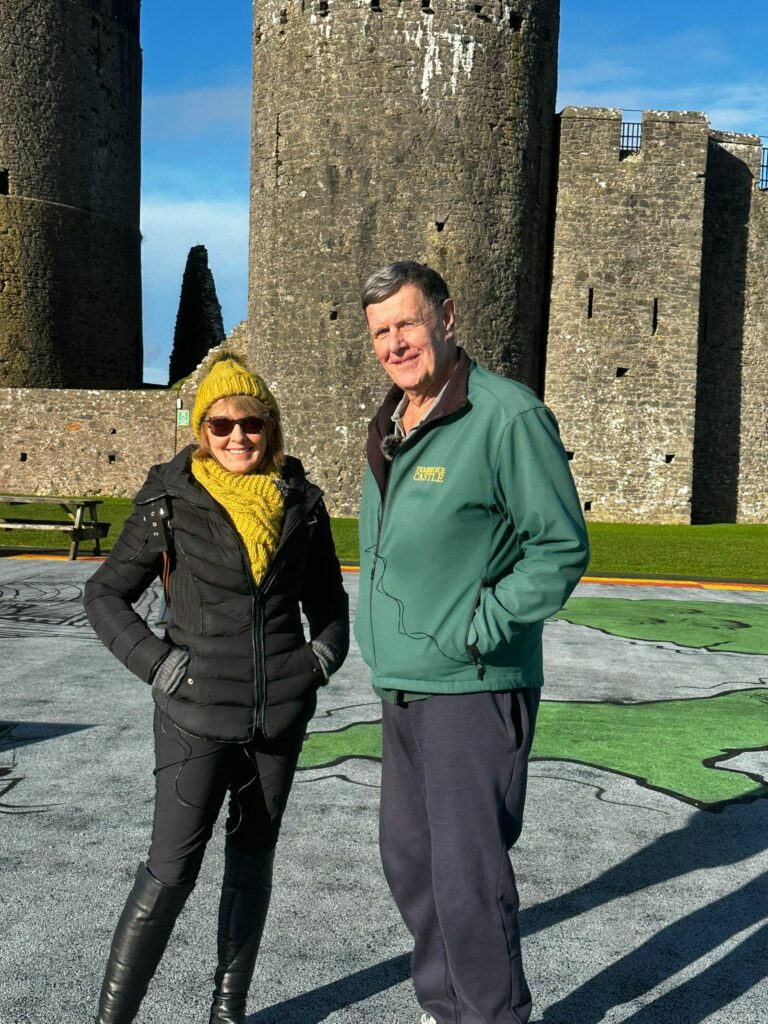
Sarah with Nathen (left), Terry (centre) and Gareth (right).
Images © The Tudor Travel Guide.
Lamphey Palace Gallery
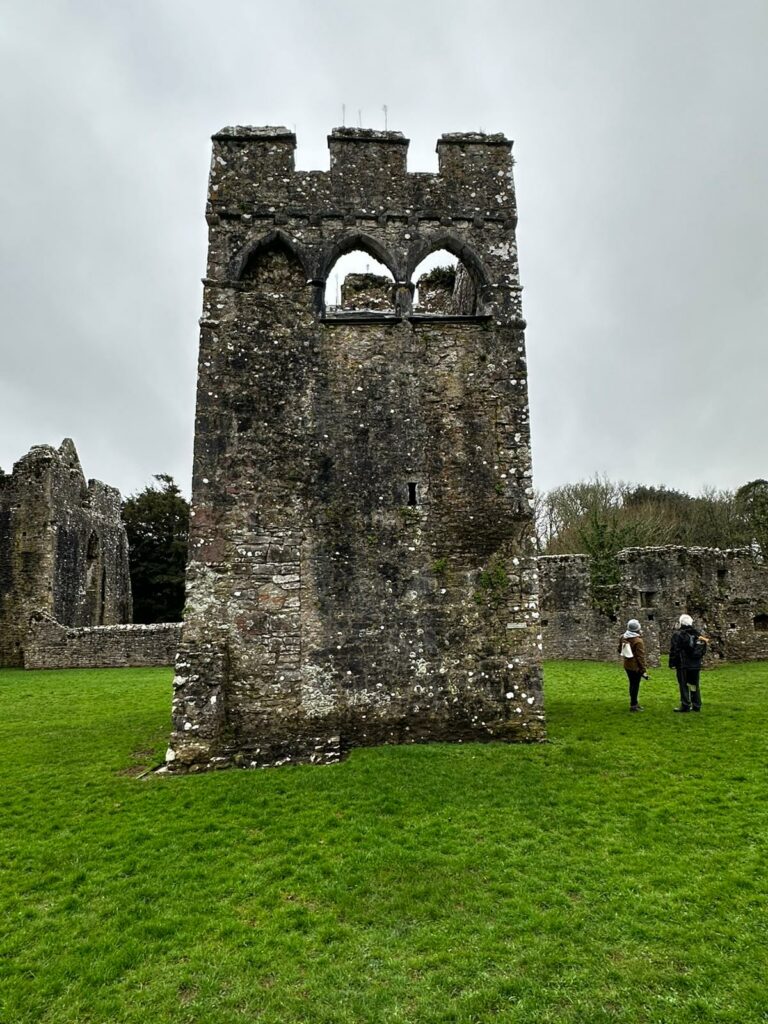
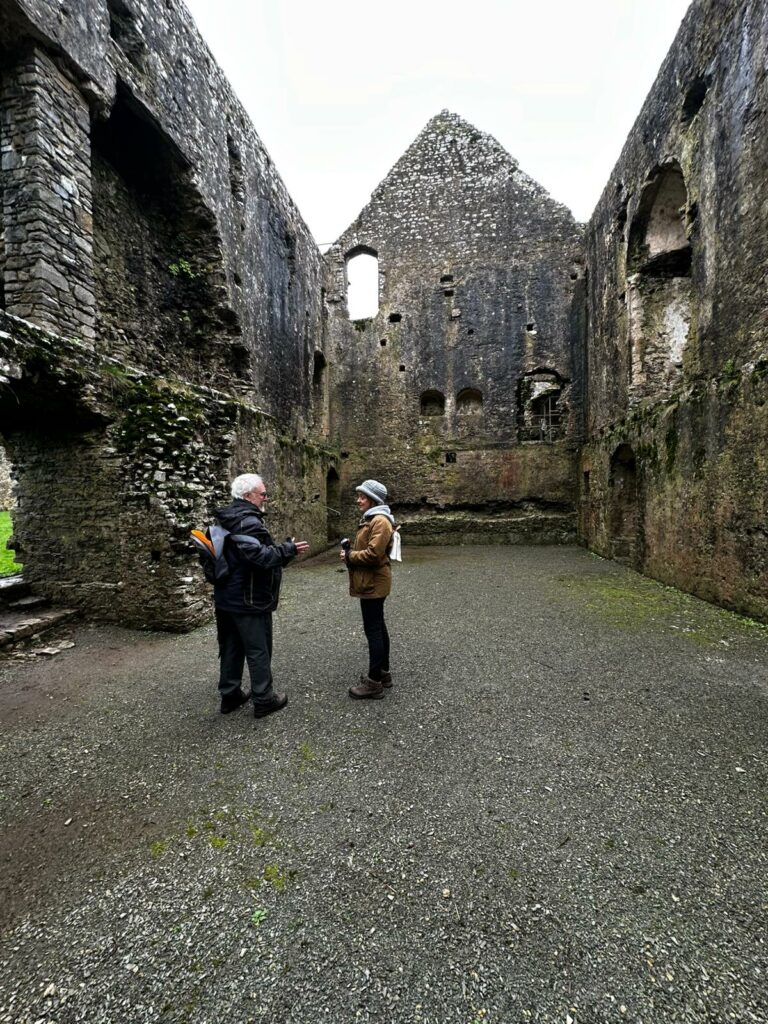

Lamphey Palace. Top left: The inner gatehouse. Top right: The Great Western Hall
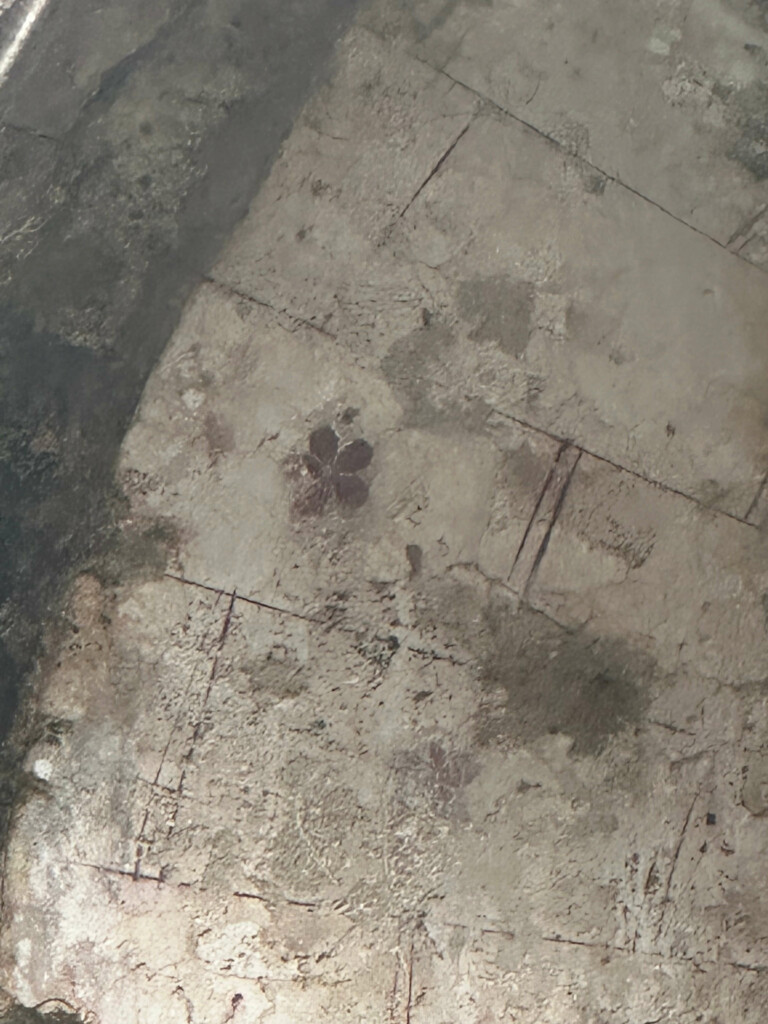
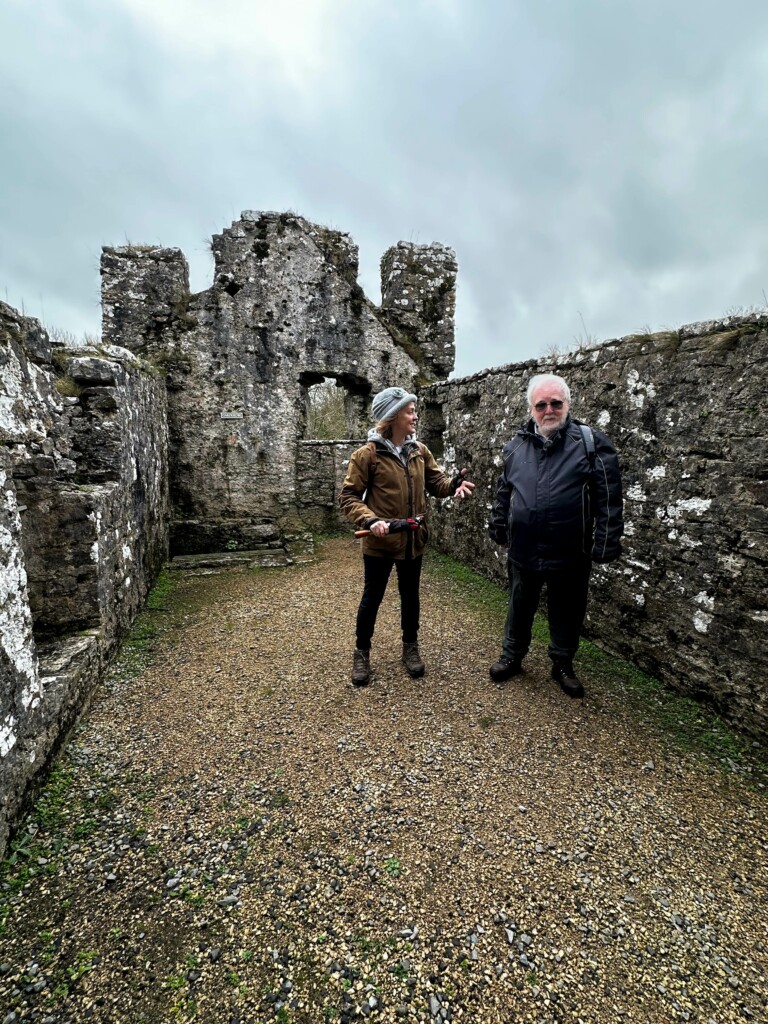
Middle Left: Original paintwork in the Great Western Hall. Middle right: De Gower’s Hall
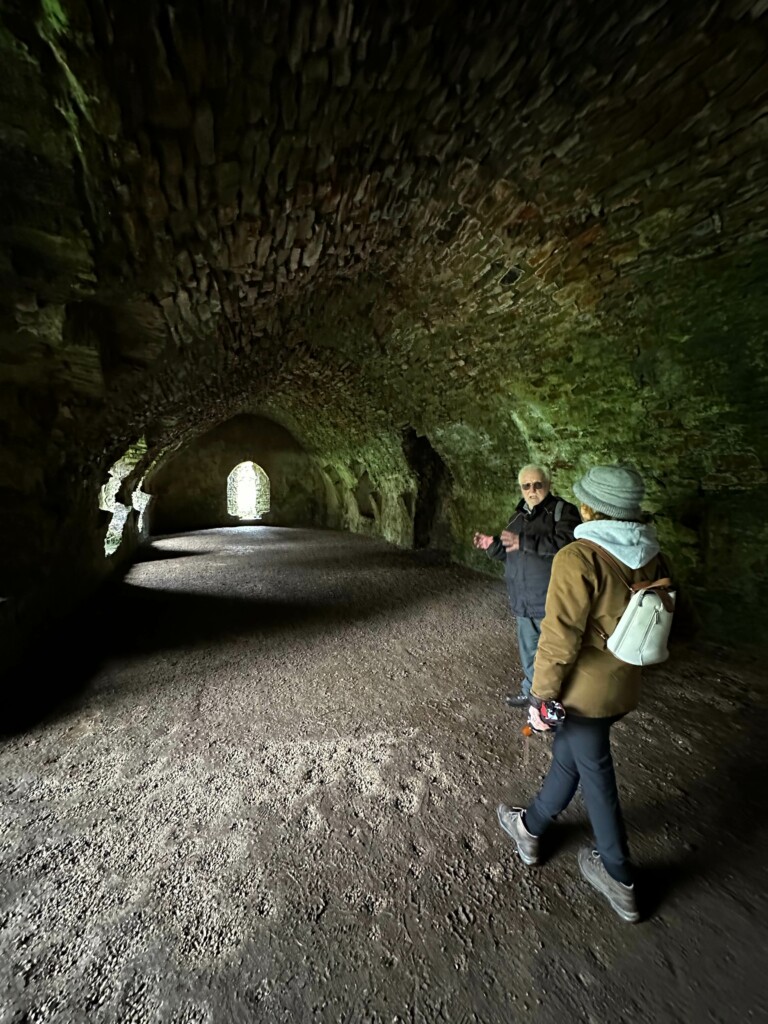
Lower left: Privy Chamber off De Gower’s Hall. Was this where Henry was conceived? Lower right: The Undercroft
Images © The Tudor Travel Guide.
Pembroke Castle Gallery
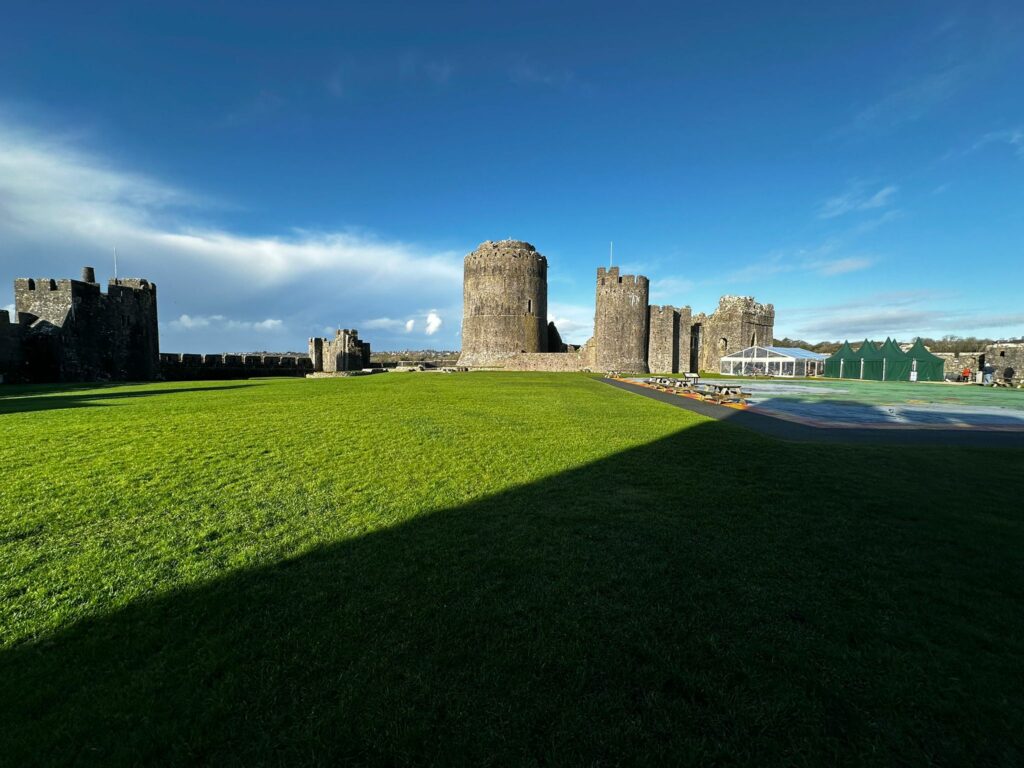
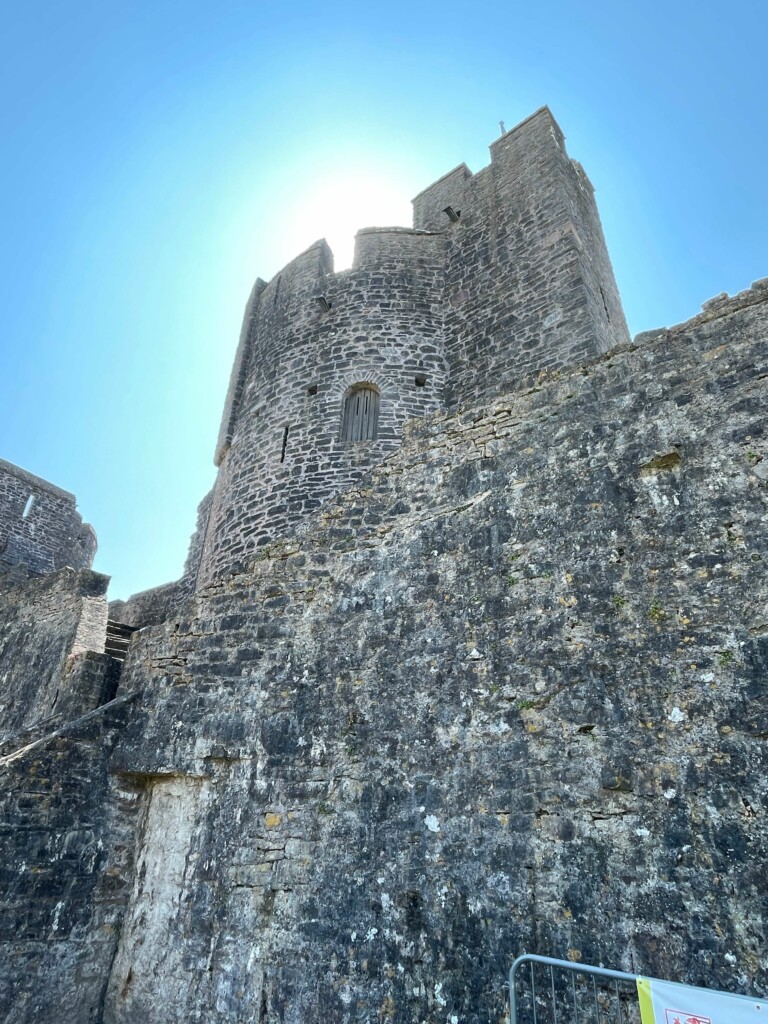
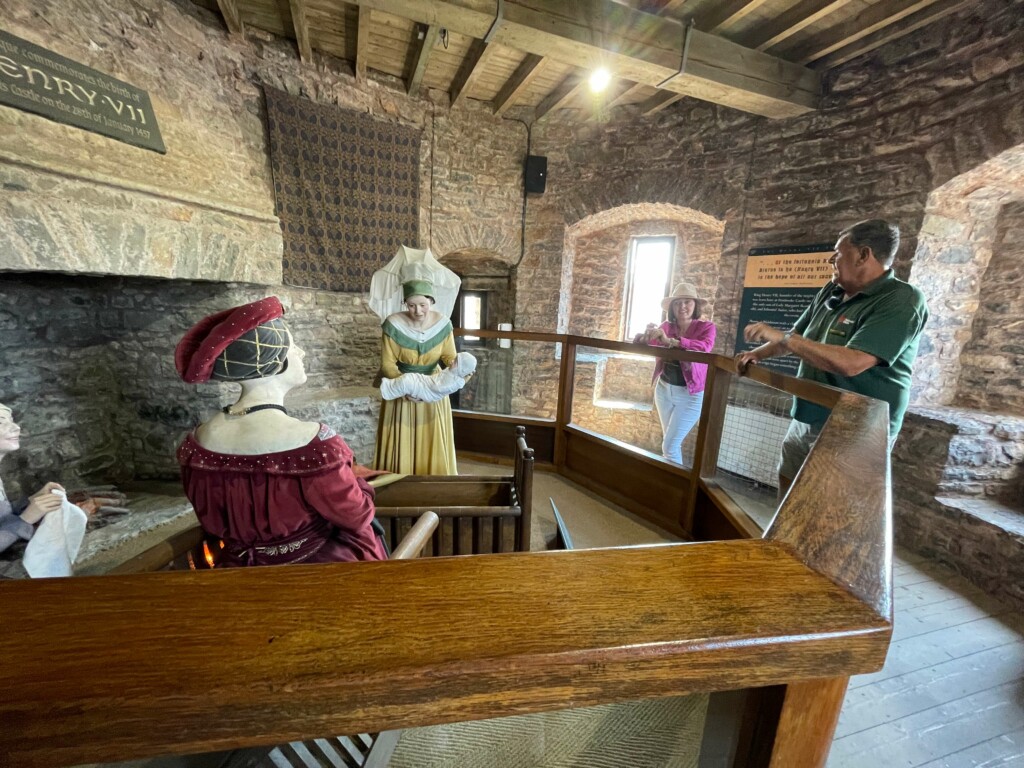
Pembroke Castle (a couple of photos taken from a previous visit)
Top left: The Outer Bailey and medieval keep. Top Right: The Henry VII Tower
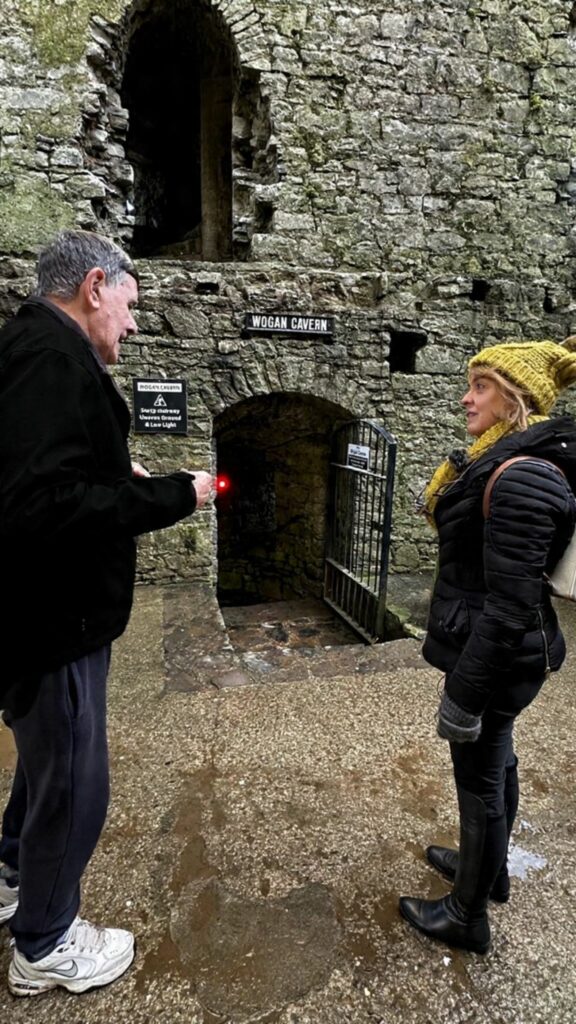
Middle left: Inside the Henry VII Tower and the ‘recreation’ of Henry’s alleged birth there. Middle right: Outside Wogan’s Cave
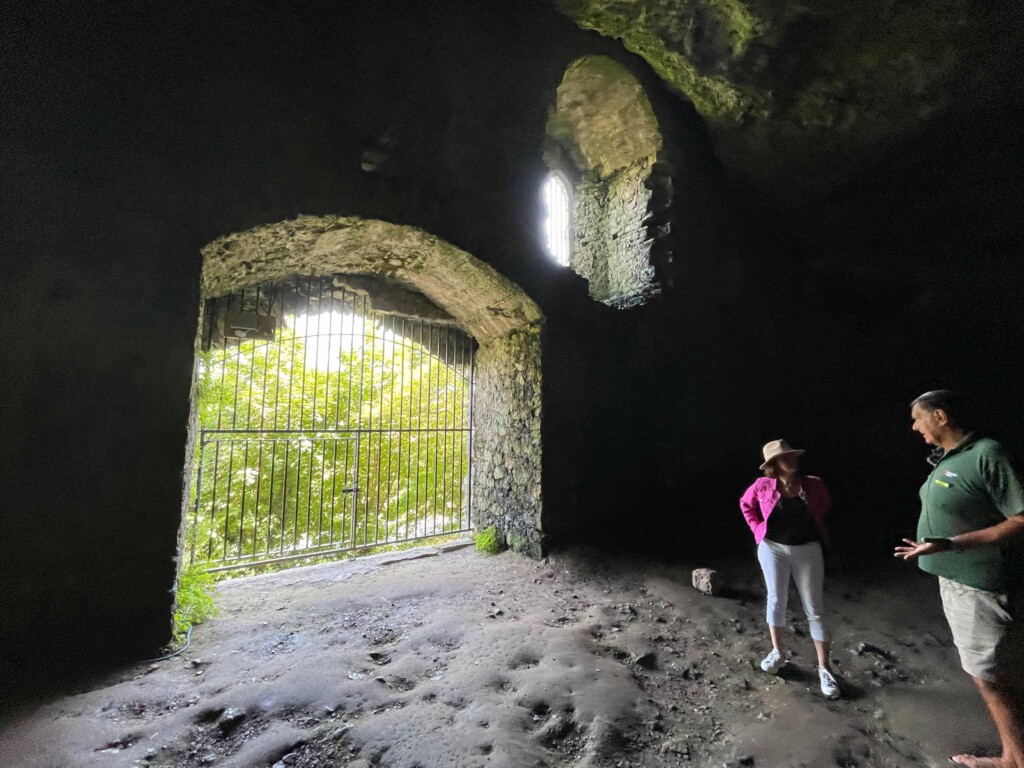
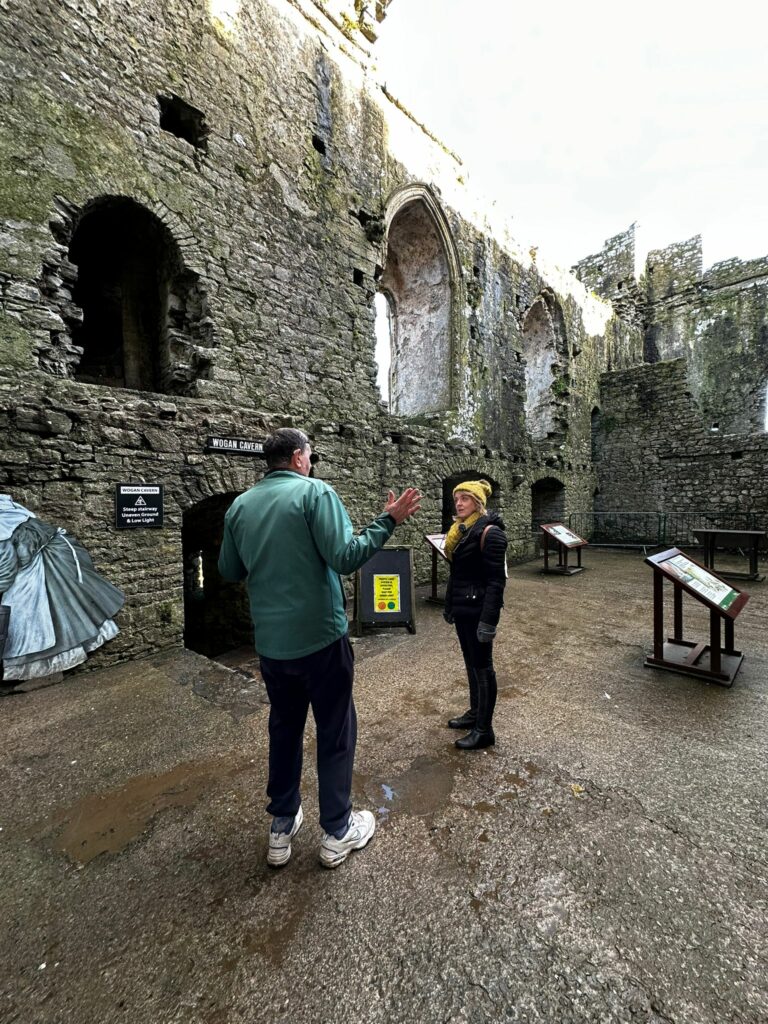
Lower Left: Inside Wogan’s Cave. Lower Right: Inside the Medieval apartments.
Images © The Tudor Travel Guide.
Episode 2
Tenby Image Gallery
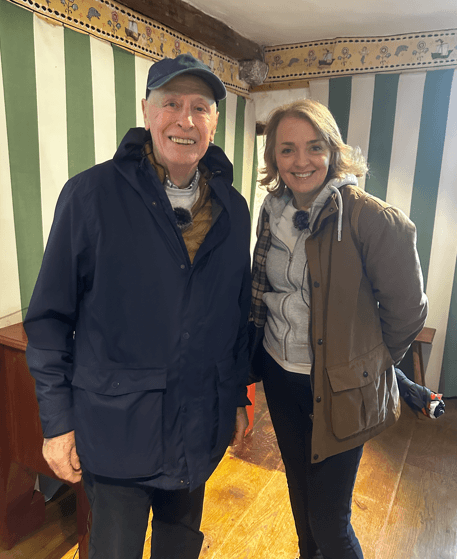
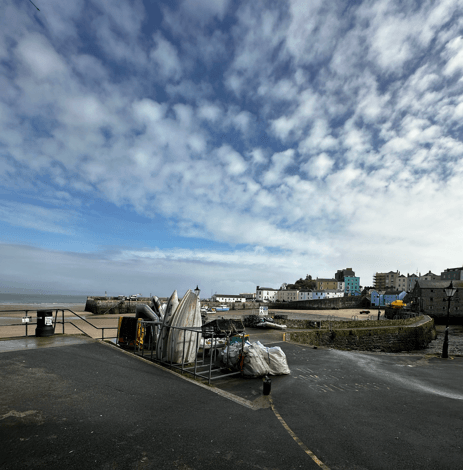
Left: Sarah and Tony in the Tudor Merchant’s House. Right: Tenby Harbour.
Images © The Tudor Travel Guide.
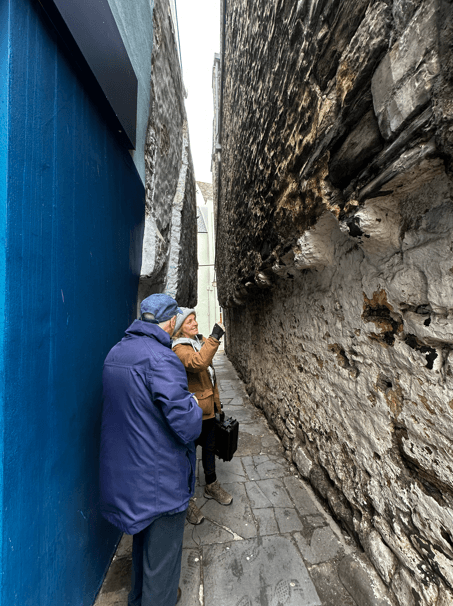
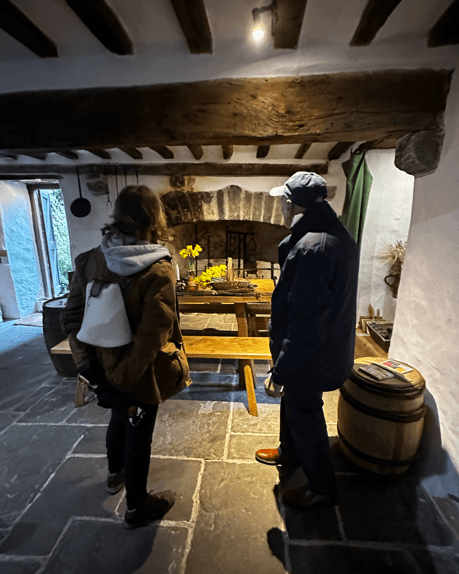
Top left: Sarah and Tony looking at the medieval architecture still visible behind Georgian-fronted houses.
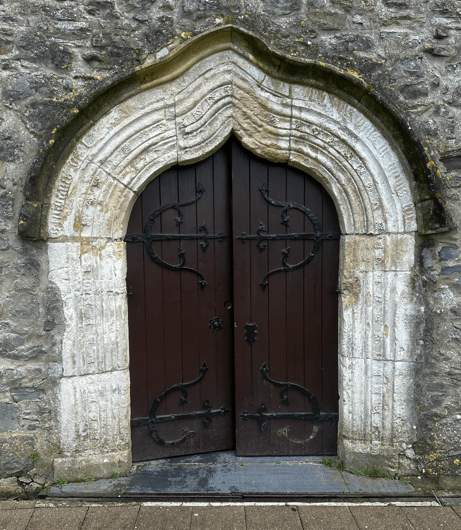
Top Right: Doorway of St. Mary’s Church in Tenby.
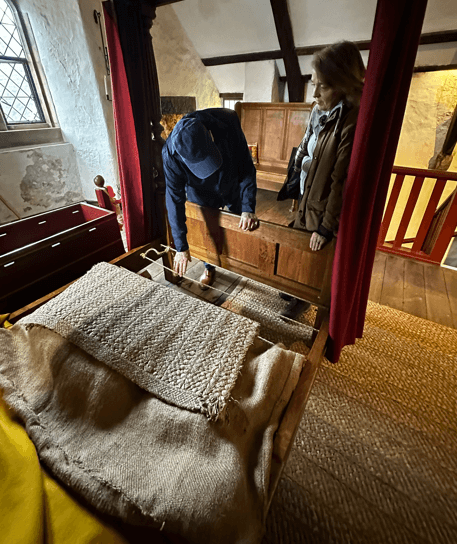
Bottom left: Master Bedroom, Tudor Merchant’s House, Tenby. Bottom Right: Kitchen, Tenby Tudor Merchant’s House, Tenby.
Images © The Tudor Travel Guide.
Mill Bay Image Gallery
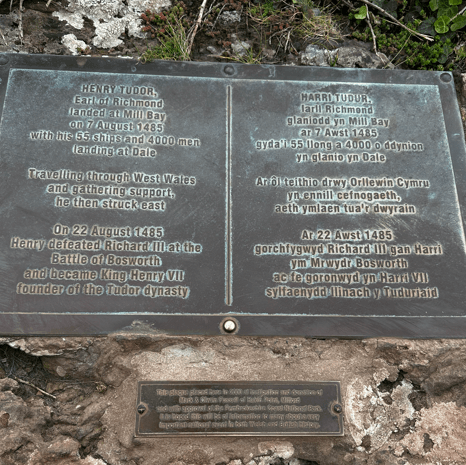
Left: The plaque commemorating the landing of Henry Tudor at Mill Bay in 1485.
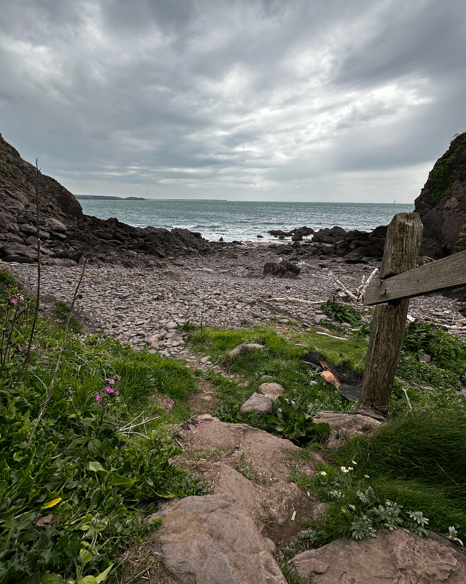
Right: the site of Henry Tudor’s landing in Mill Bay.
Images © The Tudor Travel Guide.
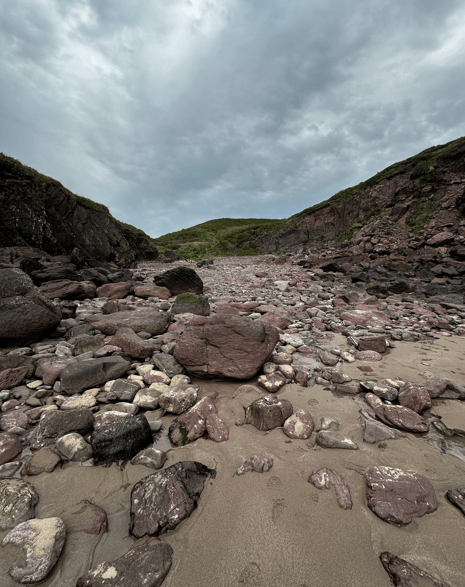
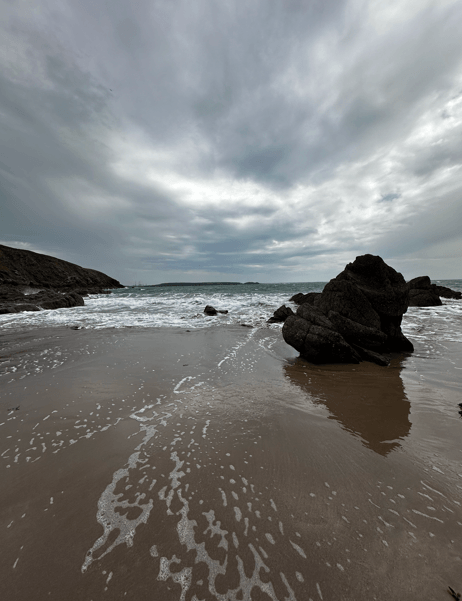
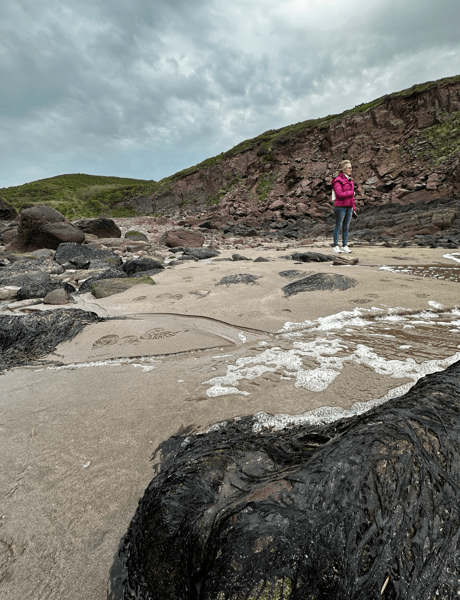
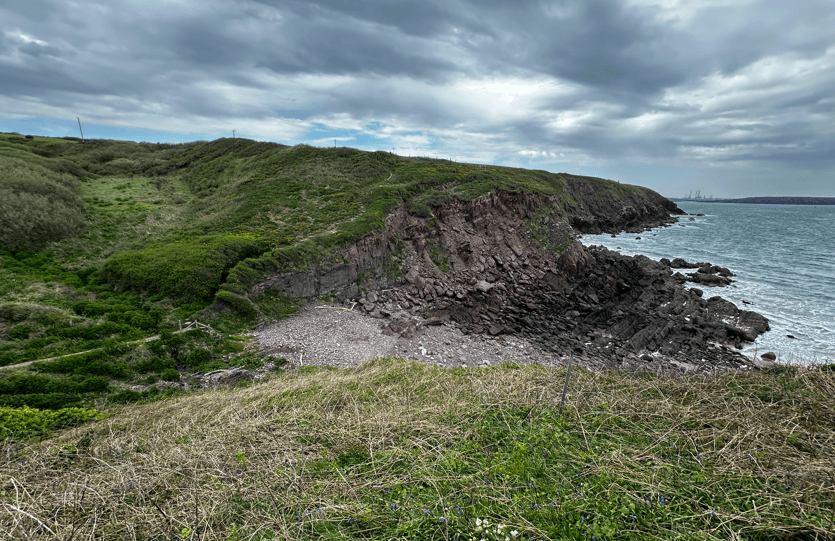
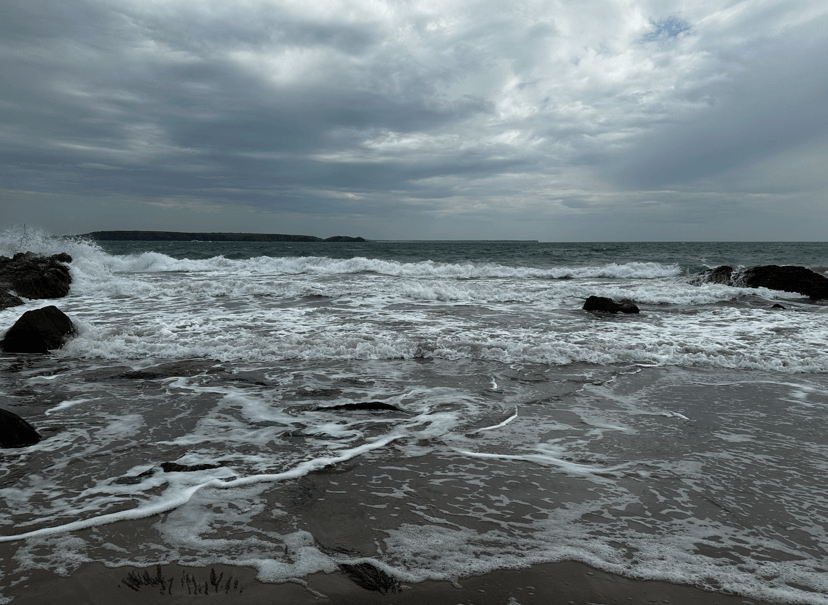
Mill Bay, within the beautiful Pembrokeshire Coast National Park. In August 1485, Henry Tudor landed here with around 2,000 soldiers before marching east to defeat Richard III at the Battle of Bosworth and become King Henry VII, founder of the Tudor dynasty. Images © The Tudor Travel Guide.
Now, if you want to explore Tudor Pembrokeshire for yourself, here is my long weekend itinerary, taking in some of the best of the county’s Tudor heritage sites.
A Long Weekend in Tudor Pembrokeshire
Welcome to Tudor Pembrokeshire!
Pembrokeshire is a picturesque county in south-west Wales. It is bordered by Carmarthenshire to the east, Ceredigion to the northeast, while the Atlantic Ocean laps at its stunning south-west coastline. In this blog, we head off for a long weekend to explore the county’s best Tudor places. Of course, Pembrokeshire is the birthplace of the future Henry VII and is inextricably linked with the genesis of the Tudor dynasty. As a result, there is plenty of Tudor history to discover there.
We start our journey at Lamphey Palace. Today, an idyllic ruin where Henry Tudor was likely conceived before travelling through time to end our trip at the quirky Carew Castle, the seat of one of the heroes of Bosworth, Rhys ap Thomas.
From palaces to beaches, castles to cathedrals and churches to Elizabethan houses, with underground tunnels thrown in for good measure, the area is rich with Tudor connections, making for a fantastic long weekend break.
Note: While the area can be reached via rail from London, this is one part of the country where you need a car to get around and visit the places mentioned in the time available.
Let’s go exploring!
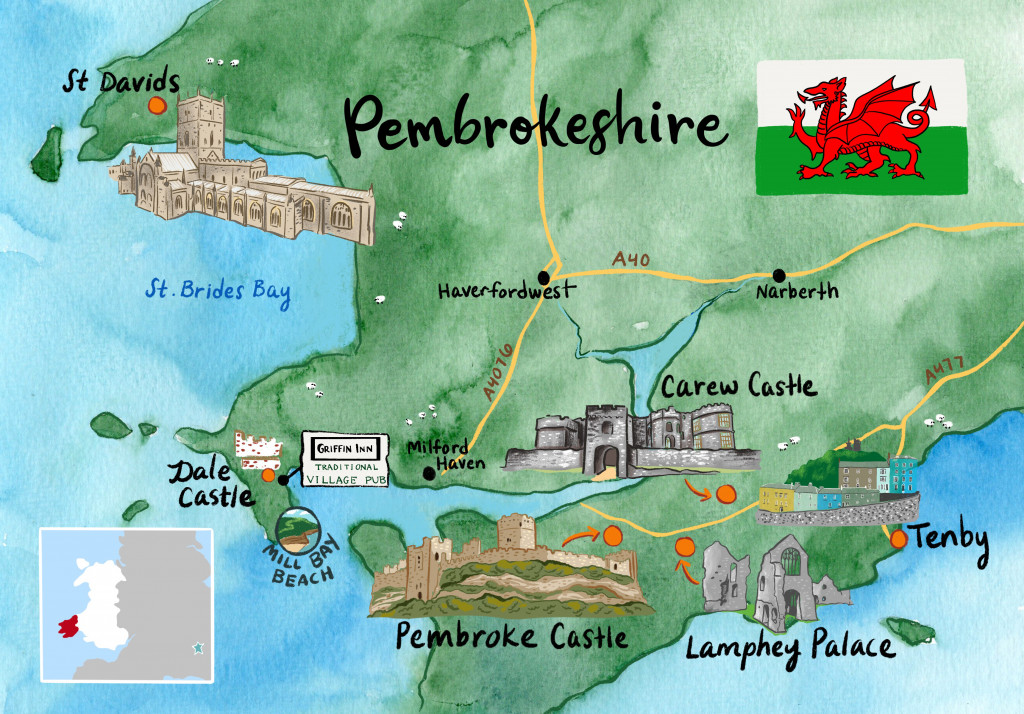
Itinerary
DAY ONE
Lamphey Bishop’s Palace
Lamphey, Pembroke, Pembrokeshire SA71 5NT
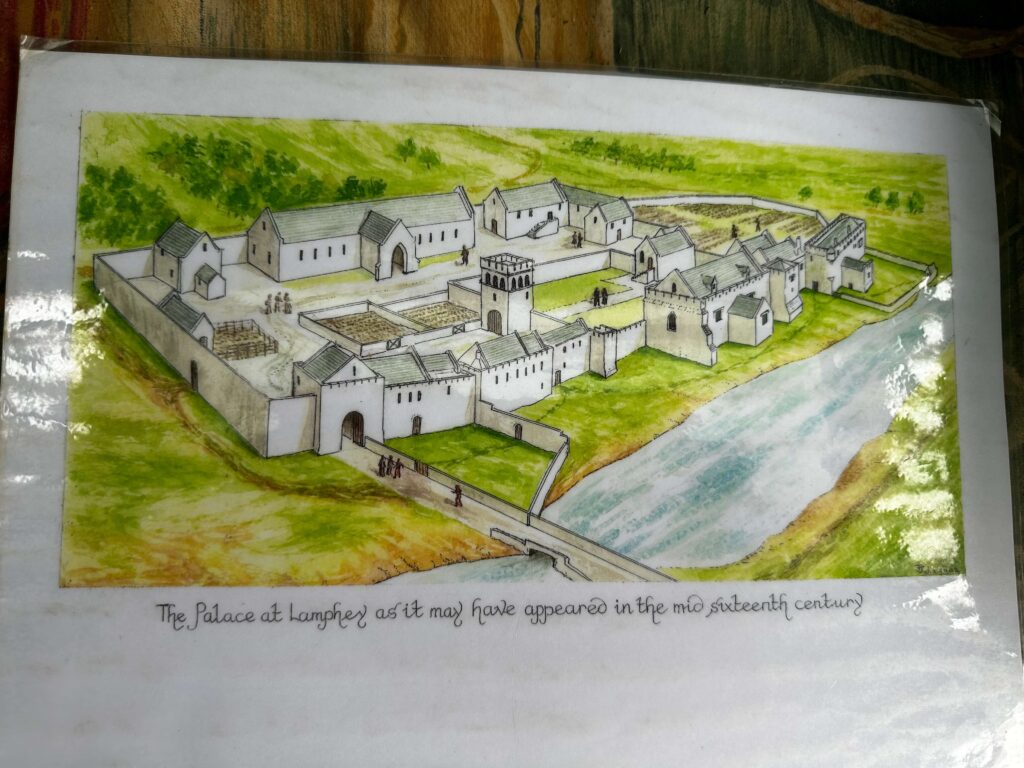
We start our odyssey following in the footsteps of Henry VII by travelling to the place where the future king was likely conceived: Lamphey Palace. Lamphey was the luxurious country retreat that once belonged to the Bishopric of St Davids.
In the mid-fifteenth century, the palace was lent to Henry’s twenty-five-year-old father, Edmund Tudor, Earl of Richmond (half-brother to the then King, Henry VI) by its absentee Bishop, John de la Bere. According to the author Nathen Amin, Edmund Tudor regularly stayed at Lamphey on state business in South Wales. Following his marriage to the young Margaret Beaufort in 1455, the couple spent their honeymoon at the palace.
Despite the tender age of his young bride, Edmund consummated the marriage with haste, and it is believed that the future king was conceived at Lamphey sometime during the spring of the following year, 1456. Perhaps Edmund had a premonition that his life would soon be cut short, and so could not delay the process of begetting a Beaufort / Lancastrian heir. If so, he was right to think so, as the young Earl would be captured by Welsh / Yorkist forces later that year and allowed to perish in Carmarthen Castle, dying on 1 November 1456, three months before his son was born.
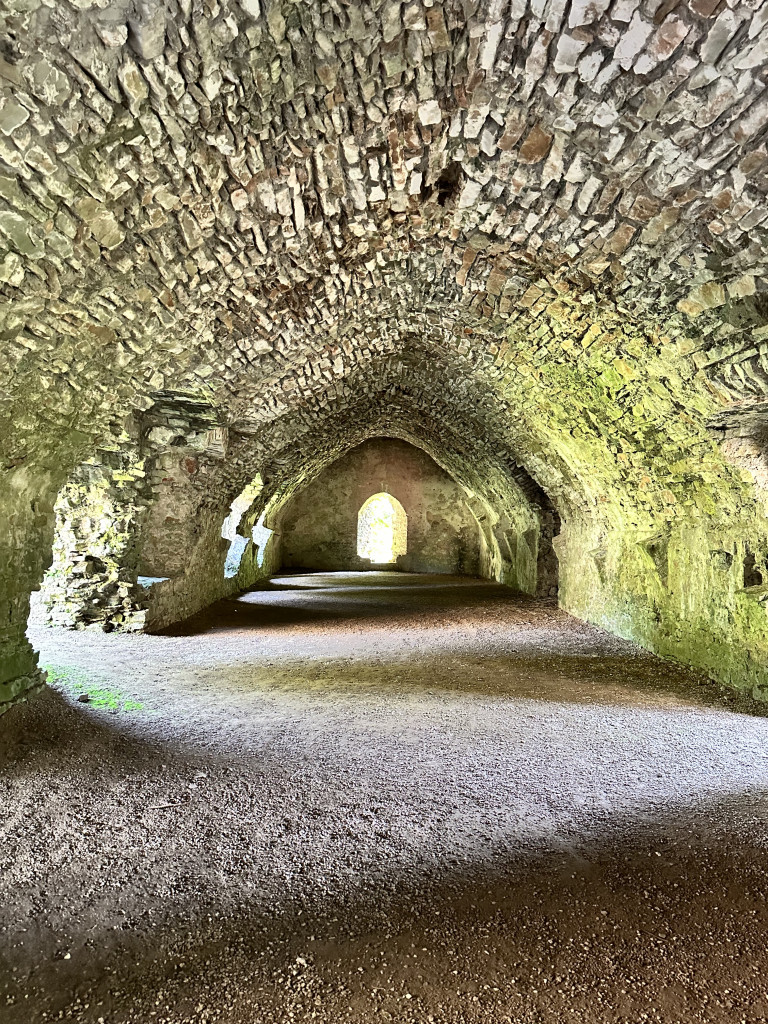
Image © The Tudor Travel Guide.
Edmund greatly favoured Lamphey for its pleasing situation, surrounded as it was by peaceful woodland. Although the forest has no doubt greatly diminished in scale over the centuries, when you visit today, you will still be charmed by the serenity of the ruins, whose lush, leafy landscape harks back to earlier times.
The palace was primarily the result of the vision of Henry Gower, Bishop of St David’s from 1328 to 1347. He developed the complex to consist of two courtyards with a cluster of palatial public and privy lodgings clustered around the southern corner of the smaller inner courtyard.
In the centre of the compound is the extant inner gateway that gave access to the most high-status buildings of the palace from the outer courtyard. These comprised the great Western Hall, served by a kitchen at the lower end, and an adjacent chapel.
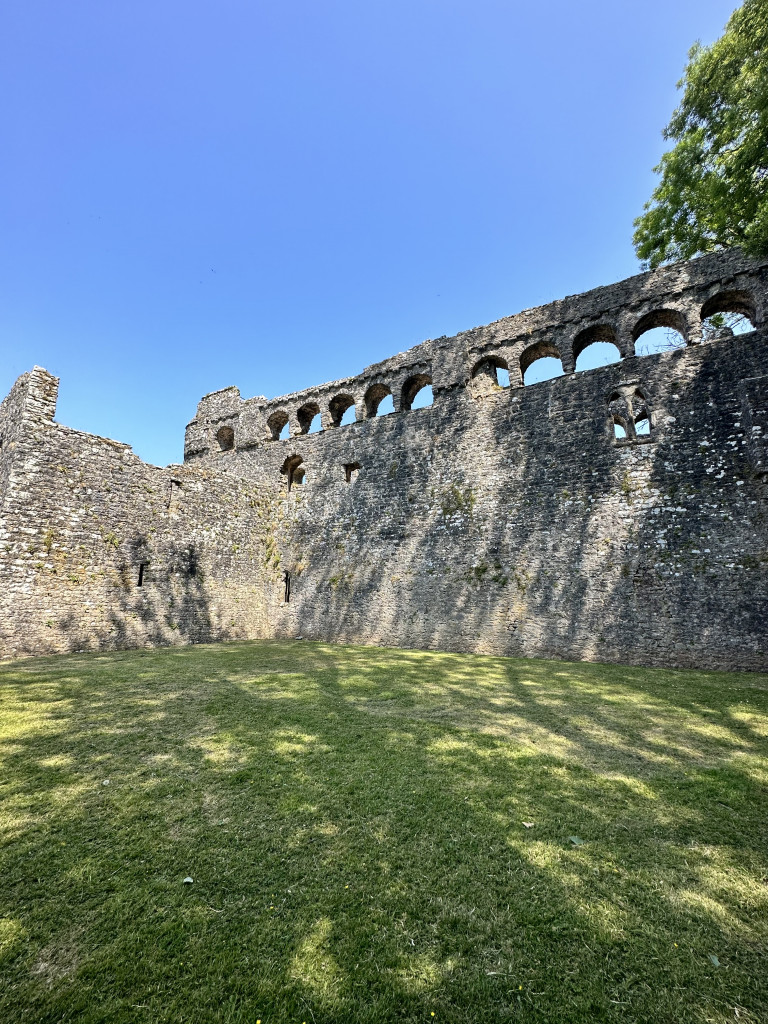
Image © The Tudor Travel Guide.
The most private apartments, and therefore, undoubtedly, the most high-status lodgings, lay beyond. Here, a suite of semi-private rooms on the first floor sits above a surviving undercroft. According to the architectural historian Anthony Emery, these chambers would have formed the most private and luxurious rooms in the palace, including an adjoining bedchamber. I imagine it would have been in this area of the palace that little Henry Tudor was conceived.
Today, the palace is cared for by Cadw, although there is no longer a ticket office on site. Therefore, you can wander its substantial mid-fourteenth-century ruins free of charge.
If you are ready for a bite to eat after exploring the remains of the palace, I recommend heading to the nearby Rowan Tree Cafe, part of the Dewslake Farm campsite, for some tasty homemade food. It is open every day from 8.30 am – 4 pm.
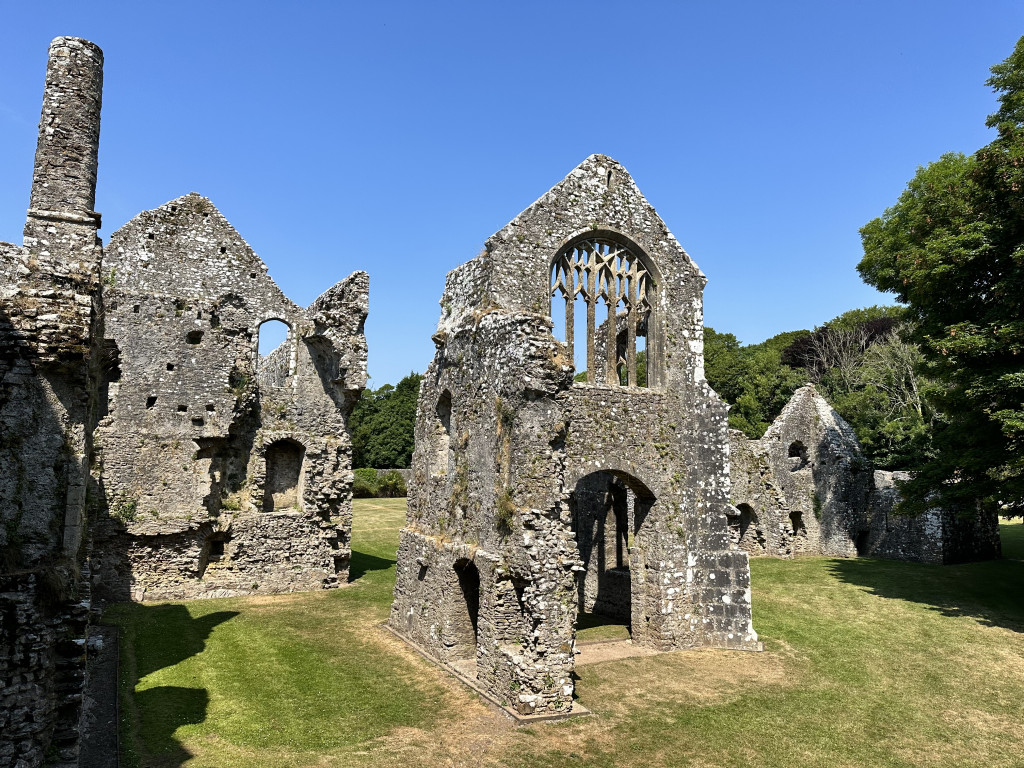
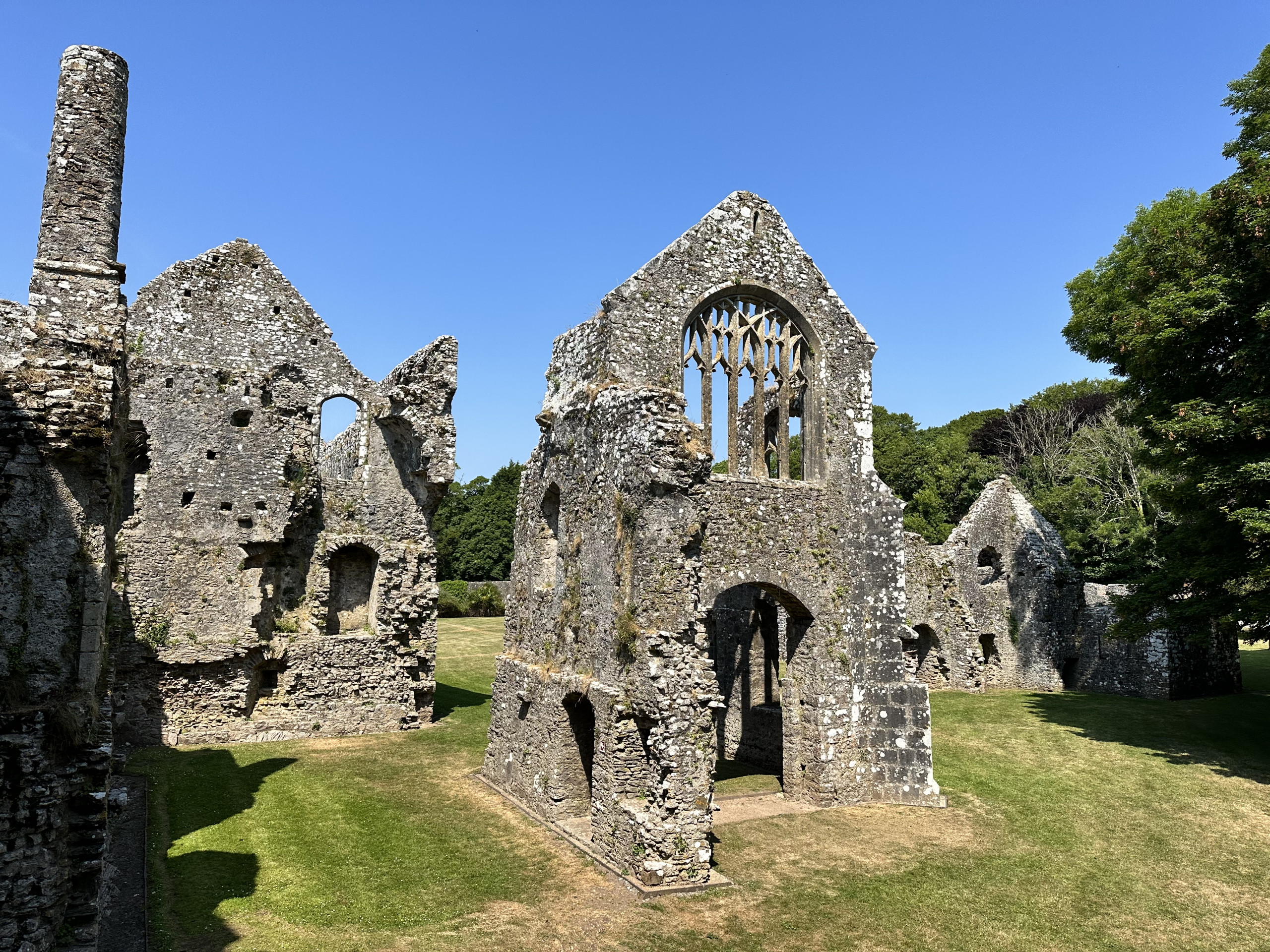
Ruins of Lamphey Palace. Image © The Tudor Travel Guide.
Pembroke Castle
Pembroke, Pembrokeshire SA71 4LA.
After Edmund Tudor’s untimely demise, his gallant younger brother and a regular James Bond of the Tudor age, Jasper Tudor, whisked Edmund’s widow, Margaret, off to safety at his nearby power base of Pembroke Castle.
None of the castles you might see as you roam the Pembrokeshire countryside is more impressive than Pembroke. Perched on a promontory of land beside the eponymous river, the castle dominates the adjacent town and countryside.
It was built during the late eleventh century, following the Norman invasion of Wales, and was built on a motte-and-bailey design. About a century later, the original wooden fort was rebuilt in austere, impregnable stone by its twelfth-century owner, that redoubtable knight of the chivalric age, William Marshal.
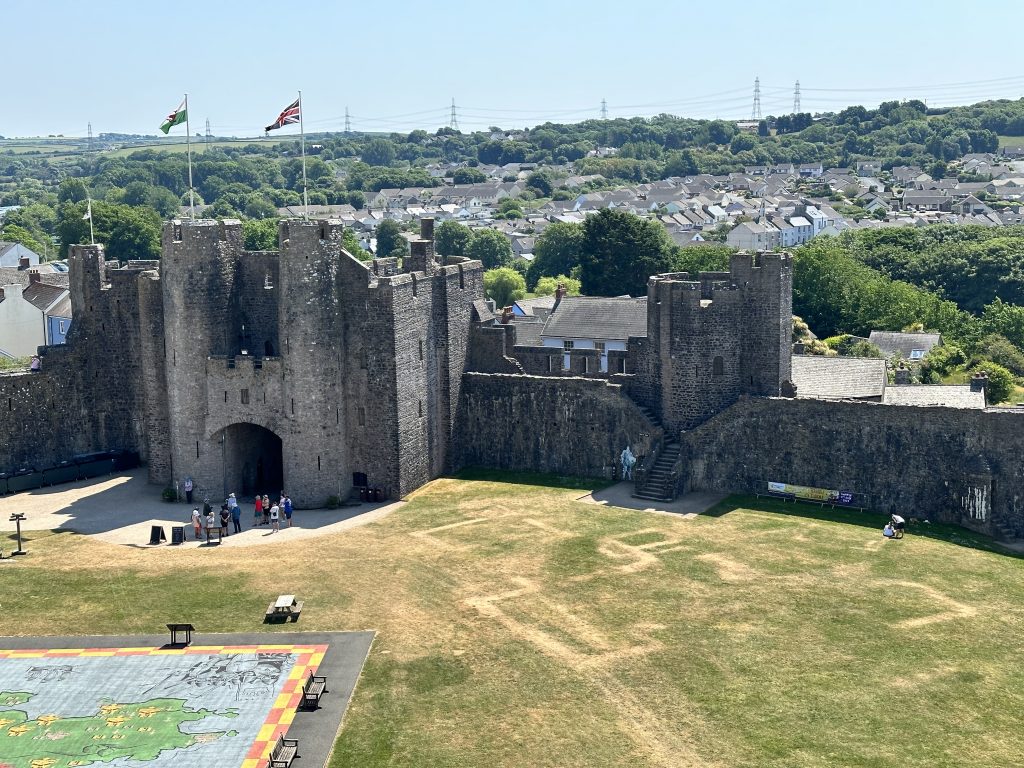
Marshal’s fortress consisted of a smaller inner courtyard and a vast outer courtyard, which remains a truly spectacular sight. The inner courtyard overlooks the river below and contains a complex of buildings, including a great hall and access to Wogan’s Cave. This enormous natural cave may well have proved crucial to Henry Tudor’s survival and escape to Brittany in 1471.
Above ground, the inner courtyard is dominated by an enormous keep that once contained Marshal’s private apartments, which you can climb if you fancy tackling all one hundred or so steps to reach the top!
On the south and east sides, the River Pembroke once wrapped itself around the promontory, offering the perfect natural defence against attack. However, the landward side was more vulnerable and, thus, was defended by a large outer gateway and thickset walls bolstered by defensive towers. Following the significant restoration of the castle in the mid-twentieth century, the gatehouse, towers, and curtain wall are in an excellent state of preservation today.
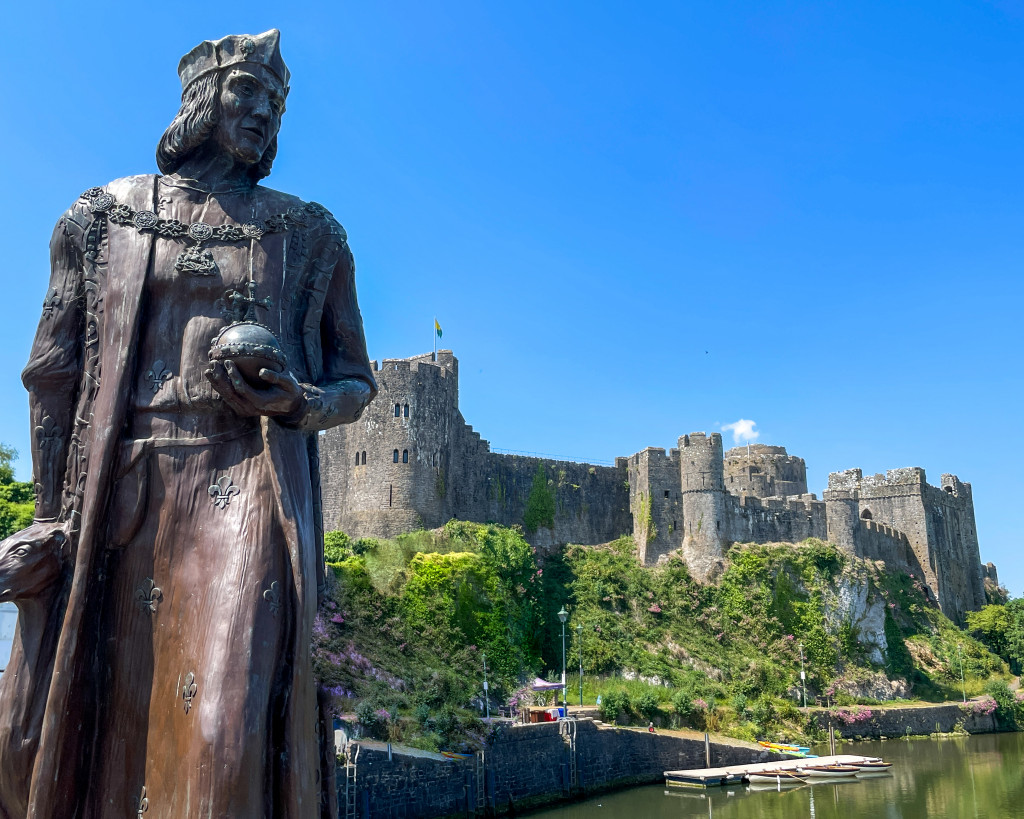
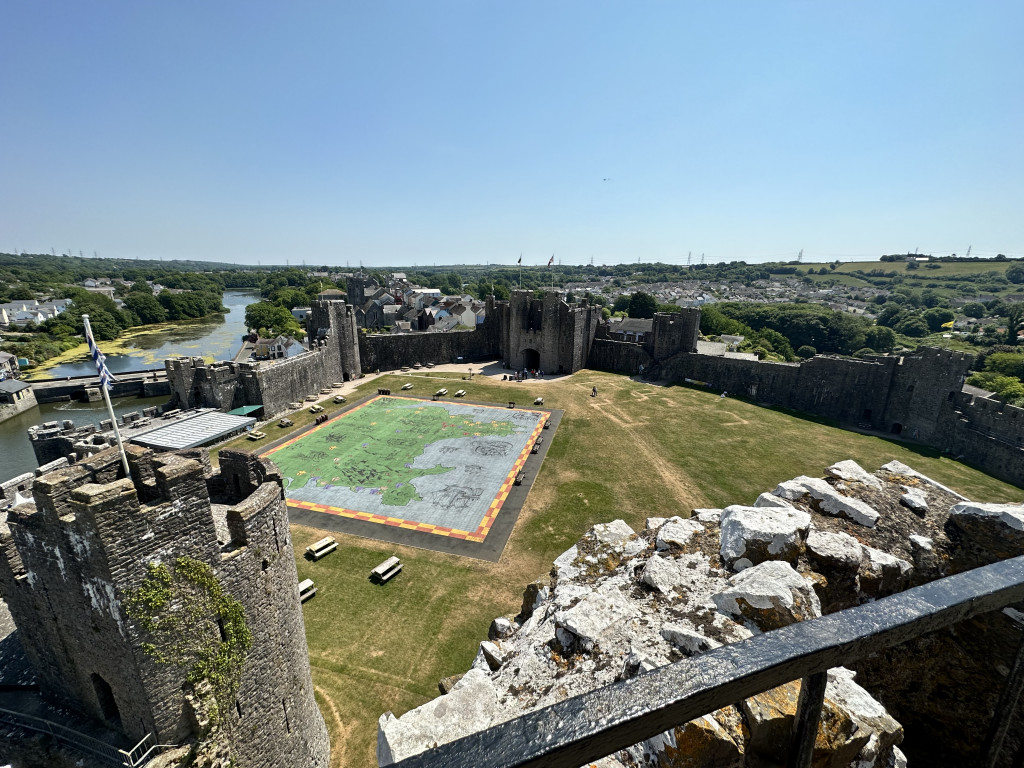
Pembroke Castle. Images © The Tudor Travel Guide.
One of these towers is of particular interest to the Tudor time traveller. The tower in question is on the western side of the castle. It overlooks the modern road that runs roughly along the original course of the castle’s defensive ditch and is otherwise unremarkable. However, according to John Leland’s description, Henry Tudor was born on 28 January 1456 in that tower, which the antiquary described as overlooking the town’s Westgate. Today, you will see a recreation of the event inside the tower, with Margaret Beaufort and her baby, attended by a lady of the bedchamber and a servant girl.
Some have questioned whether the small room where Margaret delivered her child was suitable for the Lancastrian heiress. And while Leland is clear in his understanding, more recent excavation work in the adjacent outer bailey has uncovered the existence of a large building, thought possibly to be a fine manor house used by Jasper Tudor, and which may have somehow been connected to the adjacent tower, thereby creating a complex of rooms used by their high-status owners. Watch this space; with a little luck, more will come on this story!
Before leaving Pembroke, visit the nearby parish church of St Mary to see a stained-glass window commemorating the first Tudor king’s association with the town, before heading a short distance down the hill outside, towards the bridge crossing the river. There, you will find a majestic statue of Henry Tudor, staring imperiously out into the distance, perhaps contemplating a glittering future. The castle sitting behind the King makes for the perfect photo opportunity!
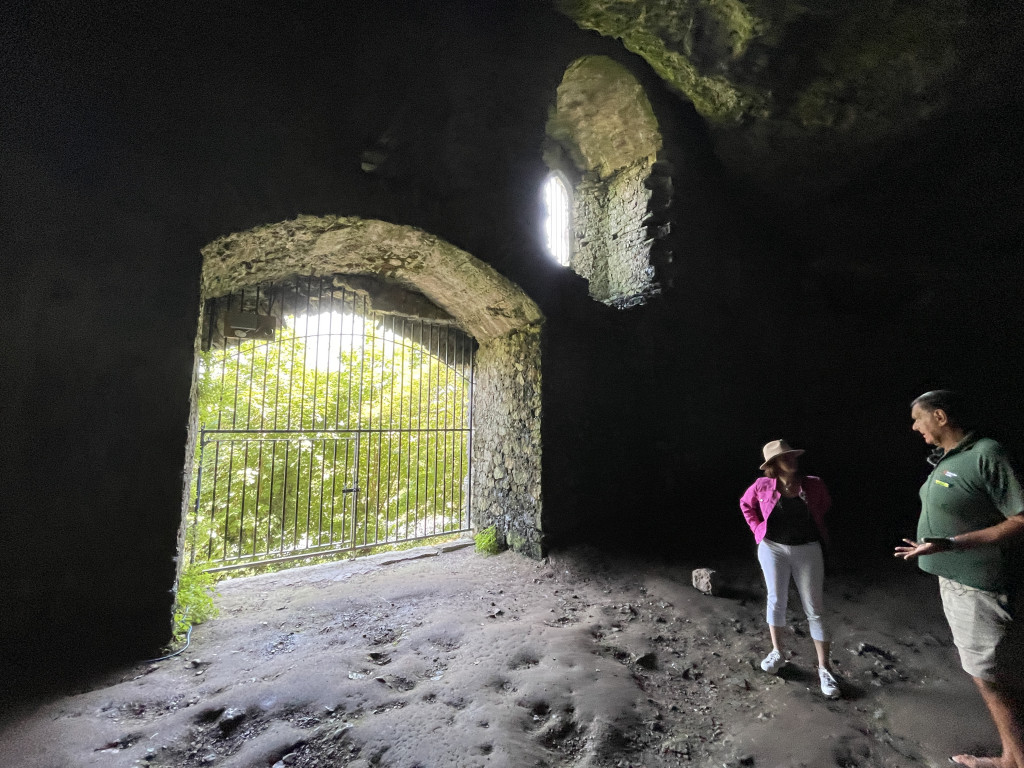
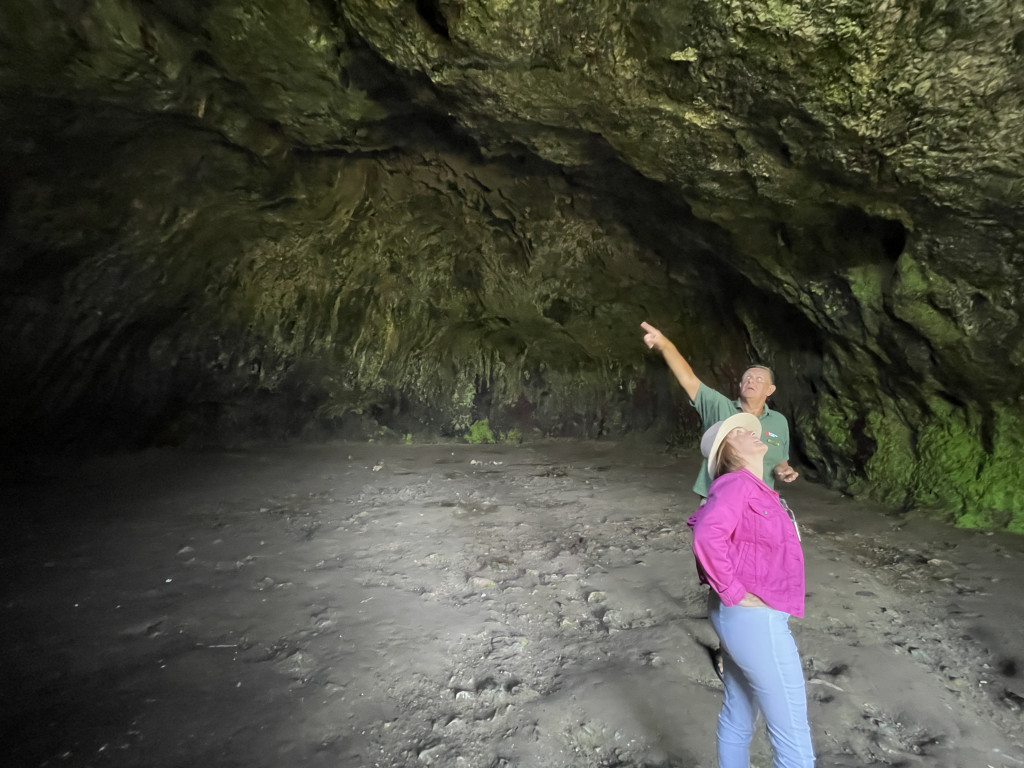
Inside Wogan’s Cave at Pembroke Castle. Images © The Tudor Travel Guide.
DAY TWO
St David’s
St David’s is the smallest city in the UK. It is tiny (more like a large village!) but quaint, with a smattering of craft shops, tea rooms and one or two satisfying restaurants.
Of course, the principal draw for tourists is St David’s Cathedral and the adjacent bishop’s palace. Like Lamphey Palace, the latter lies in ruins. However, those ruins are substantial, and as the principal seat of the diocese during the sixteenth century, it is well worth a visit.
For any Tudor history lover, though, the main attraction is the chance to visit the tomb of Henry VII’s father, Edmund Tudor. His body lies buried in the very heart of the cathedral. A more picturesque spot for a cathedral is hard to imagine, nestled in a verdant valley on the edge of the city.
The cathedral embraces layers of history, but as Tudor history lovers, you will want to note the sixteenth-century ceiling in the nave and the aforementioned chest tomb of Edmund Tudor, placed in the highest status position possible, directly in front of the high altar.
Edmund’s body was reburied in the cathedral following the Dissolution of the Greyfriars monastery in Carmarthen during Henry VIII’s reign. Thus, the original gold lettering around the edge of the lid is in English, something unheard of when the Earl’s body was first laid to rest. While the tomb is original to the sixteenth century, the immaculate brass is much later, having been replaced several times over the centuries.
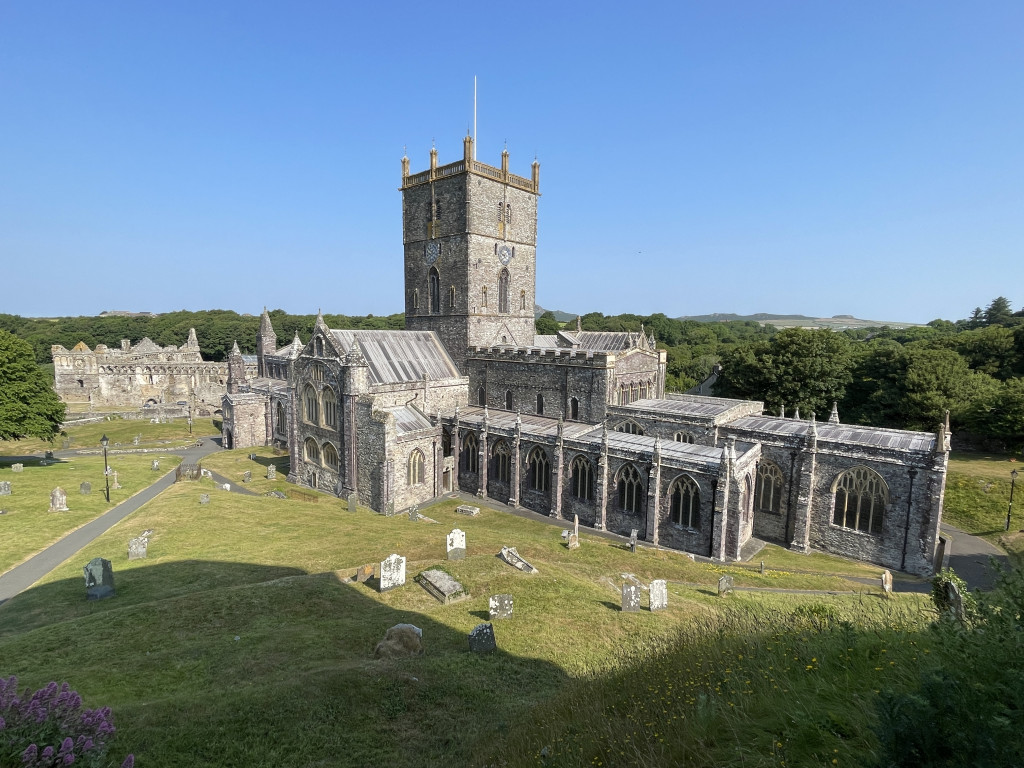
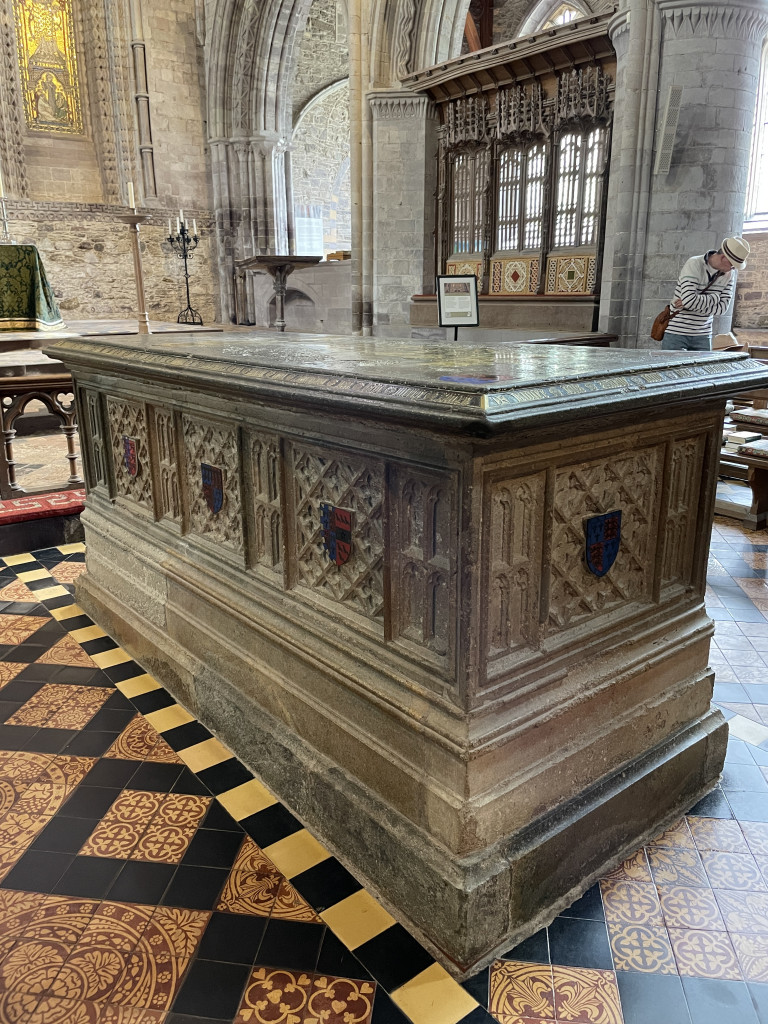
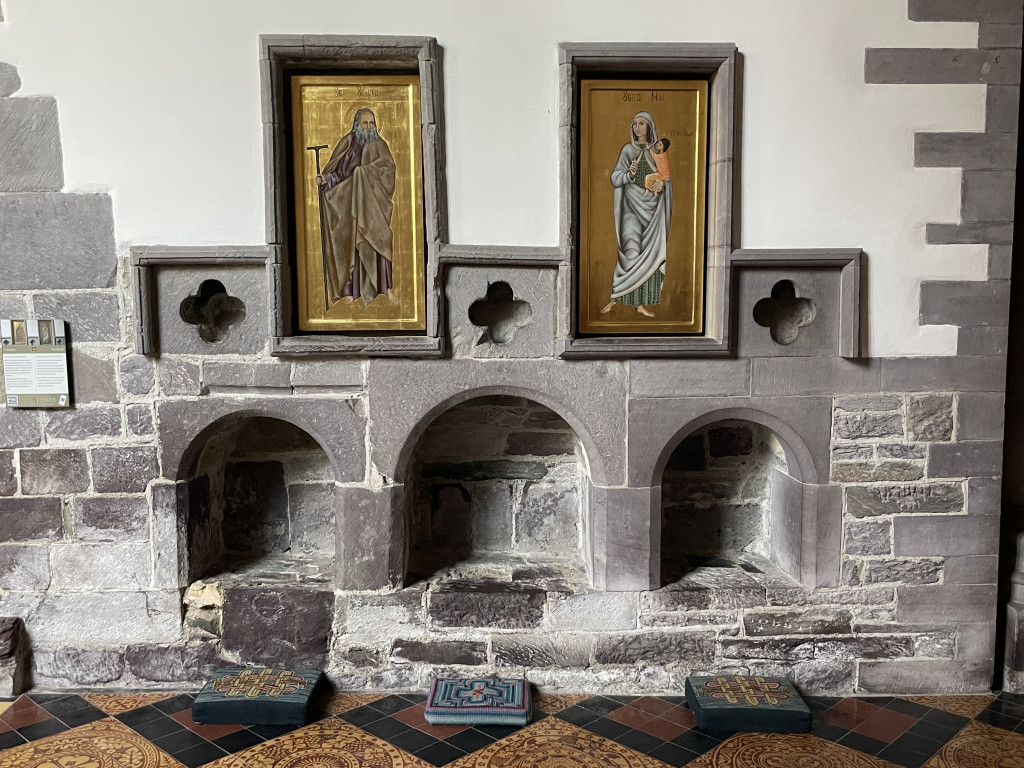
St David’s Cathedral, Edmund Tudor’s chest tomb; the chapel behind the high altar.
Images © The Tudor Travel Guide.
Mill Bay
It is nearly an hour’s drive south, along some gorgeous coastline, to reach our second destination for the day: Mill Bay.
In 1483, Edward IV, the once invincible ruler of the House of York, died at Westminster. What followed was a coup by his brother, Richard, Duke of Gloucester, who soon proclaimed himself king over his brother’s eldest son and heir, Edward V.
Richard III’s reign triggered a new Lancastrian uprising, and on 1 August 1485, the now twenty-eight-year-old Henry Tudor set sail from Brittany to reclaim the Crown for the House of Lancaster. Alongside his Uncle Jasper and several die-hard Lancastrian nobles intent on taking back the Crown, Henry Tudor landed at Mill Bay in Pembrokeshire a week later on 7 August. After fourteen years in exile, as Henry came ashore, he fell to his knees and cried, ‘Judica me Deus, et discerne causam me’ (Judge me, O God, and Distinguish my Cause).

To visit Mill Bay today is to undertake a minor quest of your own, for this location is not exactly on a well-worn tourist trail, and with good reason. Despite the many large, open sandy beaches that Henry could have chosen to come ashore, secrecy over convenience was the order of the day. Thus, Mill Bay Beach was chosen. It is small compared to some of its neighbours, with the beach embraced by steep cliffs; this would have made heaving all the supplies ashore no mean feat!
To reach this historic spot today, you must head for St Anne’s Head. There is an official car park on the long straight road leading to the promontory, but it’s quite a walk! Instead, you might want to drive up to the end of the road, just before the ‘private drive’ sign. There is just enough room for one or two cars to park on the roadside without obstructing it.
Head through the gate ahead of you and into a field, usually home to a herd of cows. There will be a row of houses to your left and the lighthouse over to your right. Walk diagonally across the field to join the well-worn coastal path. Now, head left along the path for a further five to ten-minute walk. You will know you are in the right location because, along the way, you will encounter a plinth commemorating the landing. From there, keep walking until the path takes you down towards the beach.

It is such a thrill to stand on the shoreline, imagining the horizon littered with sailing ships and then to turn and walk up the beach, a silent witness to the exchange between uncle and nephew as they made plans for what was to come, plans which they knew would end in triumph and glory or in bloody, ignominious defeat.
From Mill Bay Beach, the first stop for the would-be king was a small village just a couple of miles along the coast called ‘Dale’. A medieval castle stood there, sited a little way back from the shoreline. Its lord welcomed the invaders before the party pressed on towards their destiny. This castle survives, albeit in a significantly altered state. It was remodelled and rebuilt in 1910, but it incorporates parts of the medieval castle Henry would have known. However, it is now in private hands and can only be seen from the roadside as you leave the village.
Castle aside, I encourage you to stop in Dale after you visit Mill Bay Beach to enjoy a drink and a bite to eat at The Griffin Pub. With its friendly welcome and fantastic views out to sea, it is a lovely place to rest and reflect on the fact that you have walked in the footsteps of giants of the Tudor Age at such a pivotal moment in English history.
DAY THREE
Tenby
In 1471, the House of York was firmly established on the English throne following its resounding victory at the Battle of Tewkesbury and the bloody slaughter of the Lancastrian heir, Edward, Prince of Wales. Jasper Tudor had fled the battlefield, seeking sanctuary at Pembroke Castle. These were perilous times, and if Yorkist sympathisers had captured Jasper and the fourteen-year-old Henry Tudor, it would have meant certain death.
There is a legend that under the cover of darkness, the pair fled Pembroke Castle via Wogan’s Cave. At the time, the tidal river came right up to the cave entrance, allowing a straightforward escape by boat.
Jasper had a plan; for the time being, he recognised that the Lancastrian cause was lost, and to preserve Henry, now seen by the House of Lancaster as the rightful heir to the throne, the young man’s uncle had exile in mind, albeit hopefully, a temporary one. Thus, the pair travelled to Tenby.
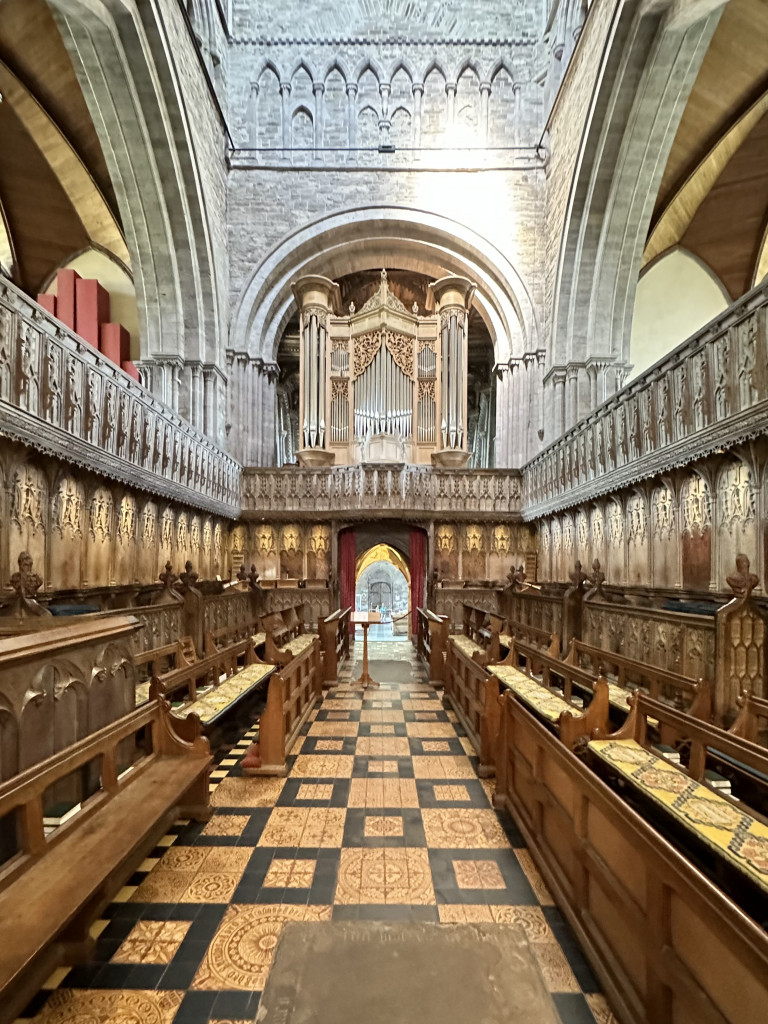
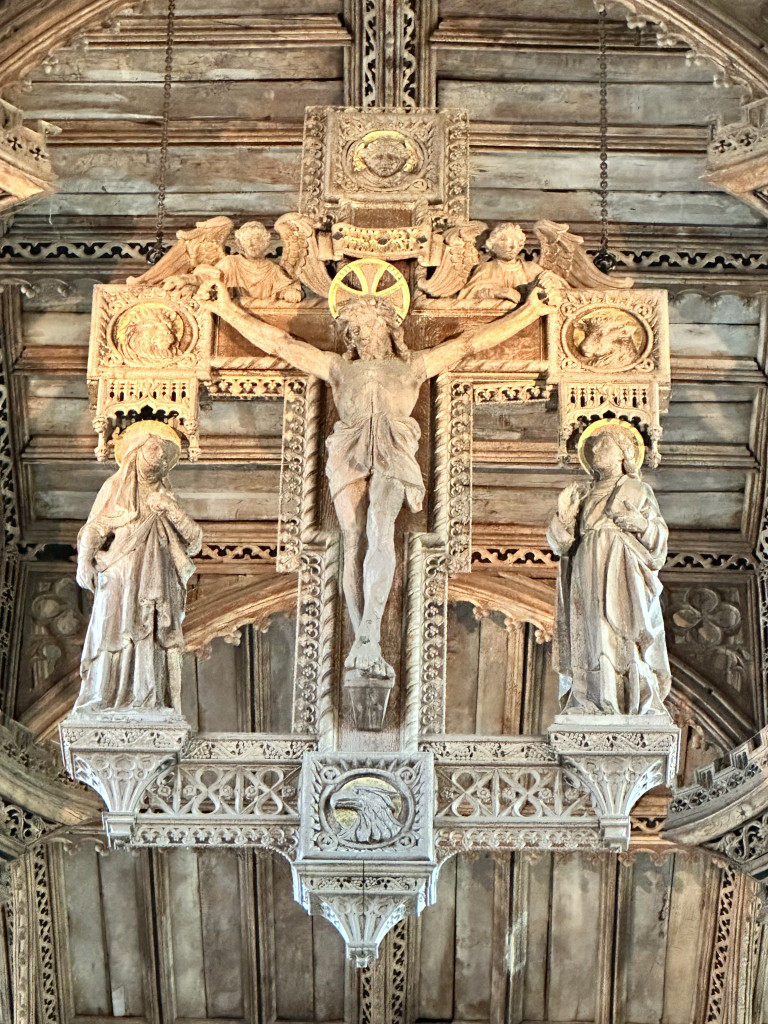
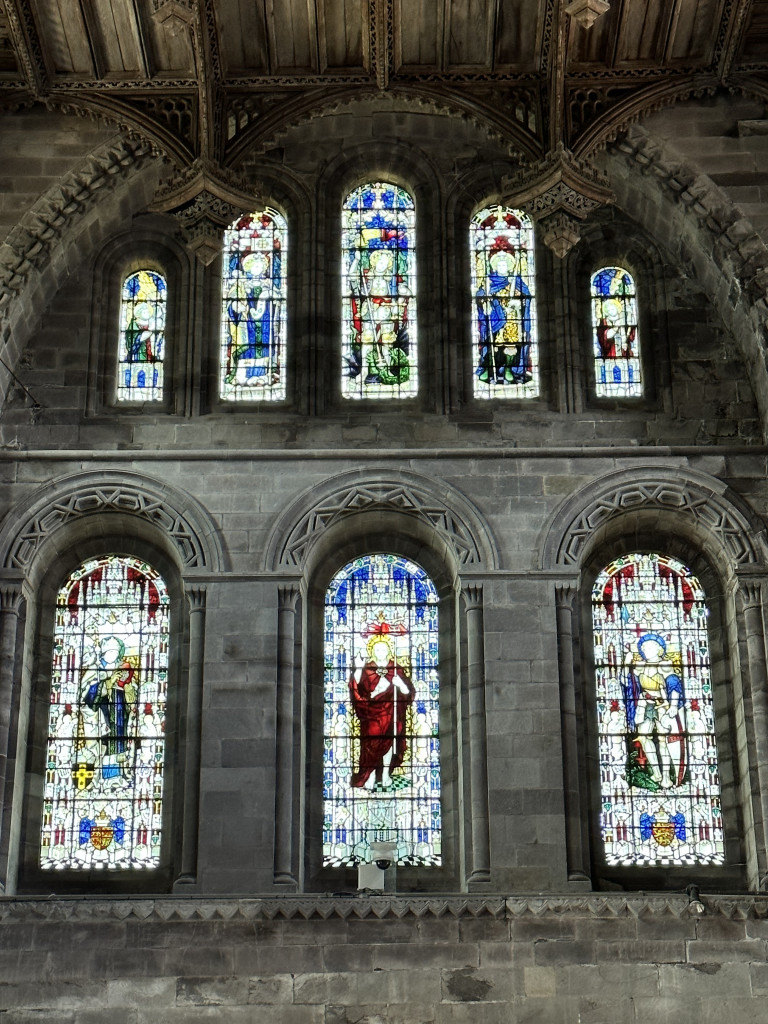
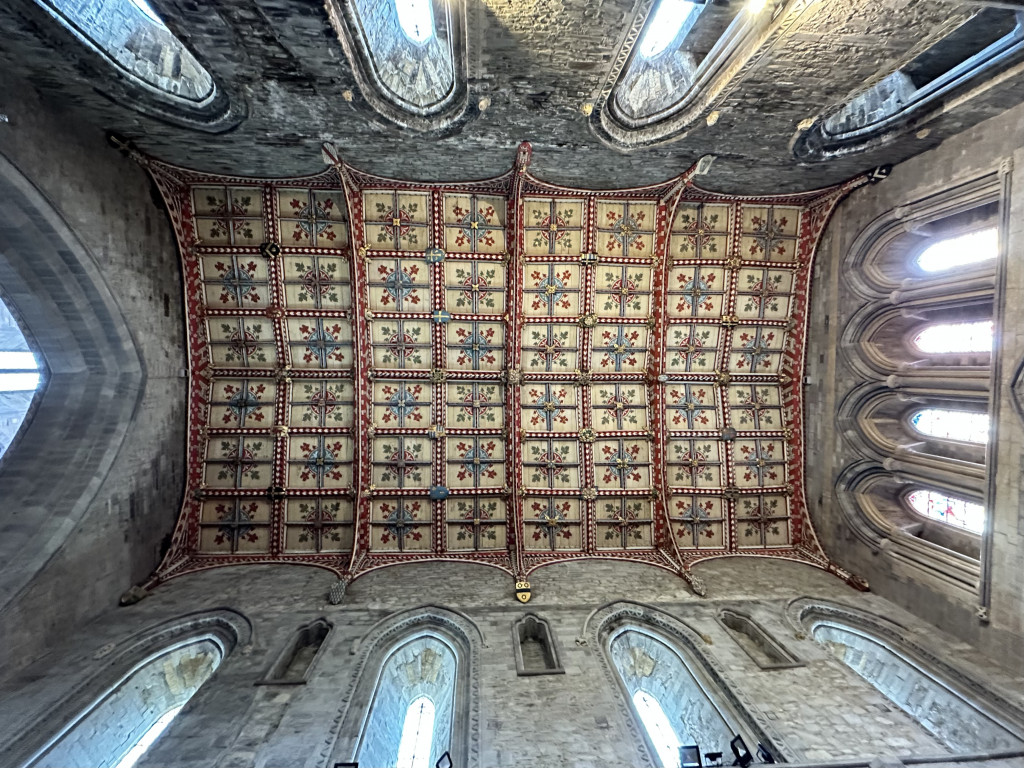
St David’s Cathedral. Images © The Tudor Travel Guide.
Jasper had close ties to the town and owned a fine townhouse, Jasperley House, situated right in the heart of the port. Legend has it that the pair sought refuge for several days in the cellars of Jasper’s friend and neighbour, John White, the then mayor of the town. His property was next door to Jasperley House.
At the time, White was not only Tenby’s mayor but a successful, wealthy merchant who, unusually, owned a ship, which he used to carry on his trade with overseas markets. Once the ship was ready, the pair escaped to the harbour through underground tunnels, boarding the vessel and making their way to Brittany, where uncle and nephew would remain for the next fourteen years.
Tenby is probably the most popular tourist destination in Pembrokeshire. People come to enjoy its charming streets, fronted by pleasant, colourful Georgian houses, its pretty harbour, and its sandy beaches. During the summer, boats take tourists to nearby islands to enjoy the wildlife, while the cafes and restaurants are packed with holidaymakers. It can be a little uncomfortable if you like a sense of space to absorb a place’s history. If this is you, you may want to visit outside the high season (which runs through July and August).
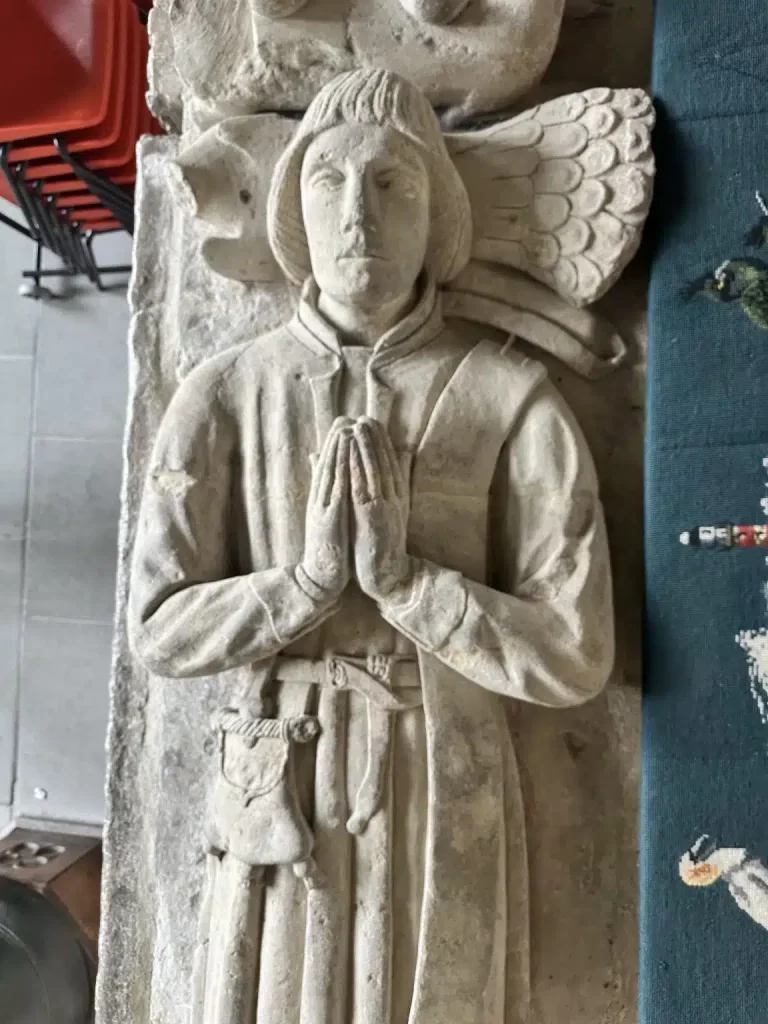
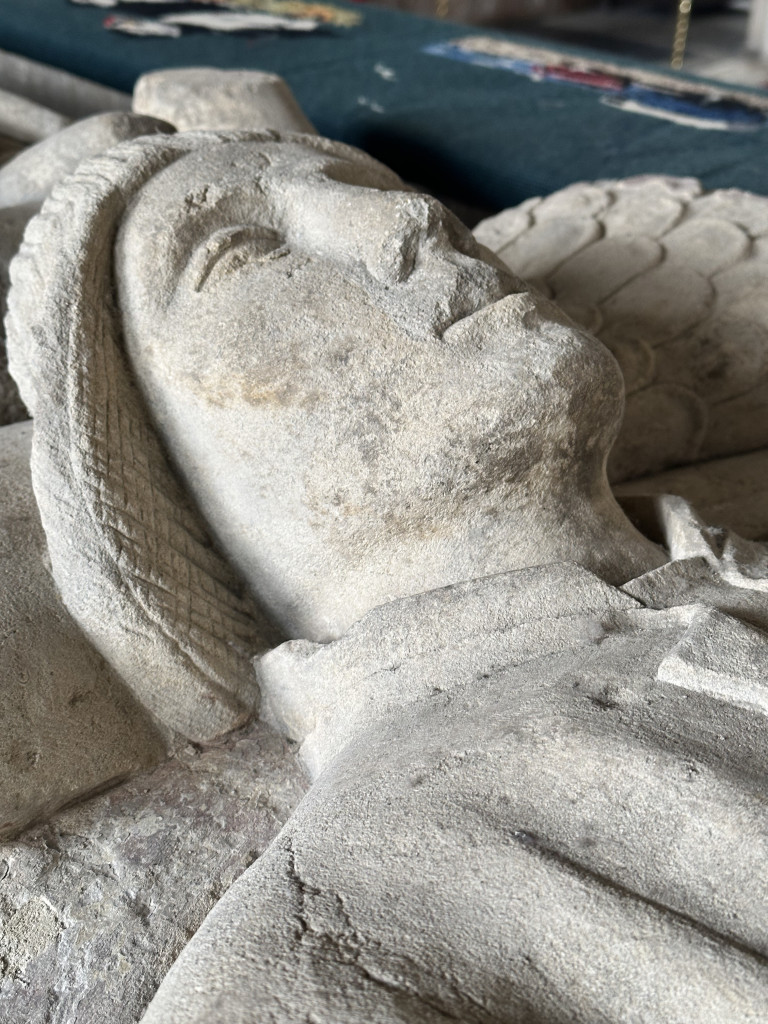
Tomb effigy of Thomas White. Images © The Tudor Travel Guide.
Arriving in the town, you will likely see the remains of Tenby’s spectacular town walls, which Jasper did much to fund the repair of in 1457. Sadly, Jasperley House and John White’s medieval home are long gone, replaced by more modern buildings. However, the cellar where Jasper and Henry took refuge still exists behind Boots the Chemist, just opposite St Mary’s Church, and near the aptly named ‘Tudor Square’. However, you cannot access these, nor the tunnels that run down to the harbour, but you can get close to where the tunnel ends and where presumably Jasper and Henry emerged, once again under cover of darkness. A blue plaque behind Boots the Chemist on Crackwell Street commemorates the event.
While in town, you must visit the aforementioned St Mary’s Church, which contains the tomb of Thomas White and his son, John. You will find the tombs, surmounted with their effigies, to the right of the chancel, near the high altar.
Also of interest, although not directly connected to Jasper or Henry Tudor, is the town’s sole surviving, complete medieval house: the Tudor Merchant’s House, cared for by the National Trust. The house has been lovingly restored and furnished as it would have looked around 1500 when a merchant of the middling classes owned it. It is definitely worth a visit.
Carew Castle
Carew, Tenby, Pembrokeshire SA70 8SL.
Although not strictly in the footsteps of Henry VII, a visit to Carew Castle will take you to the residence of one of the King’s most stalwart supporters, Sir Rhys ap Thomas, who fought alongside Henry Tudor at the Battle of Bosworth. Some say that it was Rhys who struck Richard III with the fatal blow that pierced his skull and ended his life.
Whether it was Rhys himself or one of his retainers, ap Thomas fought bravely enough to be knighted following the battle and given extensive lands in Wales. He became Chamberlain of South Wales, ruling the area like a king.
One of ap Thomas’ residences was Carew Castle, just north of Tenby. The current structure was built in the second half of the thirteenth century and consists of a complex series of halls and rooms arranged around a central courtyard.
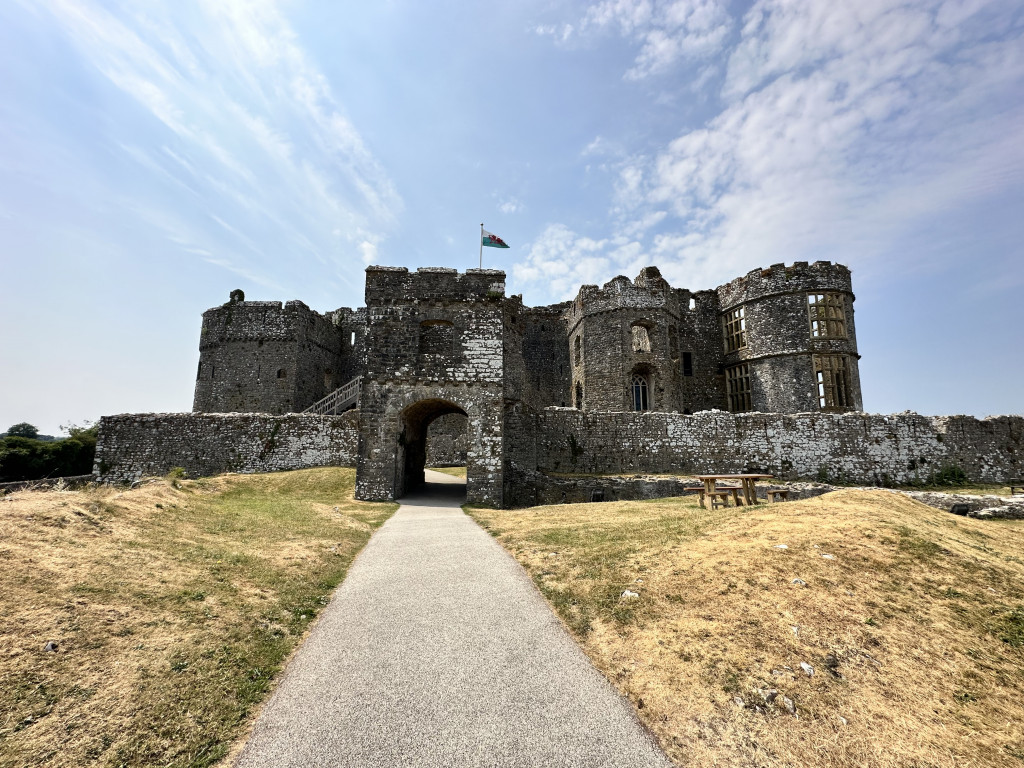
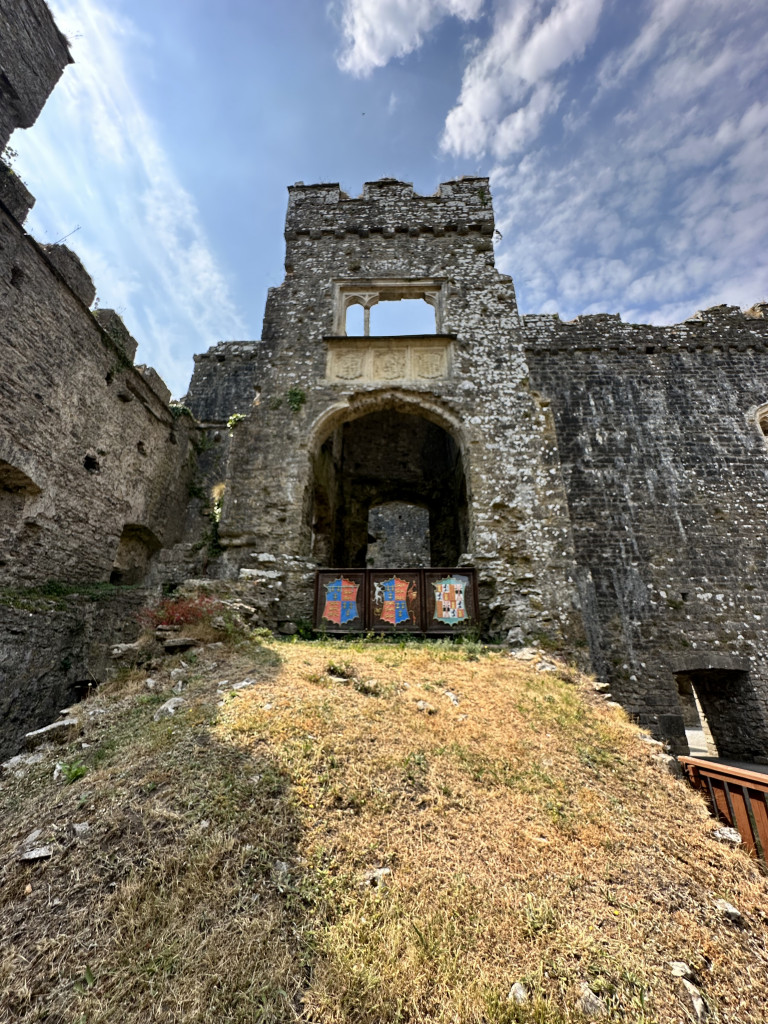
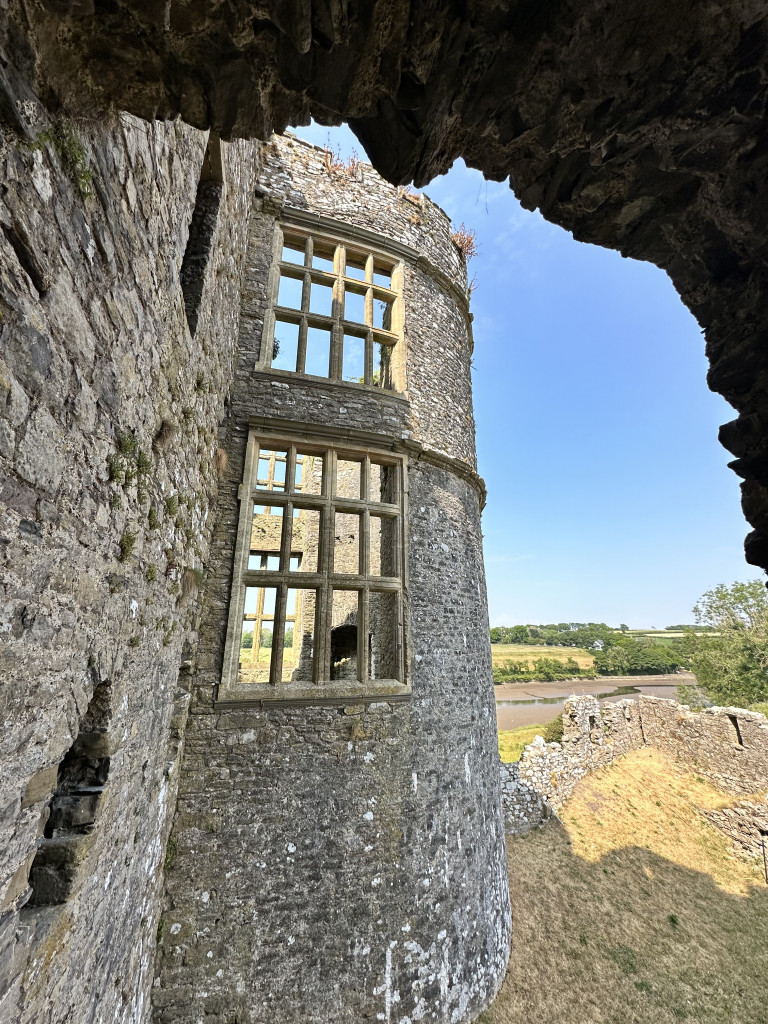
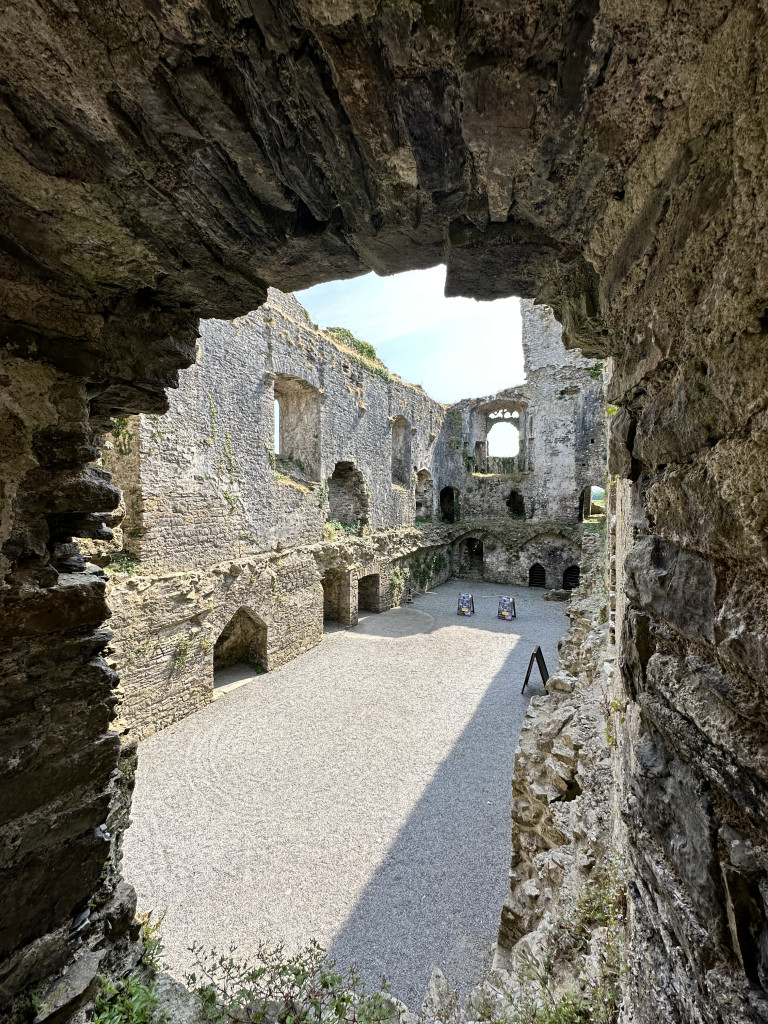
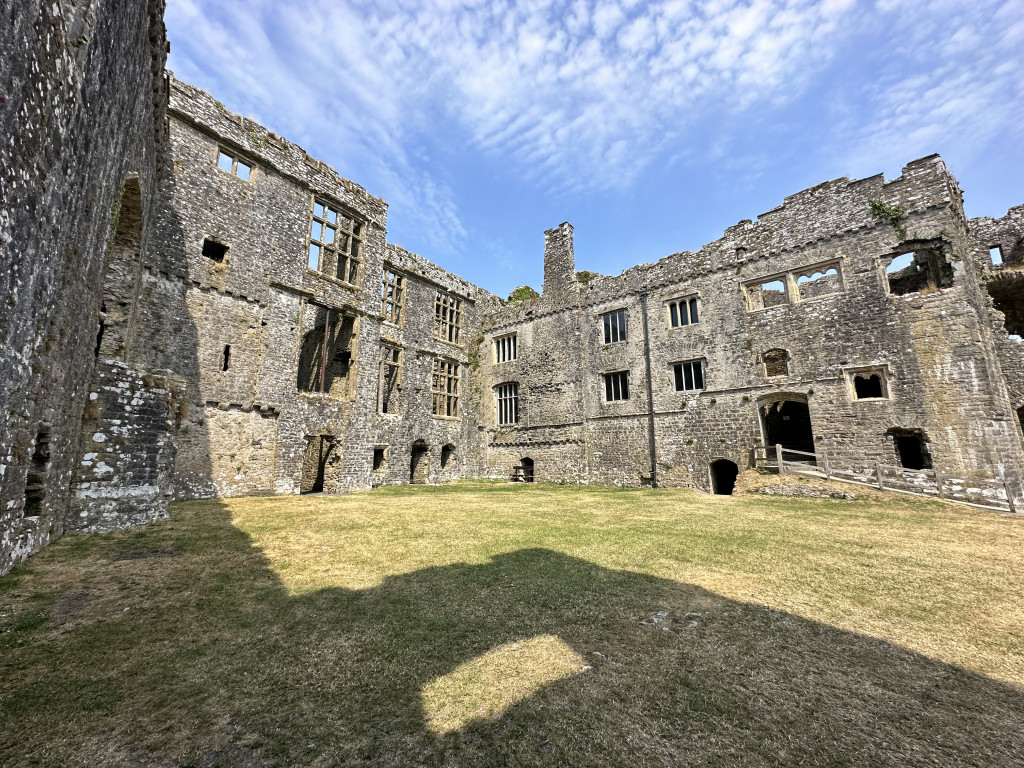
The exterior of Carew Castle includes the main entrance, the later Elizabethan wing, the Great Hall, and the inner courtyard. Images © The Tudor Travel Guide.
Once Rhys ap Thomas occupied the castle, he began to update and remodel it with the latest Tudor fashions. A few features of the early alliance between Henry VII and ap Thomas on display are the carved heraldic coats of arms of Henry VII, Prince Arthur and Kathrine of Aragon, which, although weather-worn, can still be seen above the elevated entrance to the great hall.
While wandering through the ruins – and they are substantial – you will also see Elizabethan additions made to the castle’s north range by Sir John Perrot after Elizabeth I granted him the castle towards the beginning of her reign. Unfortunately for Perrot, he made many powerful enemies at court and was accused and arrested for treason in 1591. He ended up in the Tower and perished there of natural causes the following year
As for Rhys ap Thomas, he died at the Franciscan Friary in Carmarthenshire in 1525, reaching the ripe old age of seventy-six. At the Dissolution in the 1530s, his body was moved to the nearby parish church of St Peter, where you can see the effigy of ap Thomas, lying next to his wife, forever in repose, a hero of the bloody but defining Battle of Bosworth.
Useful Links & Further Reading
There is one place remaining on Simply Tudor Tours‘ 2026 tour 1502: The Year That Shook The Tudor Throne, which runs from 6 – 12 July 2026. You can find out more and book the last place here.
You can find out more about Nathen Amin on his website here. Some of his books are linked below:
Tudor Wales
The House of Beaufort: The Bastard Line That Captured The Crown
Henry VII and the Tudor Pretenders: Simnel, Warbeck and Warwick
Son of Prophecy: The Rise of Henry Tudor
One of Gareth Mills’ books is available here:
On the Waterfront
The locations included in the itinerary are linked below:
- Lamphey Bishop’s Palace
- Rowan Tree Café
- Pembroke Castle
- St David’s Cathedral
- St David’s Bishop’s Palace
- Mill Bay
- The Griffin Pub
- Tenby
- St Mary’s Church
- Tudor Merchant House
- Carew Castle

Thanks Sarah for this fascinating tour itinerary with great photos. My appetite for visiting the region has certainly been wetted! ?
Sarah and Chris, just to thank you both for all your hard work. Sharing so much history, I enjoyed every moment and the beautiful photos just made it even more special. Mary
Aww…thanks, Mary!
L loved reading your travels lm so into the tudor got the dvds and books and lv done the London tour l never get bord of it thanku so much can’t wait to see more