Harlech Castle: Echoes of a Turbulent Past
Note: This is a show notes page accompanying my on-location podcast, recorded in summer 2026.
In this episode of The Tudor History & Travel Show, we head to the rugged coastline of North Wales to Harlech, a coastal town overlooking Tremadog Bay and set against the dramatic landscape of Eryri (Snowdonia) National Park. Once part of the historic county of Merionethshire, Harlech is best known for its imposing castle, which was begun by Edward I between 1282 and 1289 as part of his campaign to conquer Wales.
The castle’s story, however, extends far beyond its medieval beginnings. It was captured by the Welsh leader, Owain Glynd?r and later, in the 1480s, became a stronghold for Henry Tudor during his rise to the English throne. Although Harlech Castle once stood close to the edge of a sea cliff, changes to the coastline mean it now lies around half a mile inland.
Perched on a rocky outcrop, Harlech Castle commands sweeping views across the landscape towards the Irish Sea. Its towering walls have witnessed centuries of conflict, power and change. Harlech is a place where the past feels wonderfully close, but what can this mighty fortress tell us about the Tudor world? How did its story intersect with the rise of the Tudor dynasty, and what traces of that past can we still discover here today?
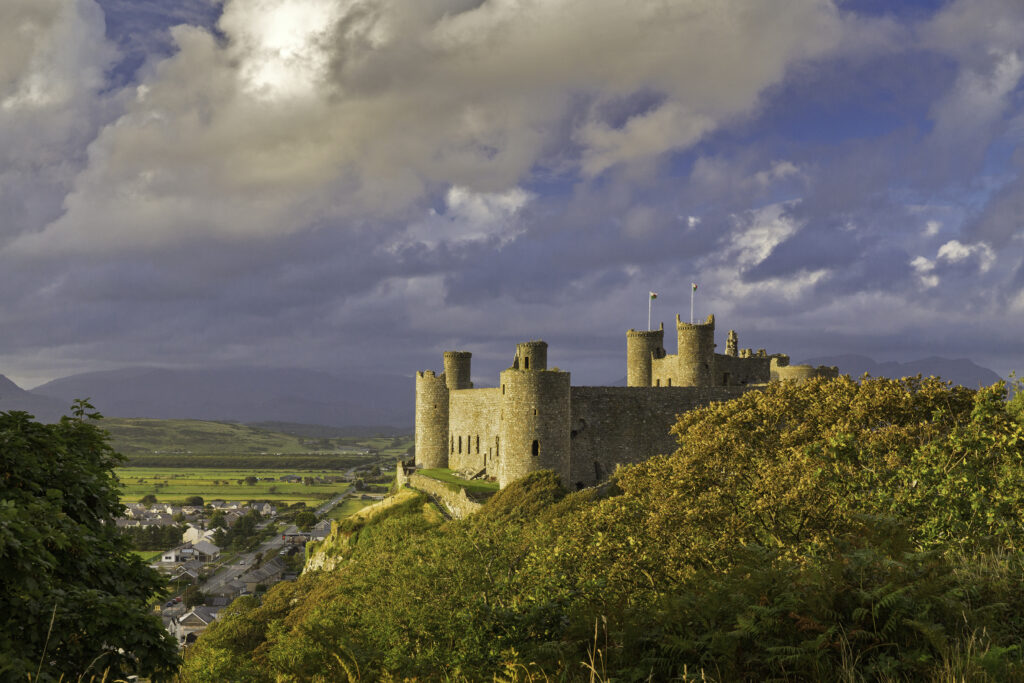
© Hawlfraint y Goron / © Crown copyright (2026) Cymru Wales.
A Brief History of Harlech Castle
Harlech Castle was begun around 1282 by Edward I, following his conquest of Wales. Designed by military architect Master James of St George, the fortress was built on a rocky outcrop overlooking the coast, with steep natural defences and imposing walls. Its position beside the sea meant that supplies could be brought in by ship, even during a siege. Yet the castle, intended to secure English rule, would later become a centre of Welsh resistance. In 1404, the forces of Owain Glynd?r captured Harlech, and it became an important base for his campaign for an independent Wales. Glynd?r held court here and, in 1405, convened a parliament at the castle. English forces eventually recaptured it in 1409, bringing this chapter of Welsh rebellion to an end.
Harlech’s next great chapter came during the Wars of the Roses. Held by Lancastrian supporters, the castle resisted Yorkist forces for years under its Welsh constable, Dafydd ab Ieuan. The siege, traditionally dated from 1461 to 1468, is often described as the longest in British history. When the castle finally fell in 1468, its determined defence became part of Welsh legend.
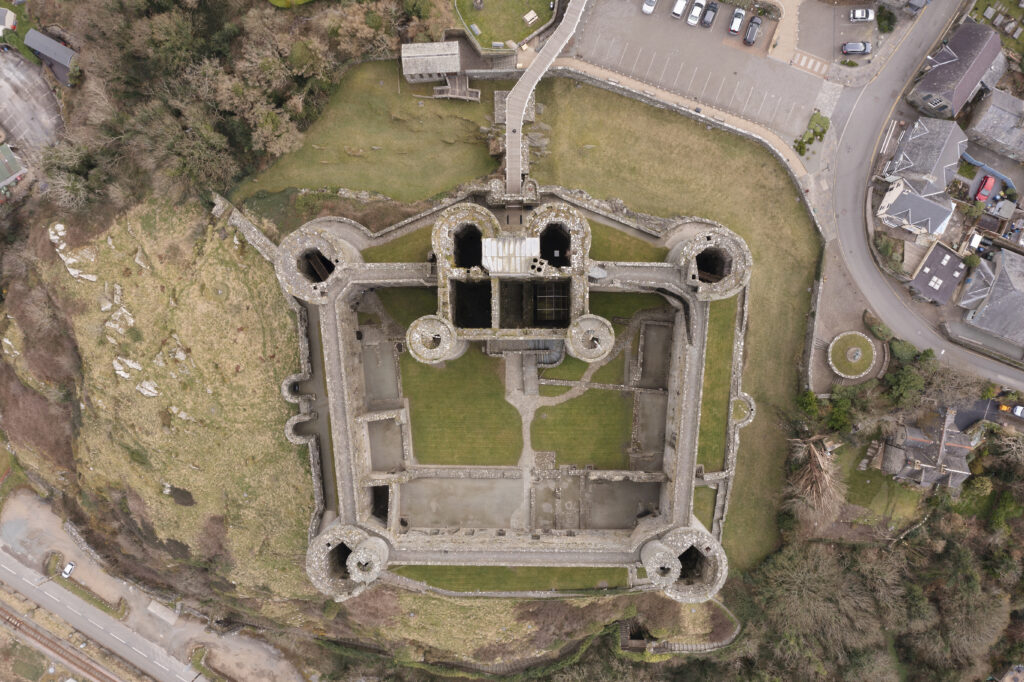
© Hawlfraint y Goron / © Crown copyright (2026) Cymru Wales.
Harlech’s history also intersects with the rise of the Tudor dynasty. Henry Tudor, born in Pembroke in 1457, emerged from the turbulent world of Welsh and Lancastrian resistance before defeating Richard III at the Battle of Bosworth in 1485. Although Harlech is not directly connected to Henry Tudor, its earlier role in Welsh rebellion and Lancastrian resistance provides a compelling backdrop to the world from which he rose to power.
The castle’s military history continued into the English Civil War, when it was held by Royalist forces loyal to Charles I. After a lengthy siege, Harlech surrendered to Parliamentarian troops in March 1647, becoming the last Royalist stronghold in mainland Britain to fall. Although orders were given to demolish its defences, much of the castle survived. Today, Harlech forms part of the UNESCO-listed Castles and Town Walls of King Edward in Gwynedd, its mighty walls overlooking a landscape that has changed considerably since the sea once lapped at its base.
In this episode, I’m joined by Sian Roberts. Sian has lived in Harlech for twenty-five years and is a Blue Badge Tourist Guide. So, let’s travel back to sixteenth-century Harlech. Imagine the wind sweeping in from the sea, the mountains rising behind us, and the people who once walked these battlements. Let’s begin our journey through time…
Listen to the podcast
Harlech Castle: Image Gallery
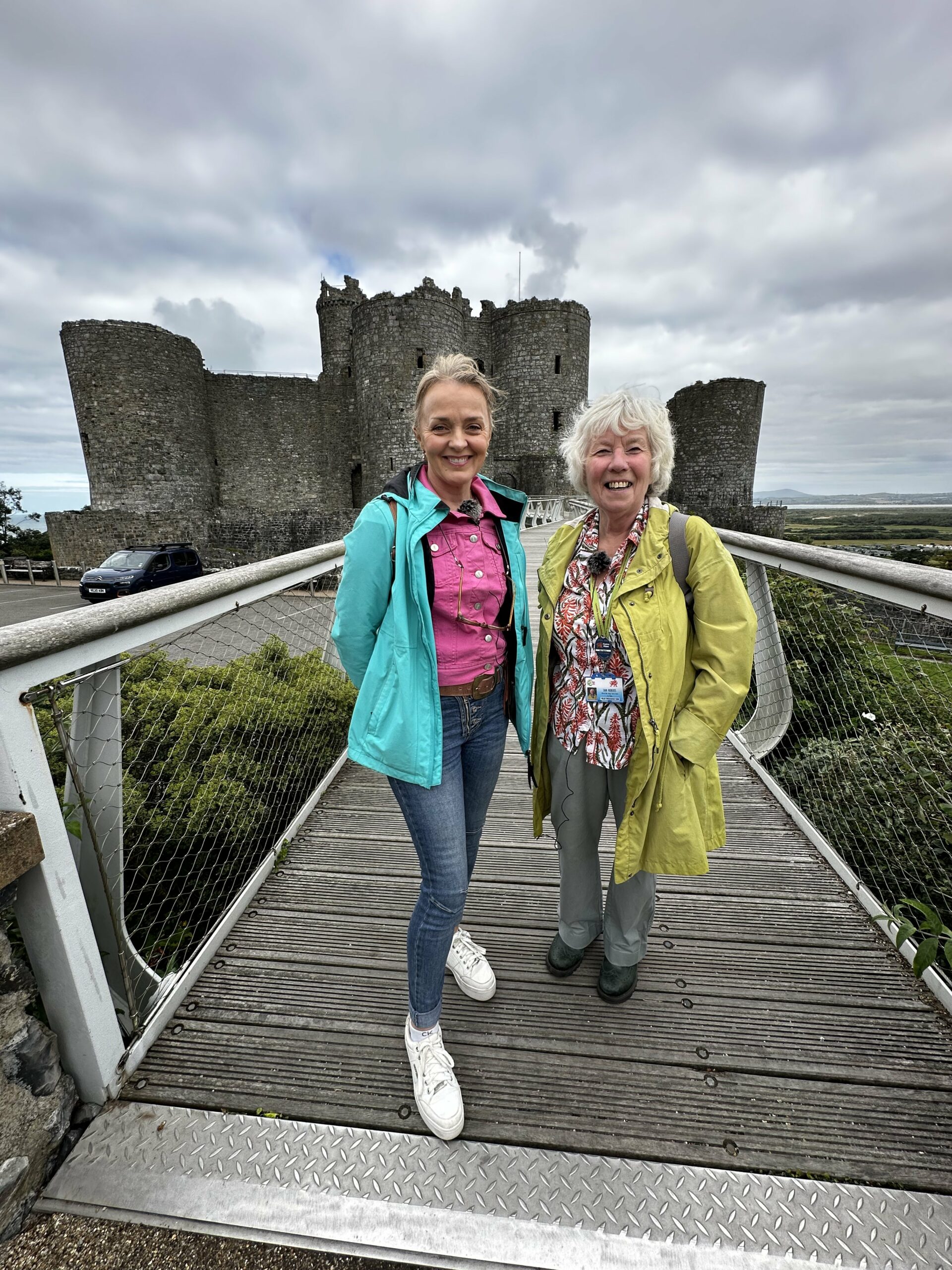
Sarah with Sian outside Harlech Castle.
Image © The Tudor Travel Guide.
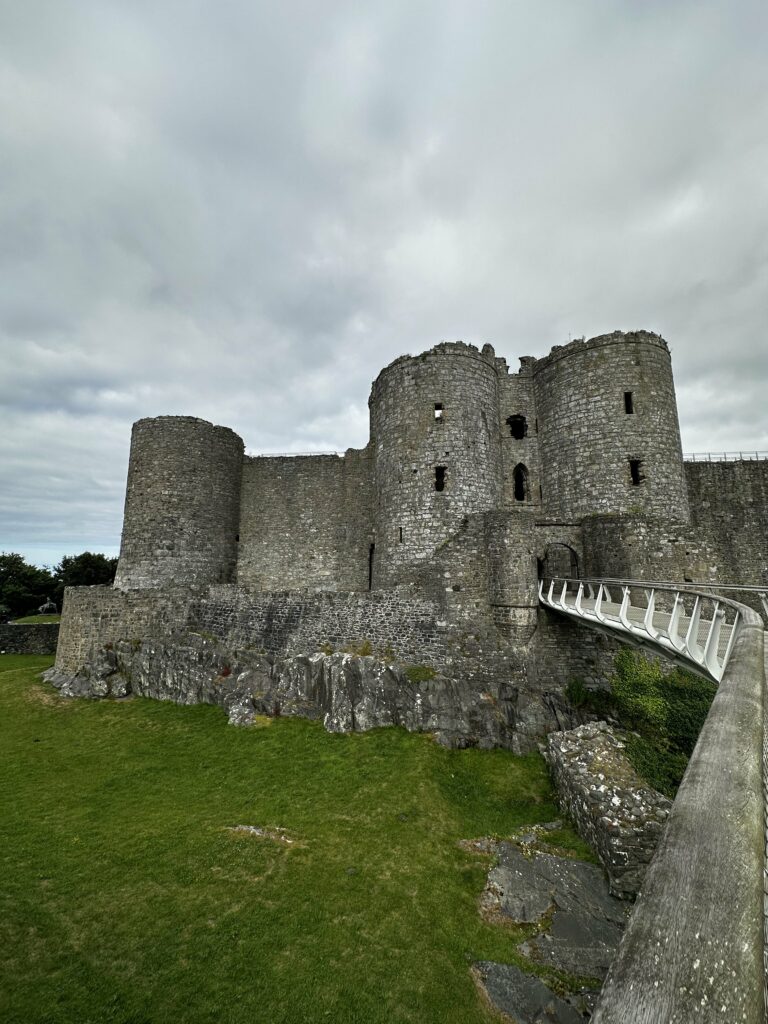
Image © The Tudor Travel Guide.
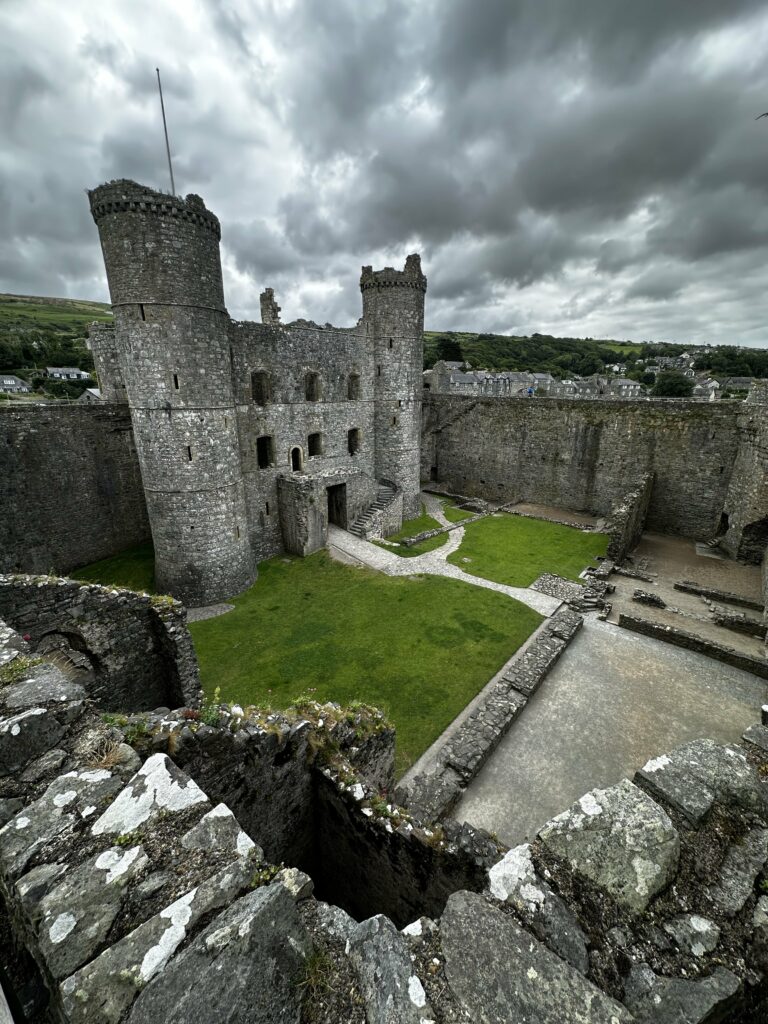
Image © The Tudor Travel Guide.
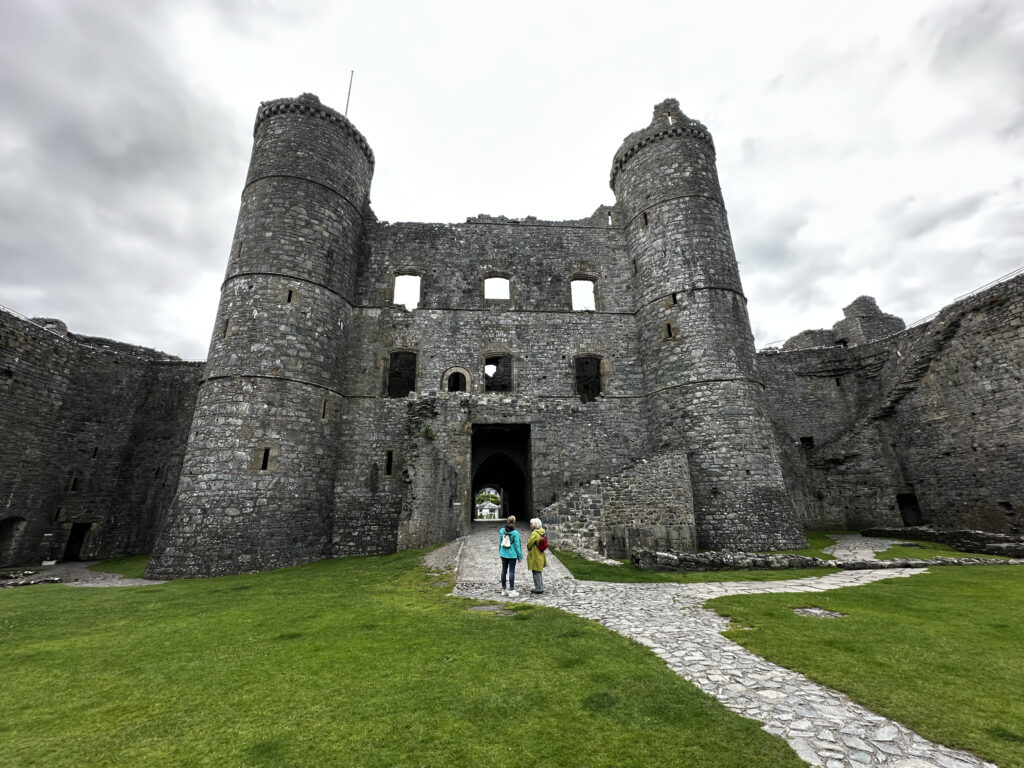
Image © The Tudor Travel Guide.
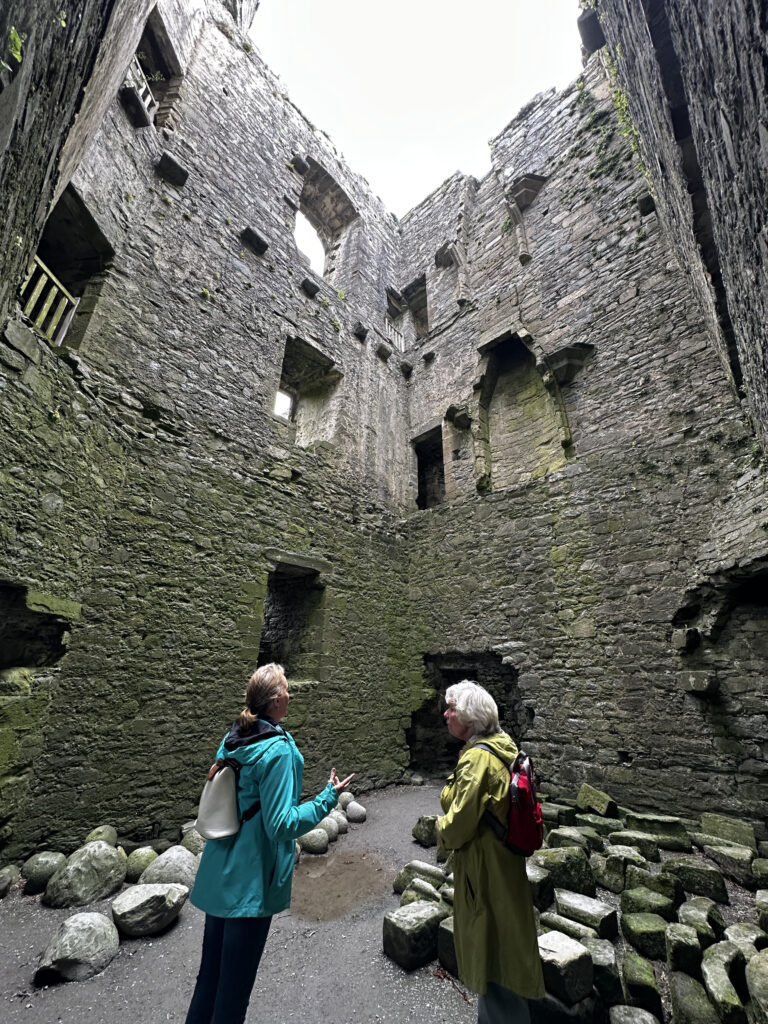
Image © The Tudor Travel Guide.
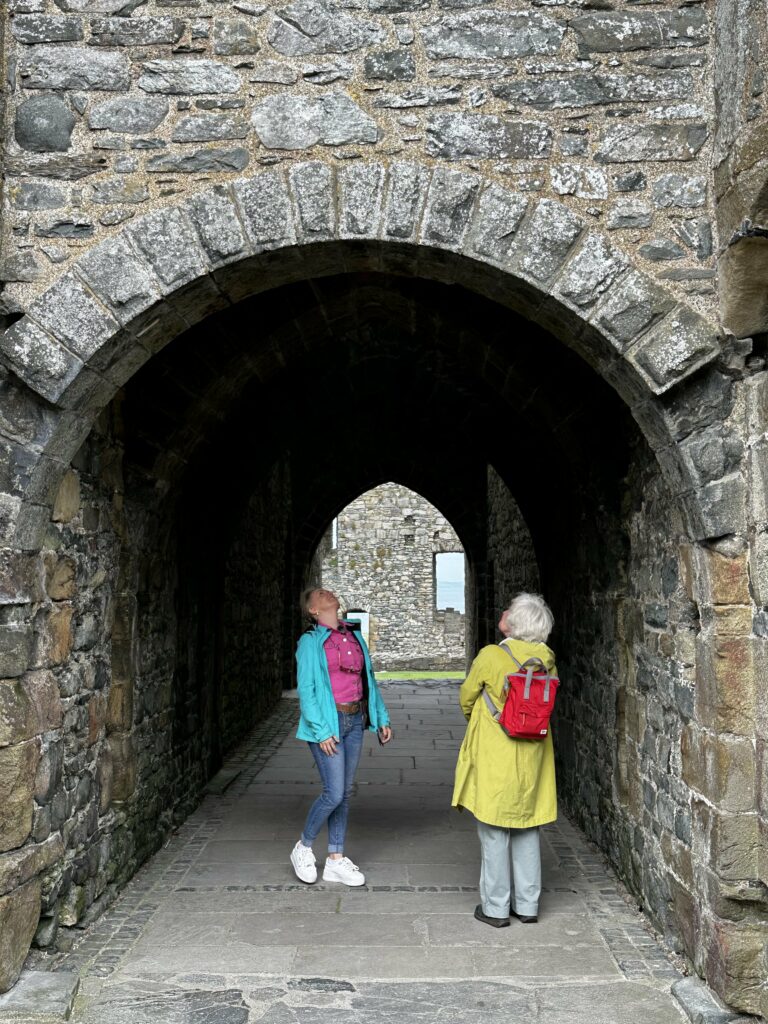
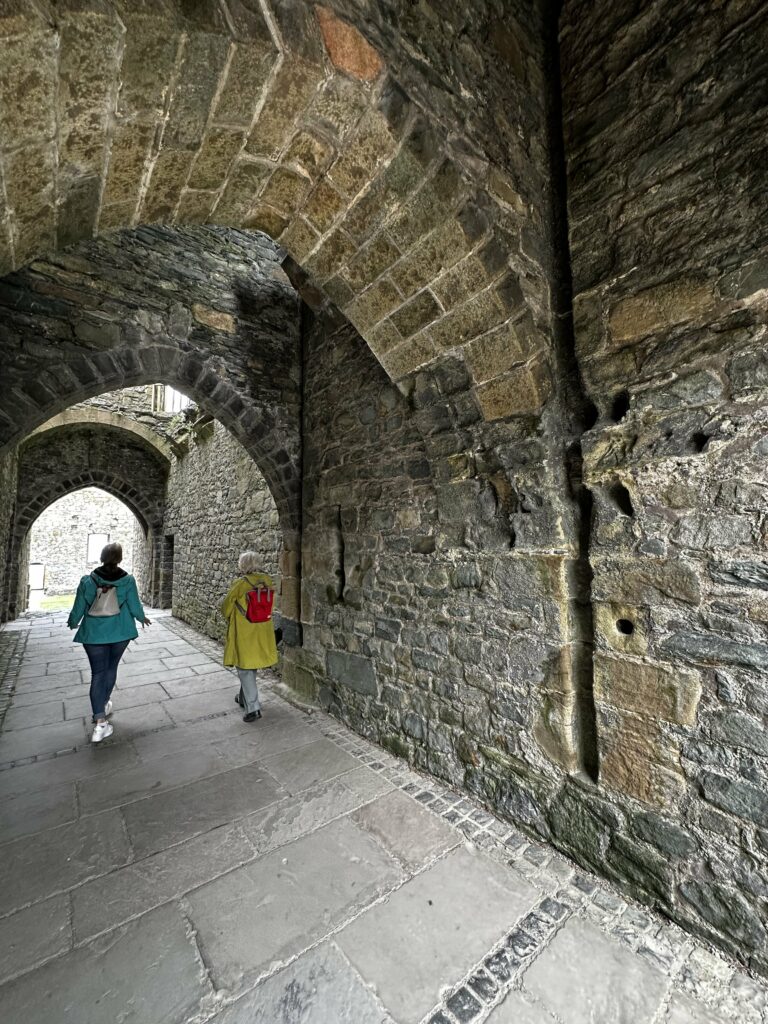
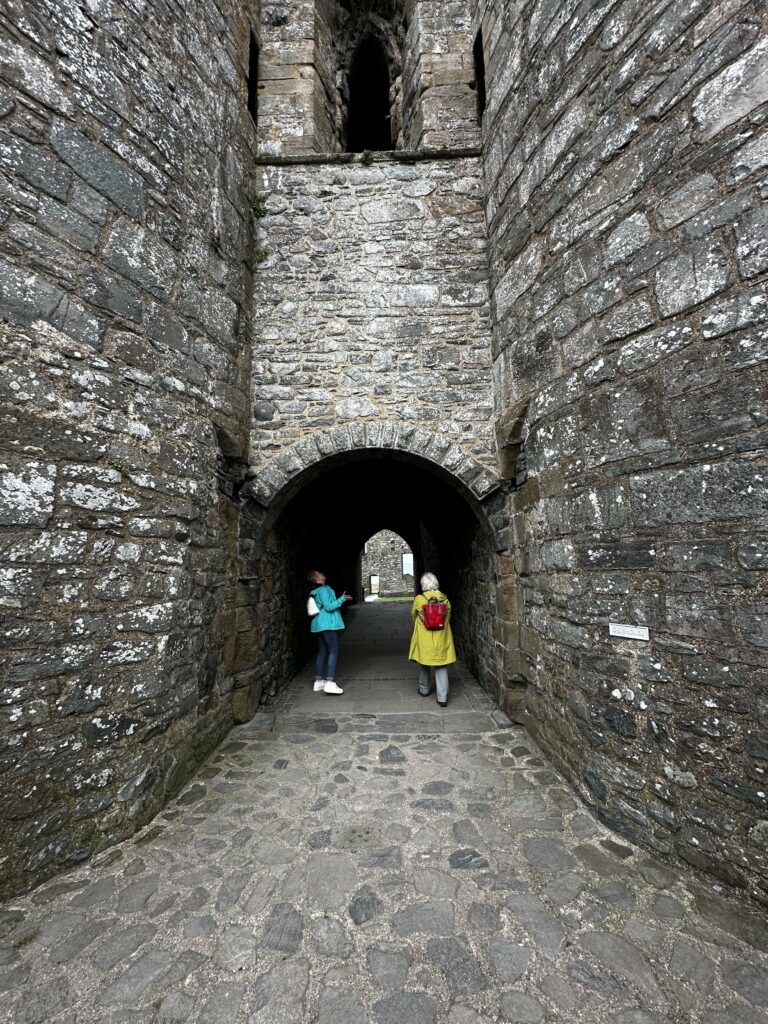
In the gatehouse, the middle image clearly shows the grooves where two of the three portcullises at Harlech were sited.
Images © The Tudor Travel Guide.
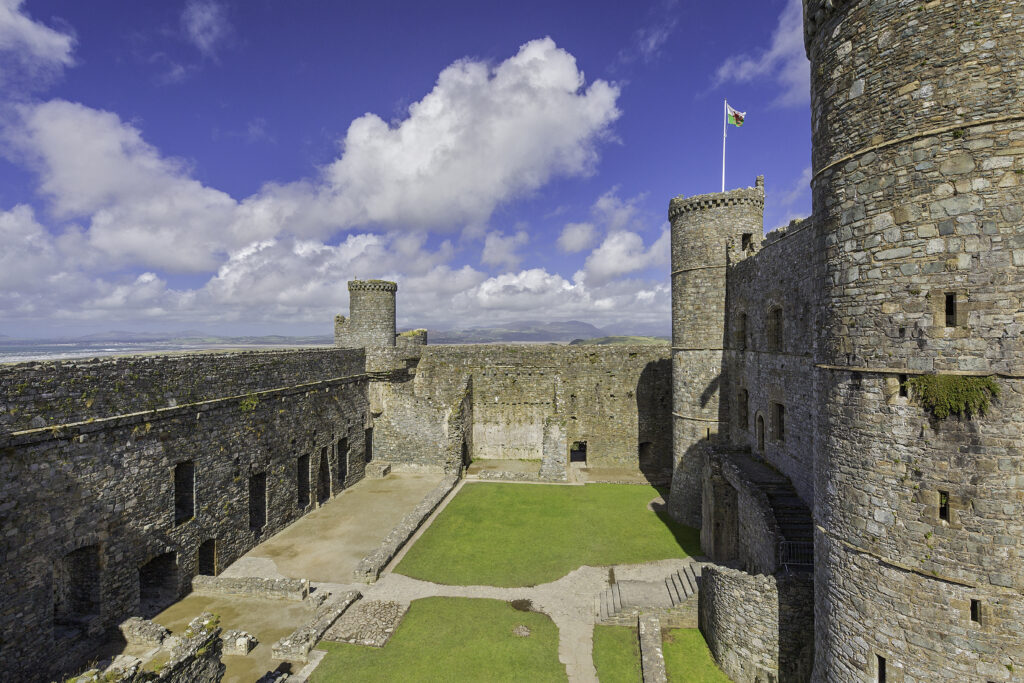
© Hawlfraint y Goron / © Crown copyright (2026) Cymru Wales.
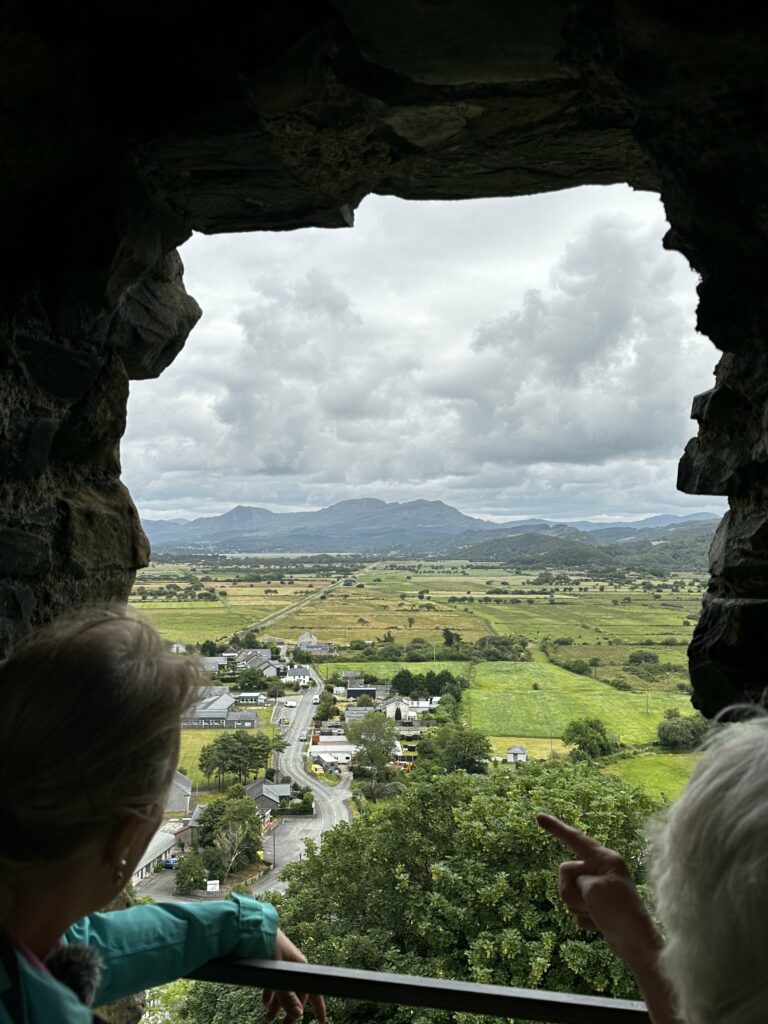
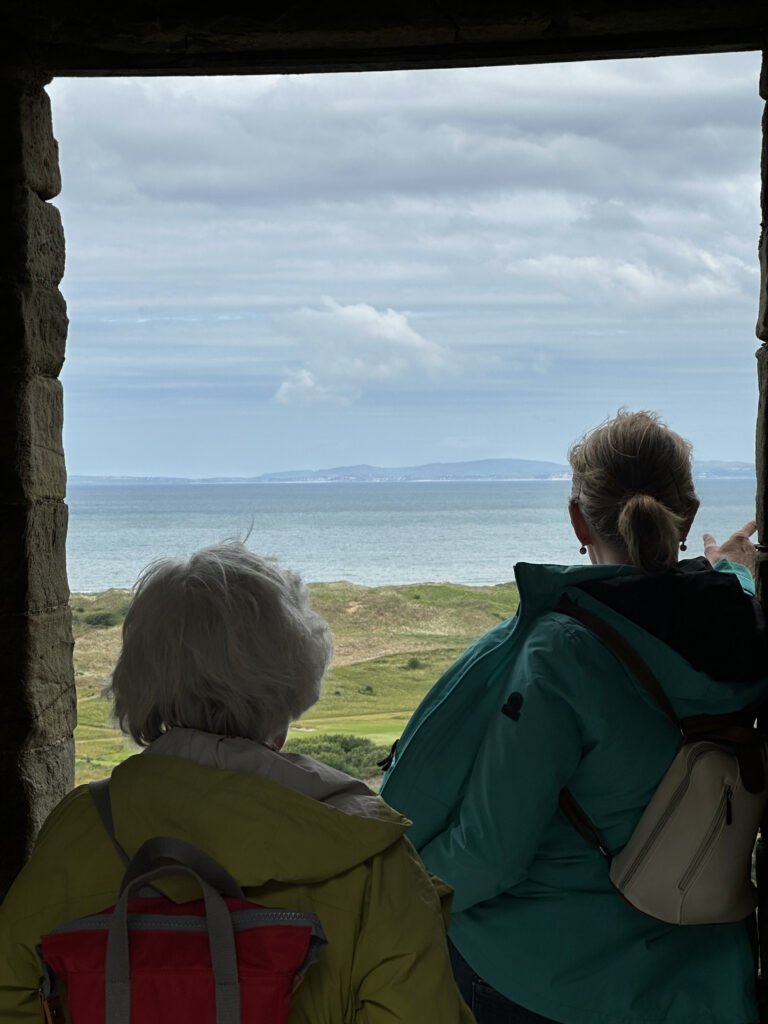
Sarah and Sian looking out towards the peaks of Snowdonia (left) and towards the coast (right).
Images © The Tudor Travel Guide.
Useful Links
Visiting information for Harlech Castle is here.
If you’re looking to explore some other historical places nearby, you may be interested in the following:
- Criccieth Castle (18 miles)
- Caernarfon Castle (29 miles)
- Dolwyddelan Castle (30 miles)
- Ty Mawr Wybrnant (around 35 miles). A wonderfully atmospheric 16th-century farmhouse and the birthplace of William Morgan, who produced the first complete translation of the Bible into Welsh, published in 1588. It’s a genuine Tudor-period domestic building and a particularly interesting stop for anyone exploring Welsh history and culture.
NOTE: Special thanks to Cadw for images of Harlech Castle from the Welsh Government Digital Media Library. As specified in the captions of these images, these are Crown Copyright and the property of the Welsh Government or the property of its licensors and/or its content providers. The moral rights of all authors of the works represented in this WG DML have been asserted.