
Chirk Castle: Exploring Seven Centuries of History
Note: This is a show notes page accompanying my on-location podcast, recorded in spring 2026.
In this episode of The Tudor History & Travel Show, I head to Chirk Castle in Wales.
Chirk Castle has been continuously inhabited for more than 700 years. It stands on a hill overlooking the Ceiriog Valley, above the meeting point of the Rivers Dee and Ceiriog near the English border in north-east Wales. Built between 1295 and 1310 on the orders of James of Saint George for Edward I, Chirk formed part of Edward’s chain of castles designed to secure his conquest of Wales. Together with nearby Caernarfon Castle, Conwy Castle, and Harlech Castle, it helped establish English control over the region.
Chirk has remained remarkably intact. Its impressive curtain walls, massive towers, medieval gatehouse, and unique defensive features survive alongside elegant state rooms and award-winning gardens, reflecting centuries of adaptation from fortress to family home. Today, its impressive architecture, historic interiors, extensive collections, and beautifully maintained gardens reflect a remarkable story of changing fortunes, from medieval nobles and prosperous merchants to the dedicated conservation work that preserves the castle for future generations.
Tudor Chirk Castle
The main Tudor story associated with Chirk Castle begins in the late sixteenth century. In 1595, the estate was purchased by Thomas Myddelton, a wealthy London merchant and government official who had made his fortune through trade and royal service during the reign of Elizabeth I. His purchase marked the beginning of more than 400 years of ownership by the Myddelton family.
Although the castle itself dates from the medieval period, many of the features visitors associate with Chirk today reflect Tudor tastes rather than medieval military architecture. Thomas Myddelton transformed the fortress into a comfortable Elizabethan country house while carefully preserving its formidable exterior. Large windows were inserted to admit more light, domestic apartments were modernised, and elegant interiors replaced many of the stark medieval living spaces.
One of the finest Tudor additions is the Long Gallery, created around 1604, shortly after the end of the Tudor dynasty. At over 150 feet (46 metres) long, it is one of the longest surviving galleries in Wales. Long galleries were a hallmark of wealthy Tudor and Elizabethan houses, providing space for exercise during bad weather, displaying portraits and tapestries, entertaining guests, and demonstrating the owner’s status.
The Tudor period also saw the development of more formal gardens at Chirk. Defensive priorities gradually gave way to displays of wealth and refinement, reflecting the broader transition from medieval castle to aristocratic residence that occurred across Britain during the sixteenth century.
In this episode of The Tudor History & Travel Show, I’m joined on location by our expert guides, Huw Sayer and Malcolm Farrar. Huw has worked at Chirk Castle for more than 15 years, shares his extensive knowledge of the castle’s history and its Tudor connections. Malcolm is in his third year as a volunteer at Chirk, and he takes us on a tour of some of the castle’s interiors, while regaling us with the story of Thomas Myddelton, the entrepreneurial Elizabethan gentleman whose endeavours brought so much prosperity to the castle.
Please find below a gallery of accompanying images, taken during my on-location visit. You can listen to the podcast episode here or by clicking the button below:
Listen to the podcast
Chirk Castle Image Gallery
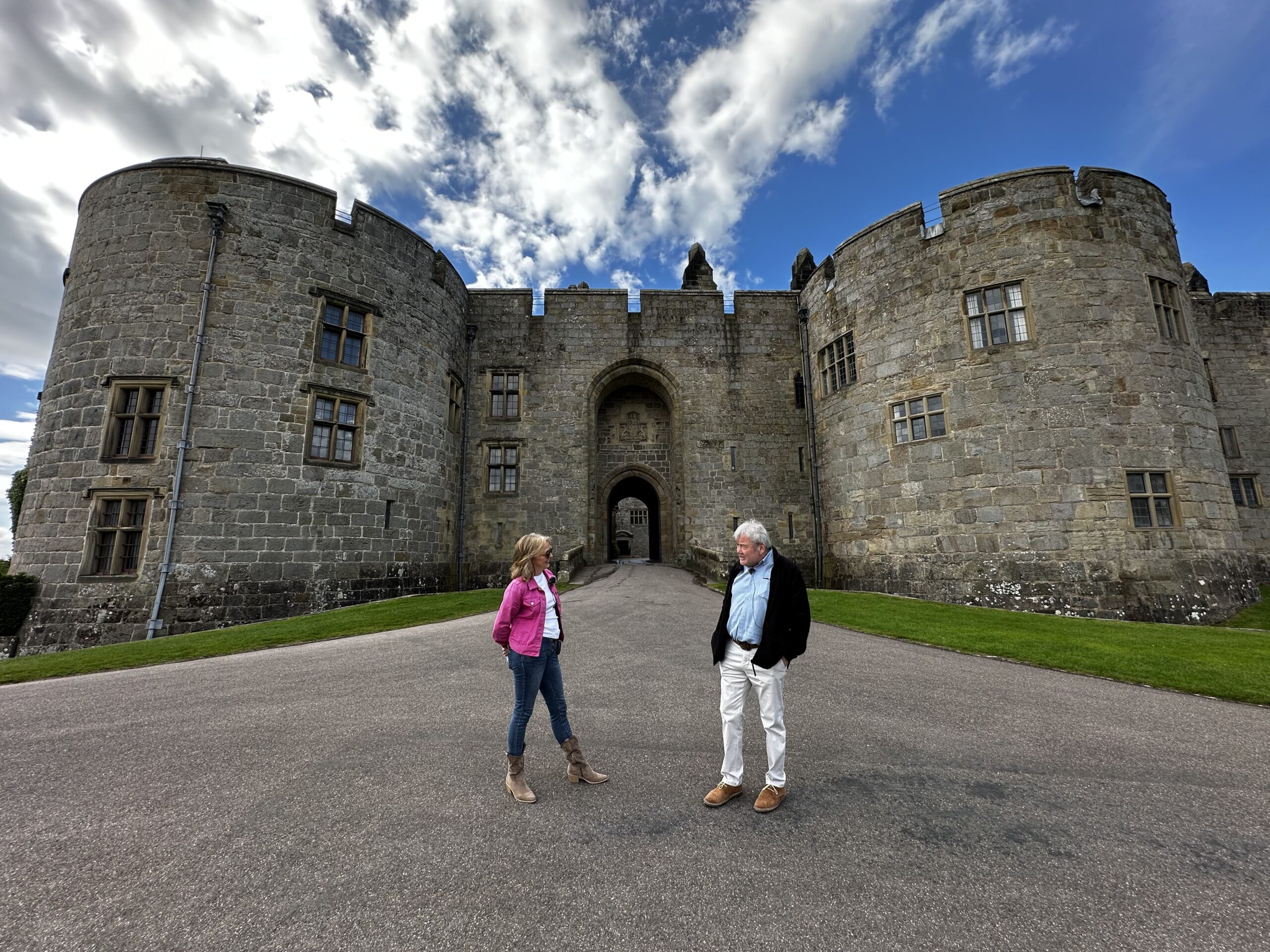
Sarah and Hugh outside Chirk Castle.
Image © The Tudor Travel Guide.
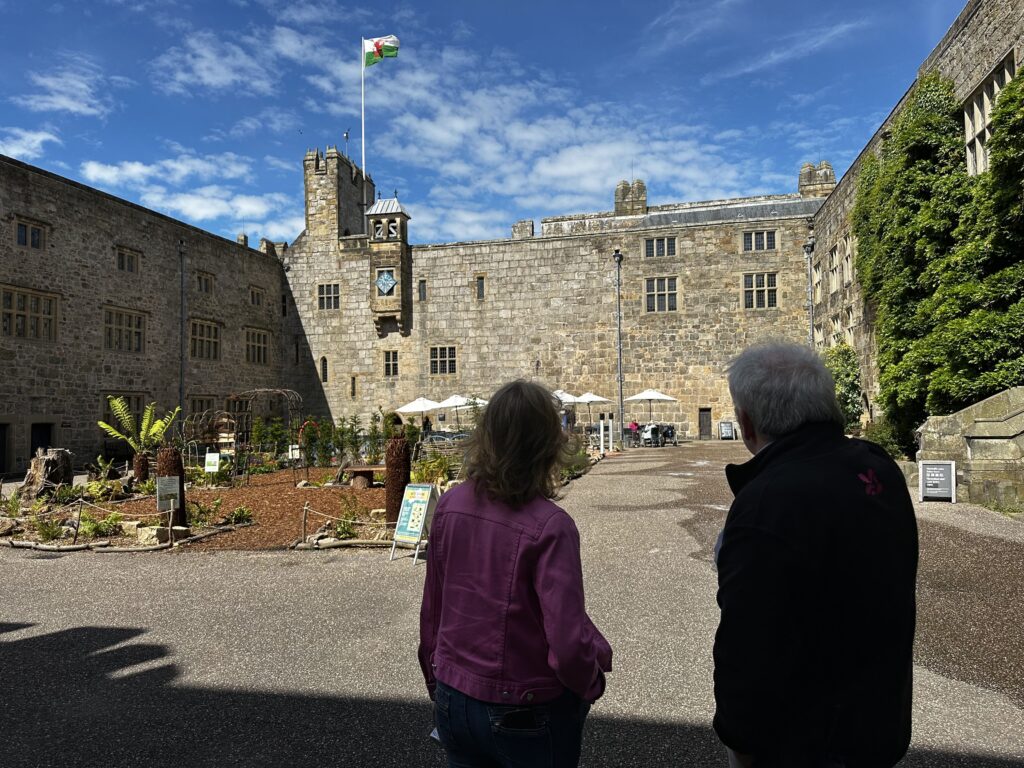
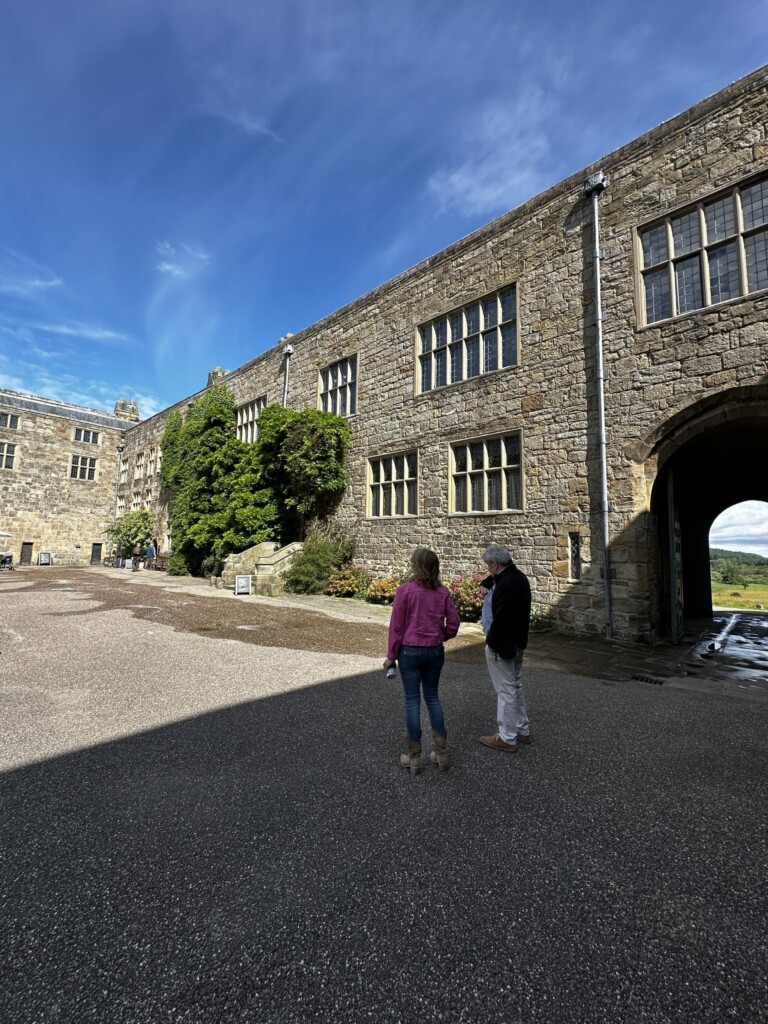
Chirk courtyard and west range.
Images © The Tudor Travel Guide.
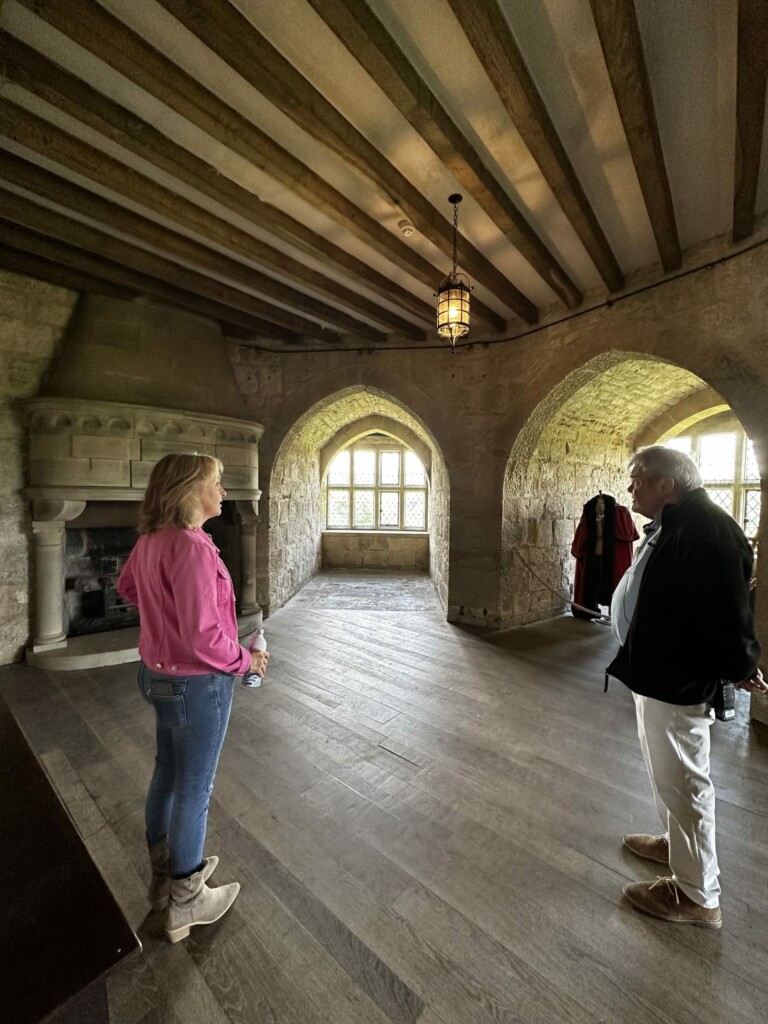
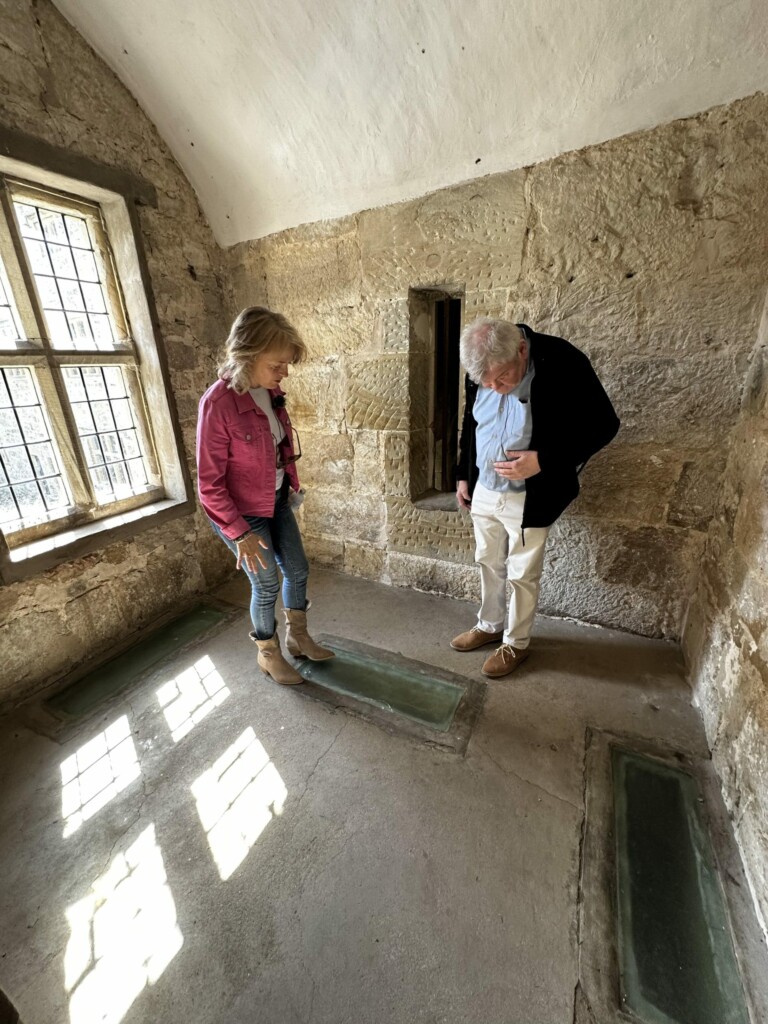
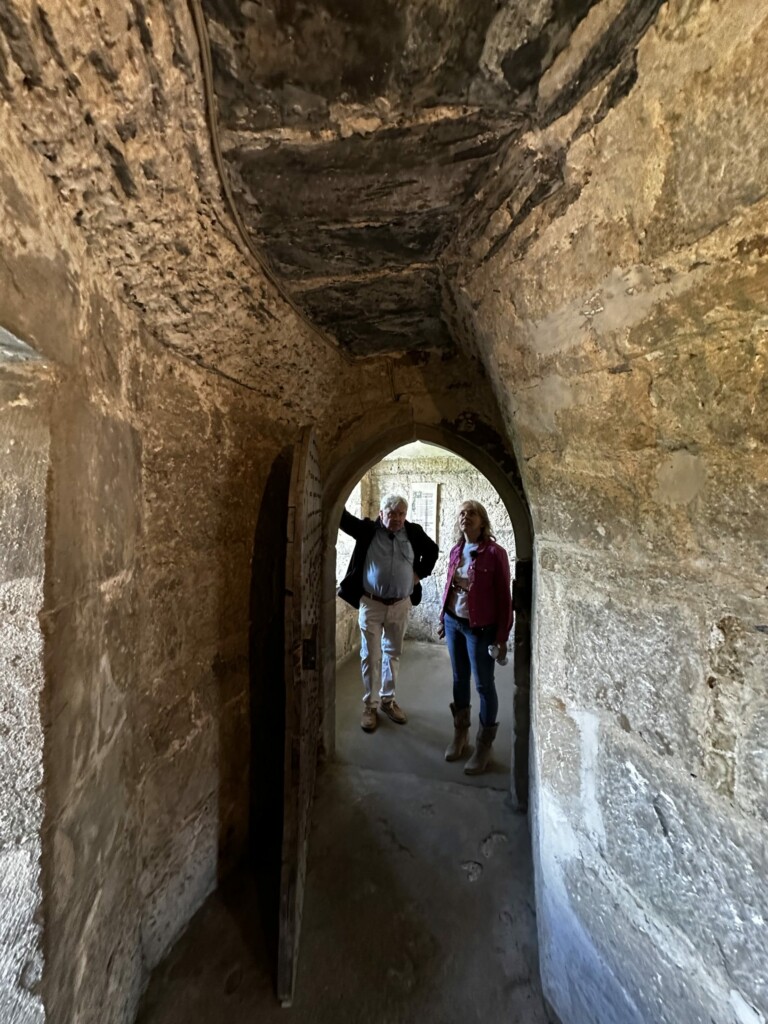
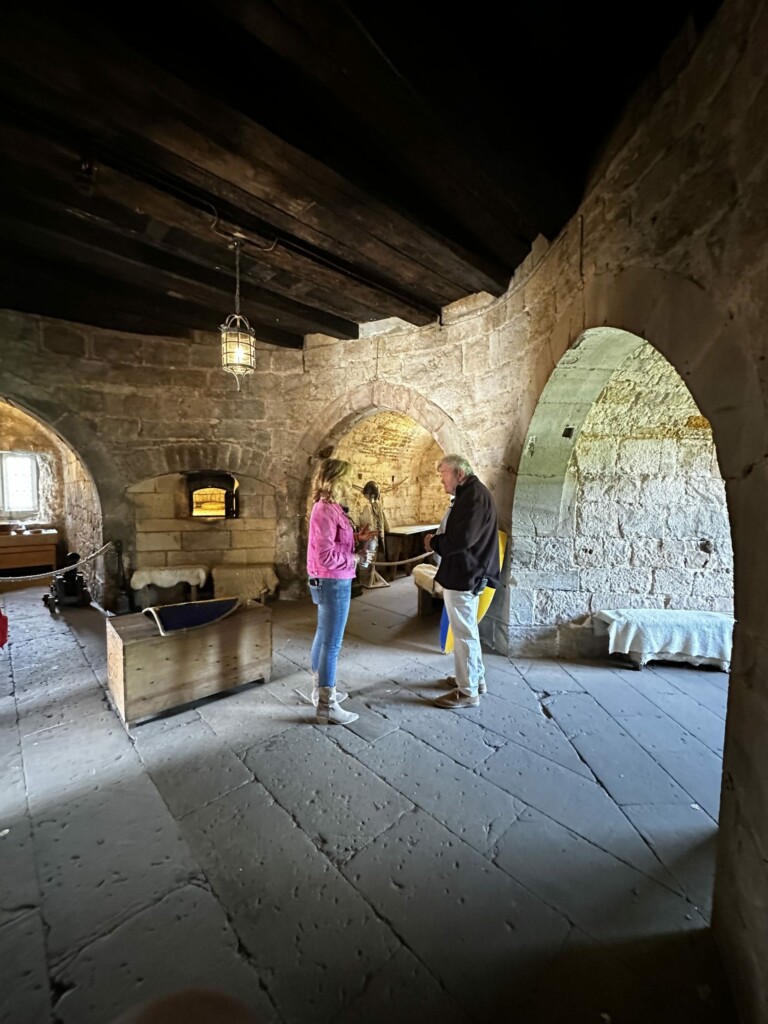
Inside the castle’s medieval tower, where corridors are hewn into mighty walls, murder holes (now covered with glass plates) can be seen in the floors, and two dungeons await those less fortunate (see images below)!
Images © The Tudor Travel Guide
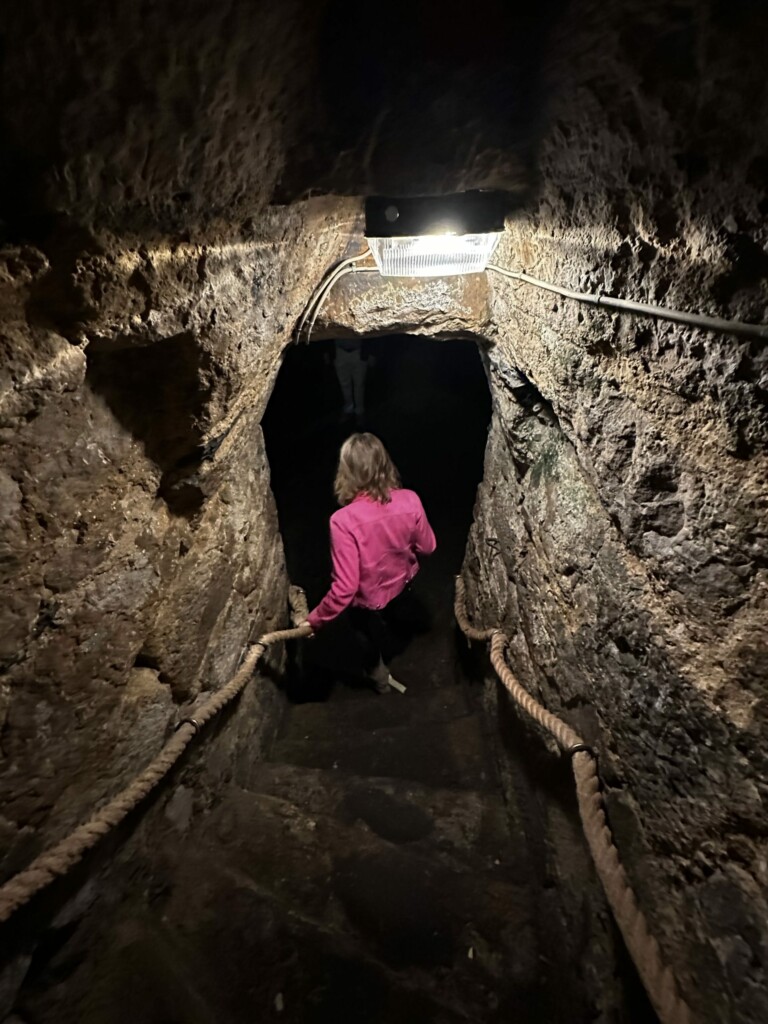
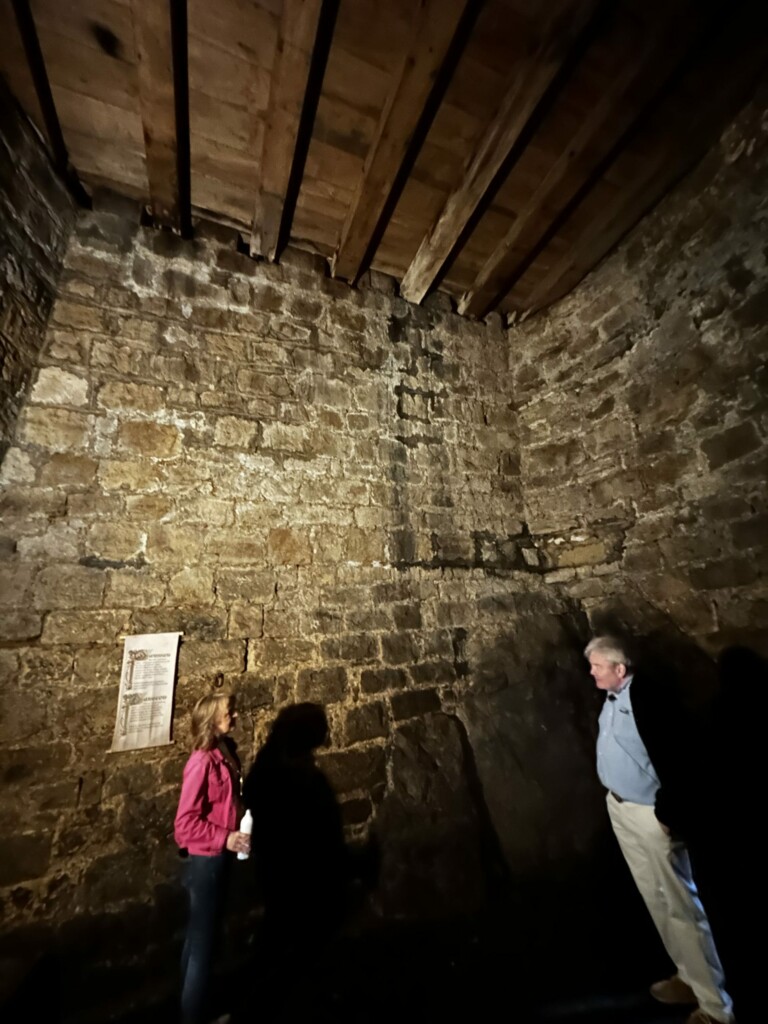
A steep spiral staircase leads down from the guard room into the
dungeons of the Adam Tower.
Images © The Tudor Travel Guide.
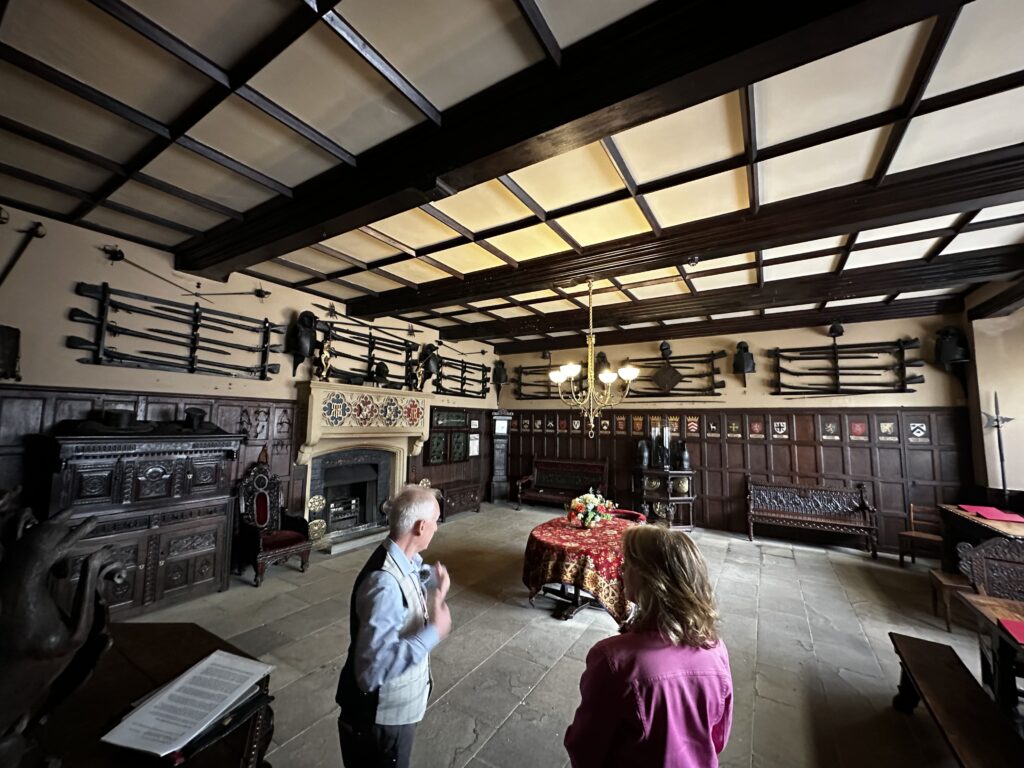
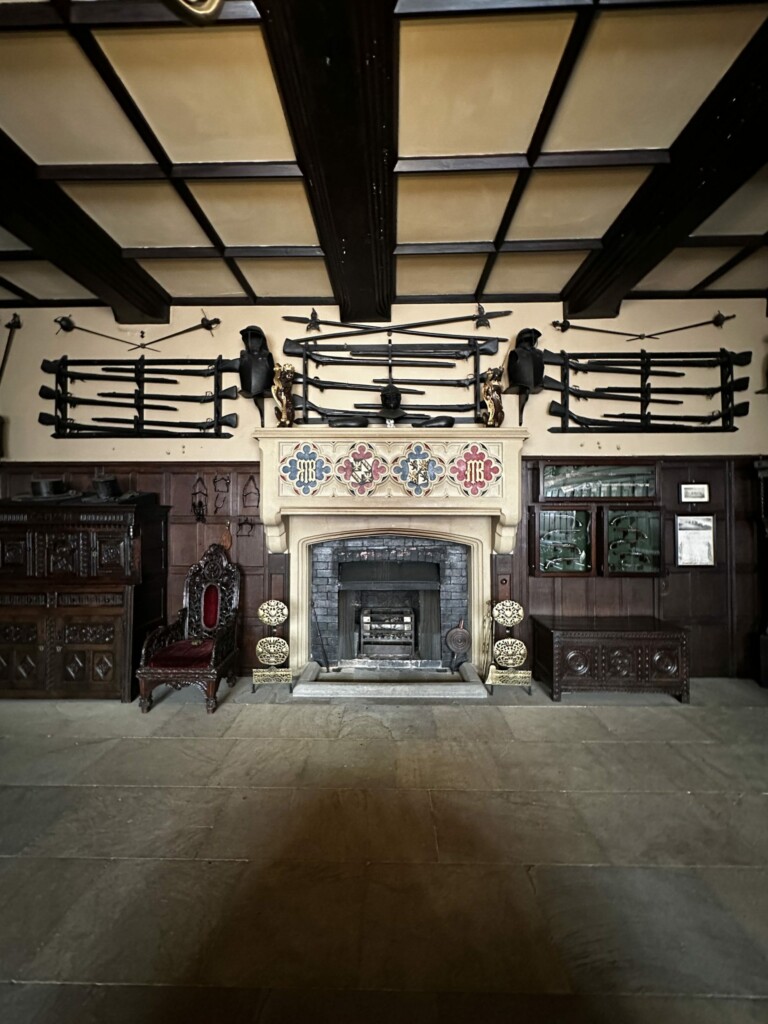
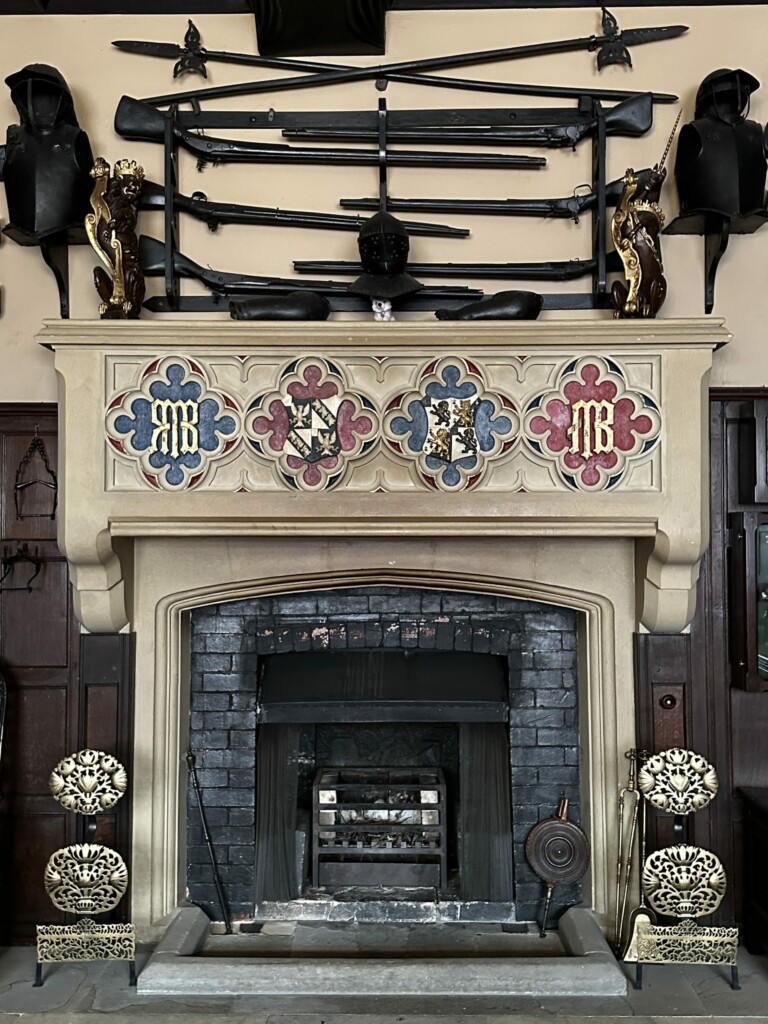
Cromwell Hall at Chirk Castle.
Images © The Tudor Travel Guide.
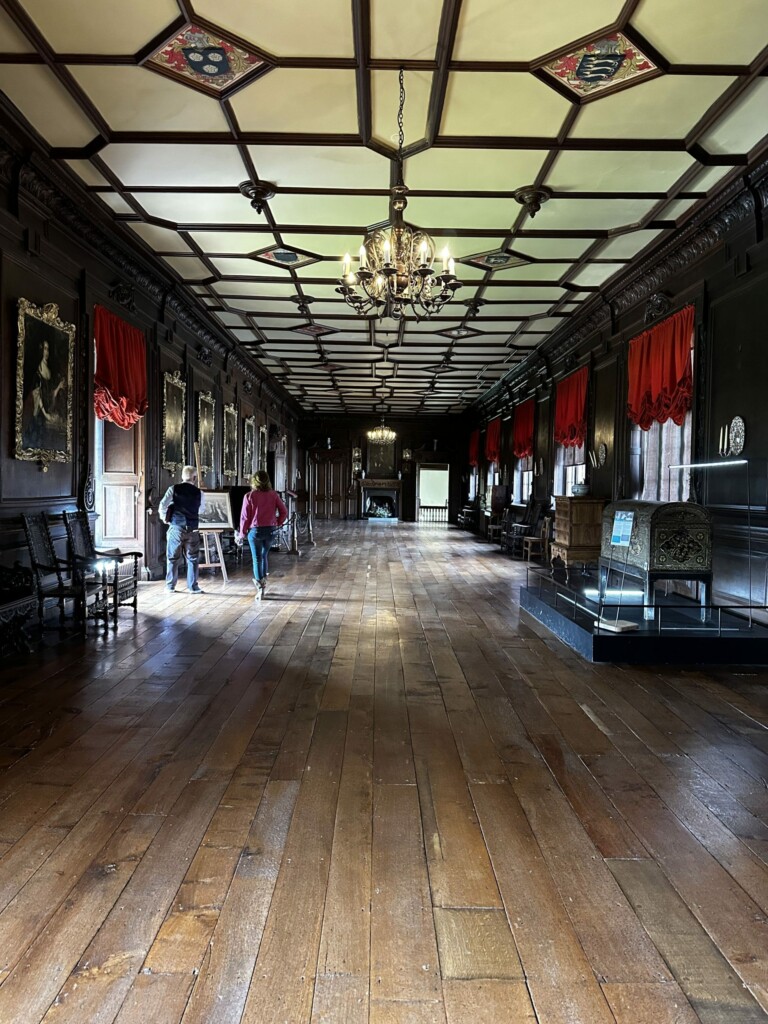
The Long Gallery at Chirk Castle.
Image © The Tudor Travel Guide.
Useful Links
Visiting information for Chirk Castle is here.
If you’re visiting Chirk, you may also enjoy:
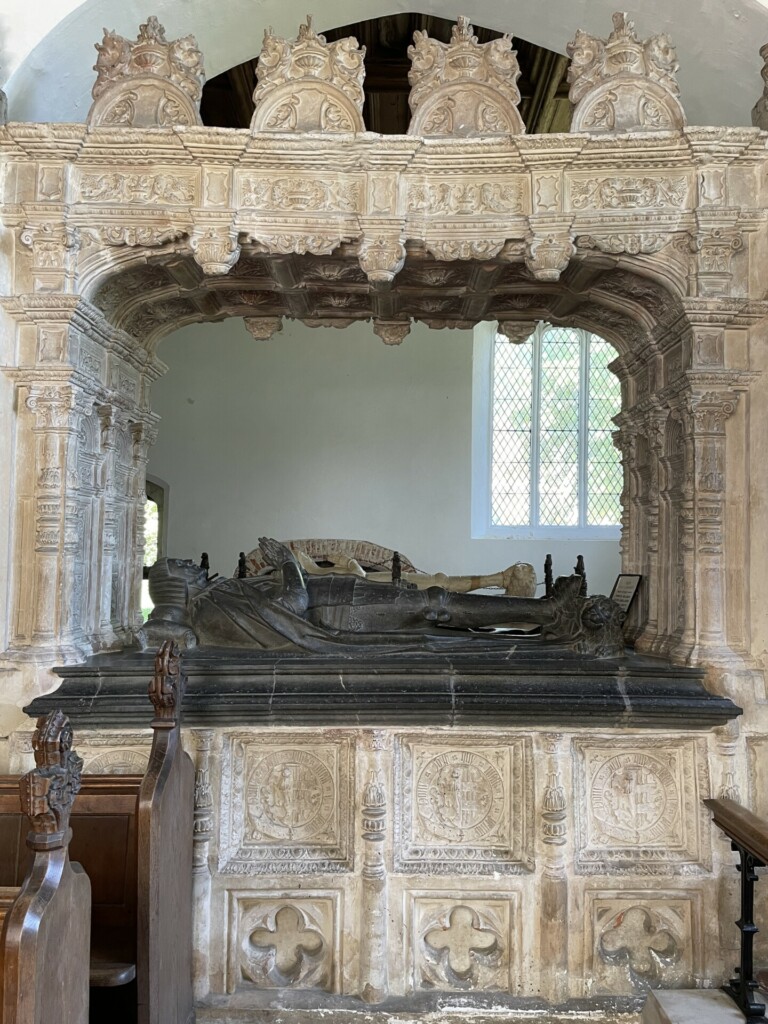
St Mary’s Church, Chirk (5 minutes) – This parish church contains features dating from the late medieval and Tudor periods and was closely associated with the Myddelton family after they acquired Chirk Castle in 1595 – it features their funerary monuments.
Nantclwyd y Dre (40 minutes) – The oldest surviving timber-framed townhouse in Wales, dating from 1435. It was remodelled during the Tudor period and provides an excellent glimpse into everyday life in sixteenth-century Wales.
Moreton Corbet Castle (45 minutes) – One of the finest Elizabethan mansion ruins in England. Built onto an earlier medieval castle, it perfectly demonstrates the Tudor shift from defensive architecture to grand Renaissance-inspired living.
If you’re in the area for a few days, my Long Weekend In The Tudor Welsh Marches includes some wonderful places to visit.
I have yet to visit Chirk Castle, it does look like a magnificent place; the photos look fantastic. The dungeons and the stairway leading down look a little spooky!
It is spooky! Gave me the chills…