The Fate of Fountains Abbey: From Majesty to Ruin
Note: This is a show notes page accompanying my on-location podcast, recorded in summer 2026.
There are few places where the story of Tudor England feels quite as tangible as Fountains Abbey in North Yorkshire. Today, its vast ruins rise dramatically from the Skell Valley, but it was once one of the wealthiest and most powerful monasteries in northern England – a thriving Cistercian community whose fortunes were forever transformed by the religious upheavals of the 1530s. Founded in 1132, Fountains Abbey survived for more than four centuries before it was dissolved by Henry VIII in 1539.
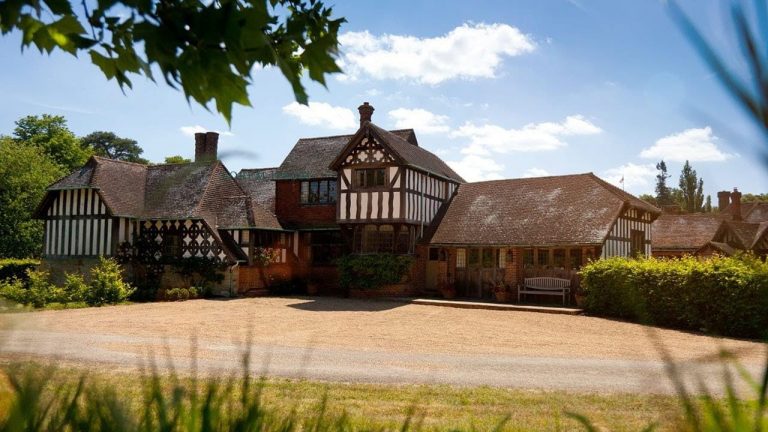
In this episode, recorded on location at Fountains Abbey, we’re stepping into that dramatic Tudor story. We’ll explore what life was like here before the Dissolution, consider the impact of Henry VIII’s break with Rome, and discover what happened to the abbey after the monks left. We’ll also uncover the fate of many of the abbeys after the Dissolution, as the upper echelons of Tudor society dismantled them to build fine Tudor manor houses. Fountains Hall, located a stone’s throw from the ruined abbey, is a fine example of such a building, and we will hear the story of its irascible and unpopular Tudor owner!
Fountains Abbey felt particularly special to return to: North Yorkshire is my home county, and here I spent many hours with my parents as a child. Alongside the comforting familiarity of so many fond memories, this visit allowed me to discover things about the abbey that had hitherto remained out of sight.
A Brief History of Fountains Abbey
Fountains Abbey was founded in 1132 under the direction of Thurstan, archbishop of York, and over the next four centuries became one of the largest and wealthiest monasteries in England. Its wealth came from activities including wool production, lead mining, cattle rearing, horse breeding and quarrying, while the surviving buildings give a remarkable sense of the scale and complexity of medieval monastic life.
Its story changed dramatically during the reign of Henry VIII. Fountains was dissolved in 1539, bringing more than four centuries of monastic life to an abrupt end. The buildings were subsequently stripped of valuable materials and used as a quarry, creating the magnificent ruins we see today. In 1540, the Crown sold the abbey and its estate to Sir Richard Gresham, and later the site became associated with Fountains Hall, built around 1600 by Sir Stephen Pro, who used stone from the abbey.
What makes Fountains particularly fascinating is that its history doesn’t end with the Dissolution. Fountains Hall provides a link between the Tudor and Stuart periods, while in the eighteenth century, the abbey ruins were incorporated into the extraordinary landscape created at Studley Royal. Today, the abbey, hall, water garden and surrounding parkland form a UNESCO World Heritage Site, creating a remarkable setting for exploring almost 900 years of history.
In this episode, I’m joined by two guests: Paul Andrews and Helen Fawbert. Paul is a volunteer guide at Fountains Abbey, and he shows me around the ruins. Afterwards, Helen picks up the story of Fountains Hall. Helen is the House and Collections Manager at Fountains Abbey, and her curatorial role includes the conservation of the site’s built structures and collections.
Listen to the podcast
Fountains Abbey: Image Gallery
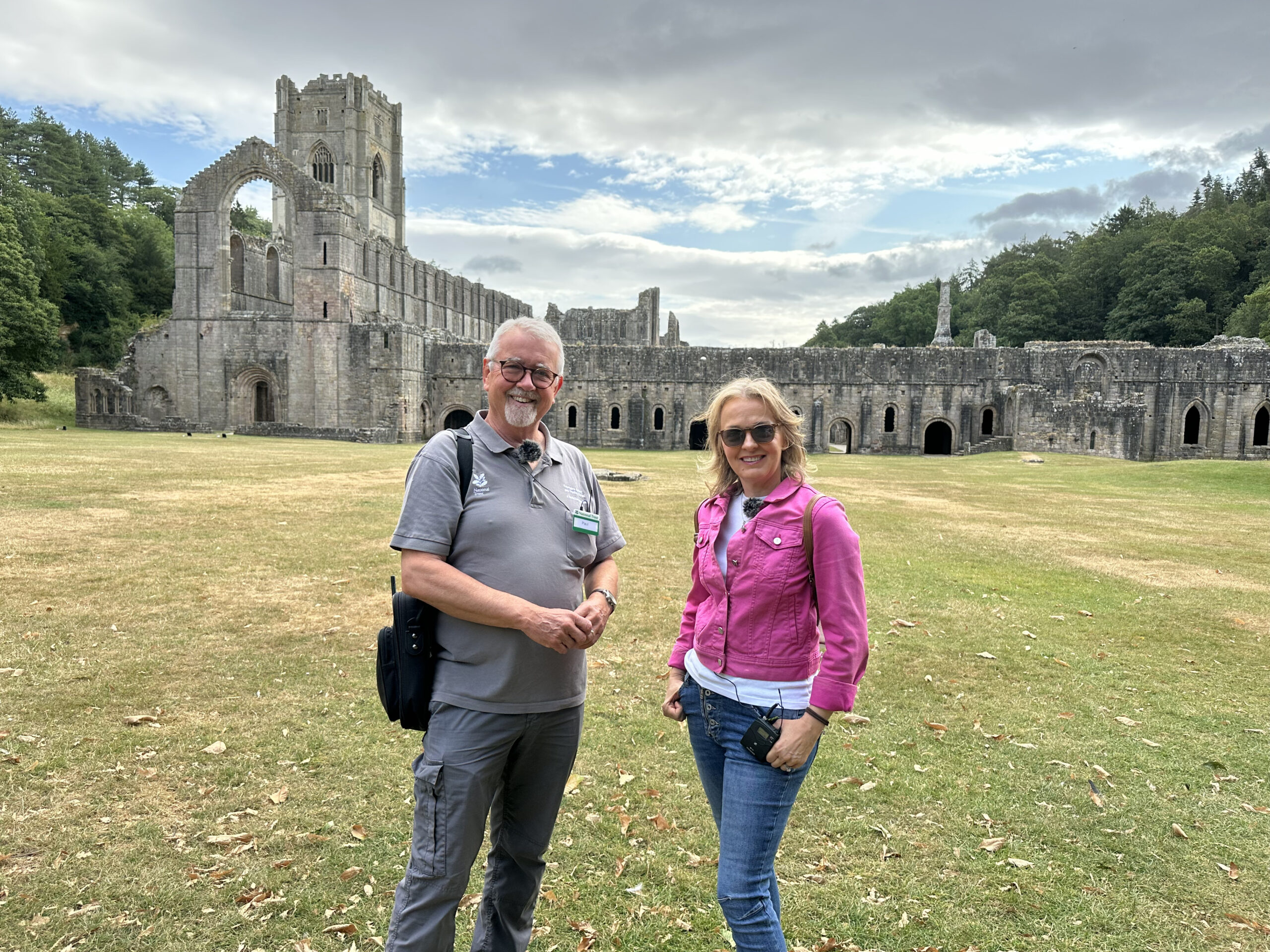
Sarah with Paul.
Image © The Tudor Travel Guide.
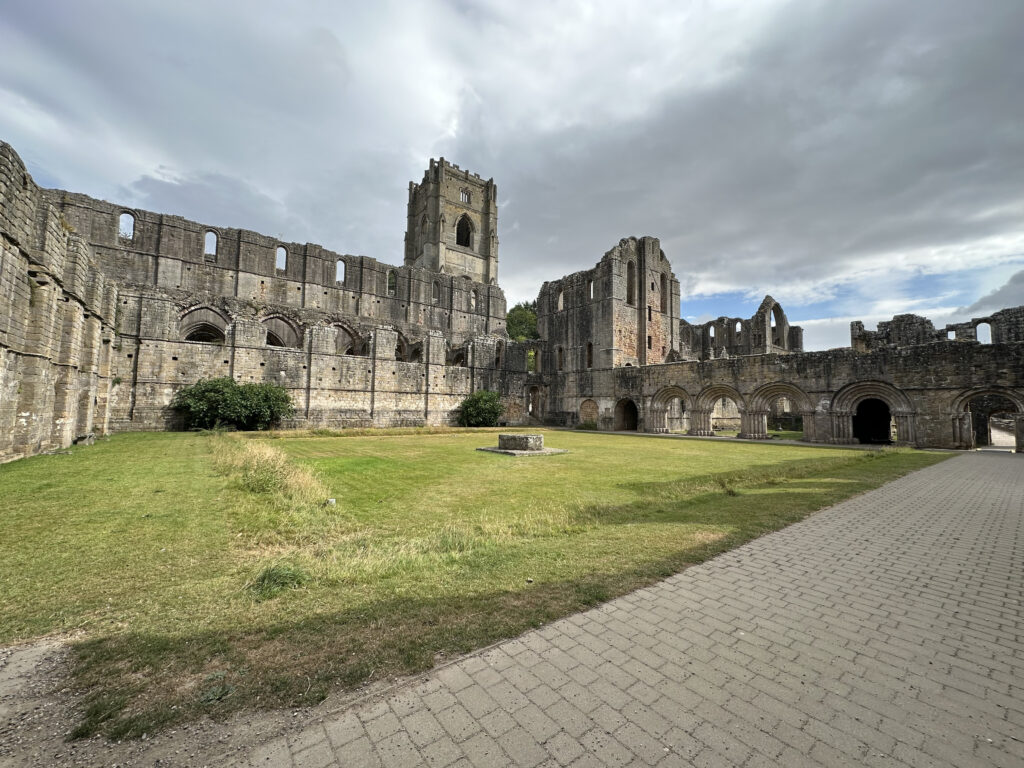
Image © The Tudor Travel Guide.
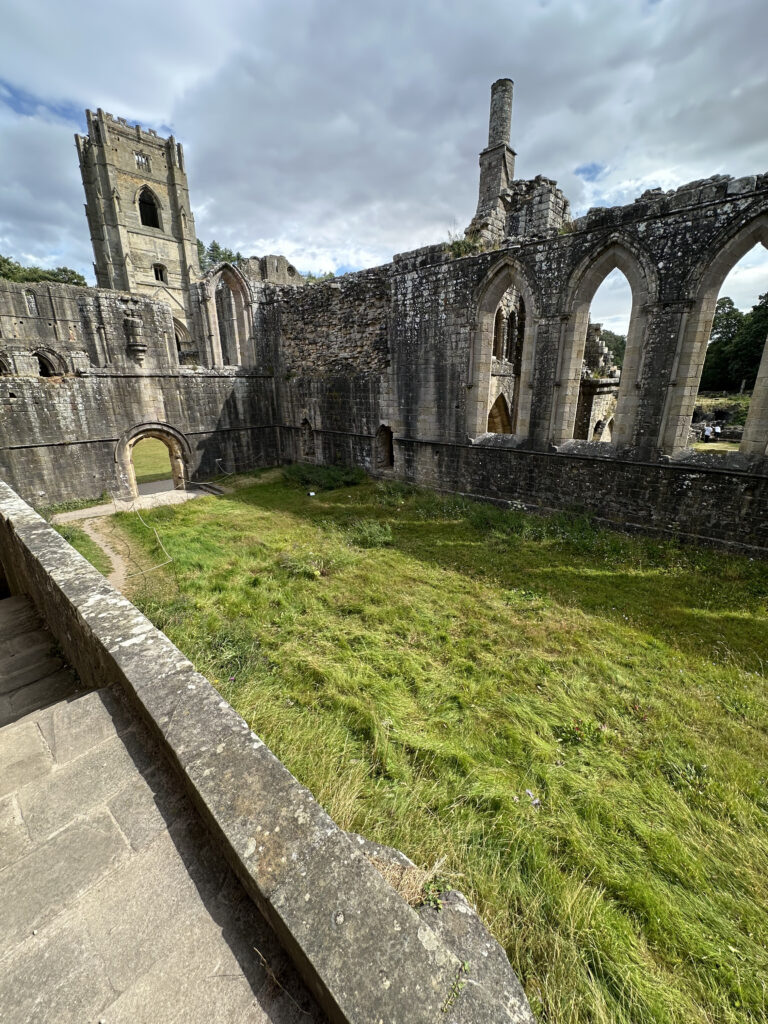
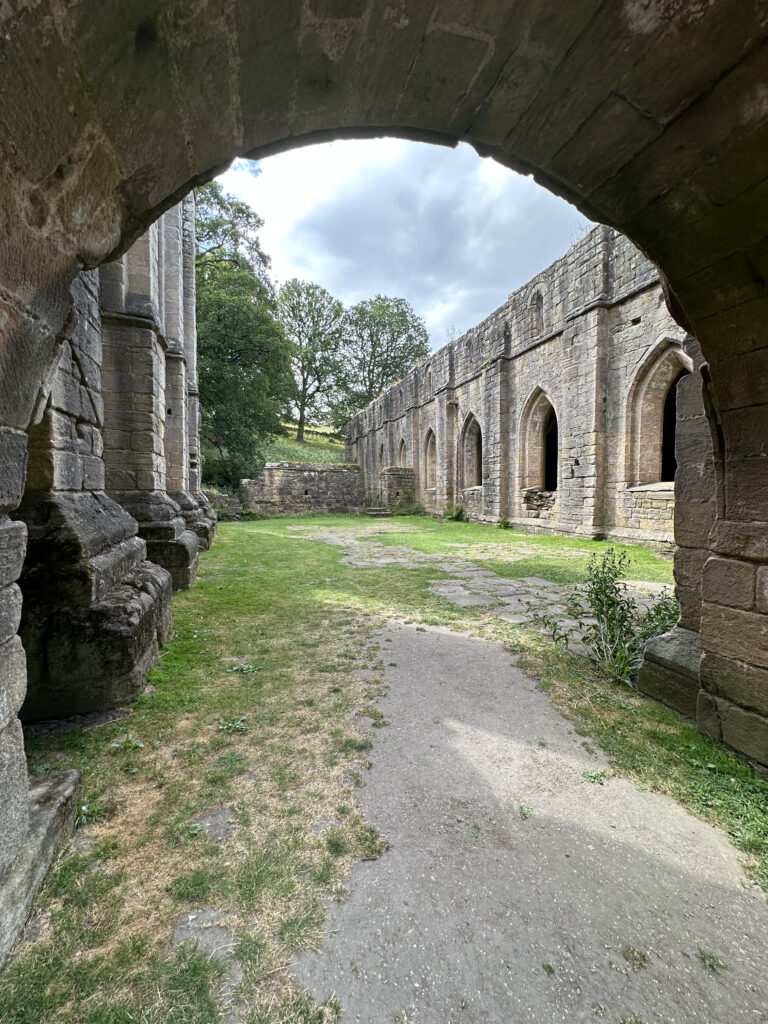
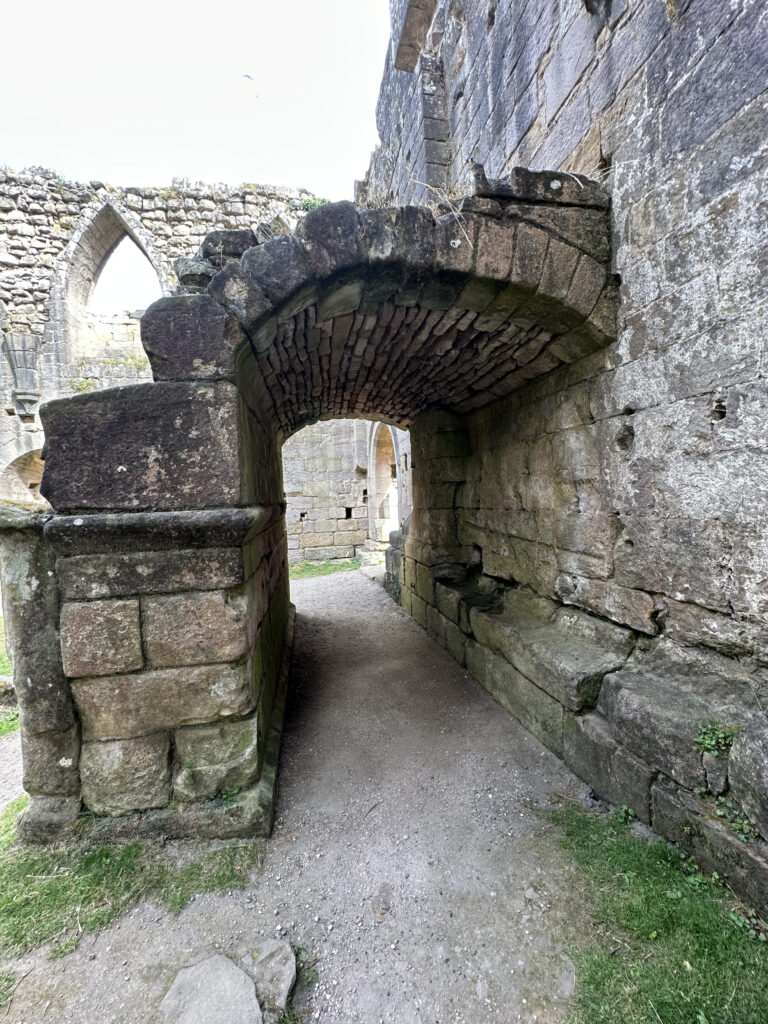
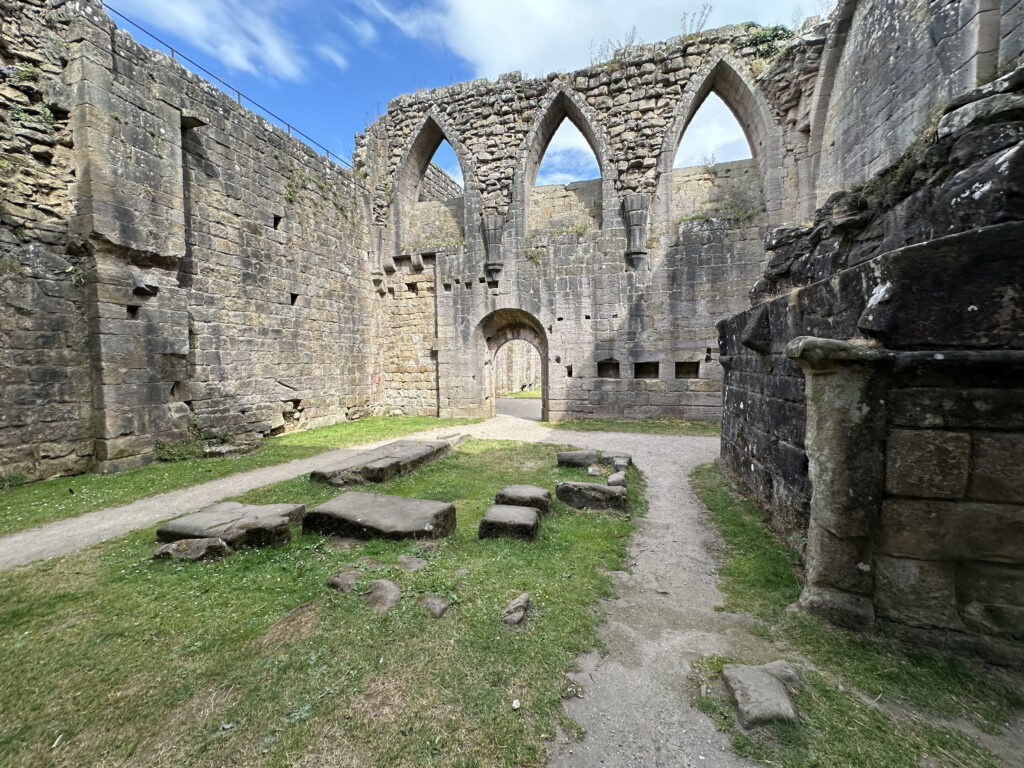
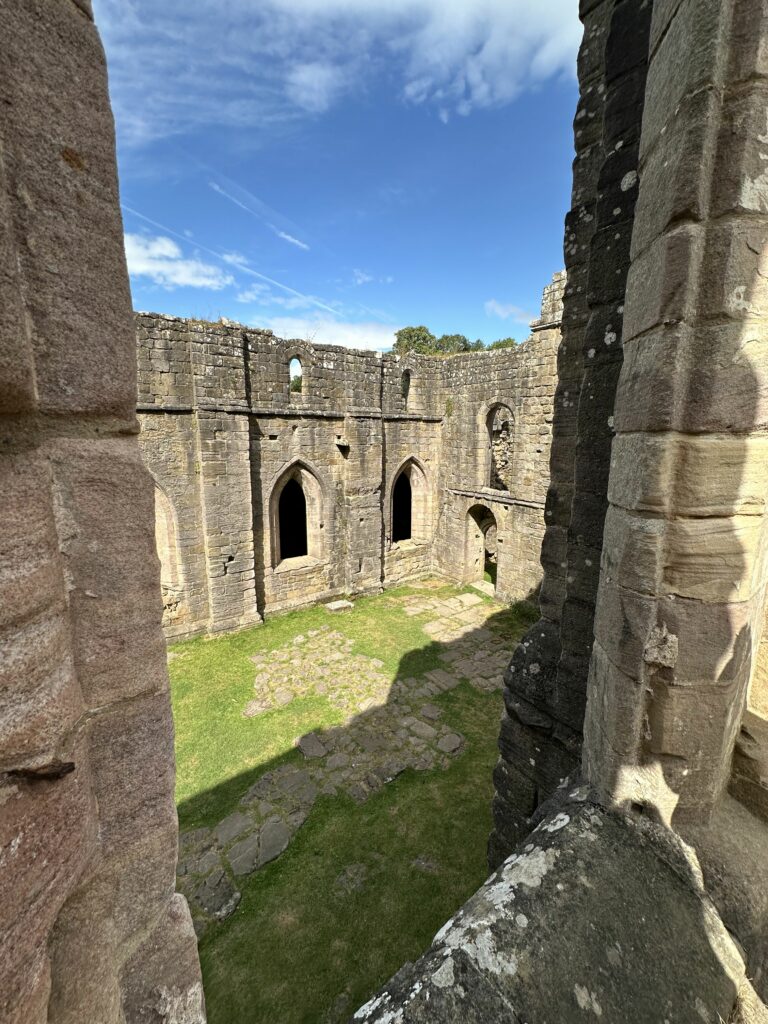
Inside the ruins of Fountains Abbey.
Images © The Tudor Travel Guide
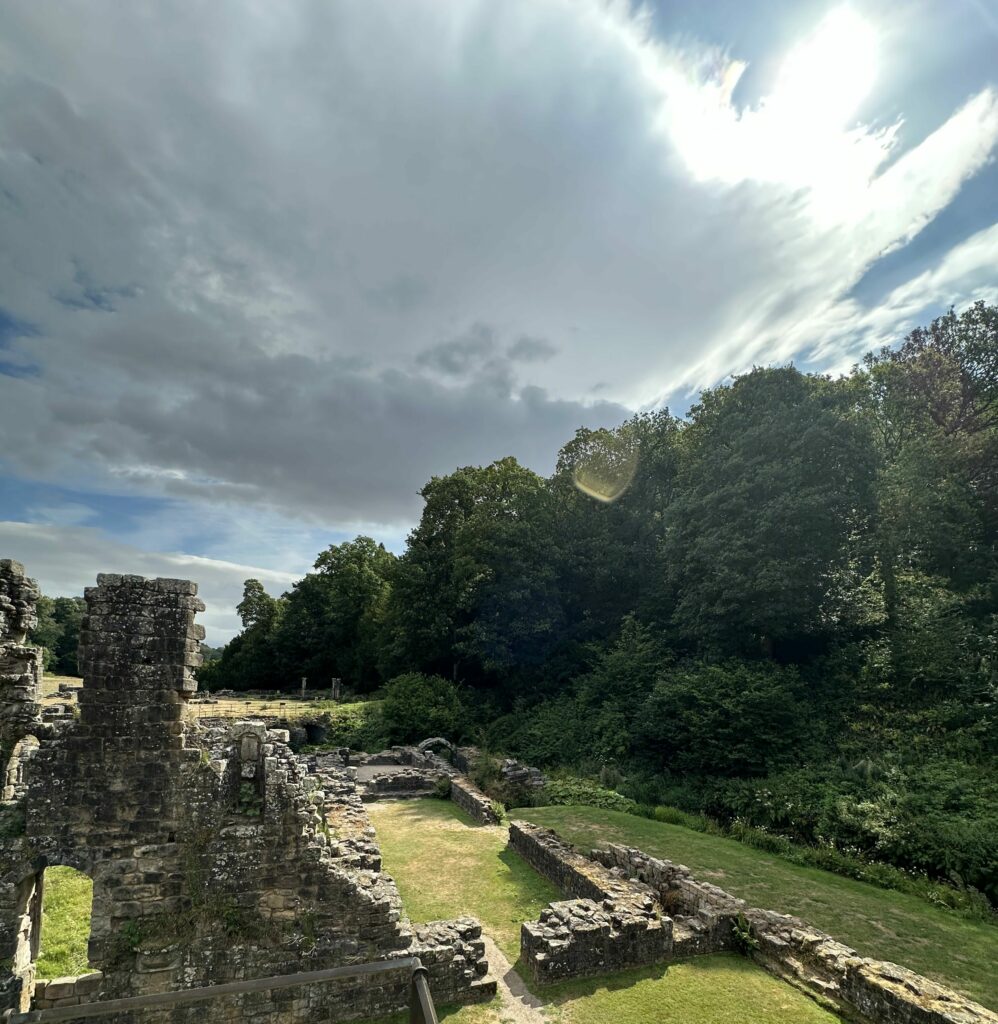
Image © The Tudor Travel Guide.
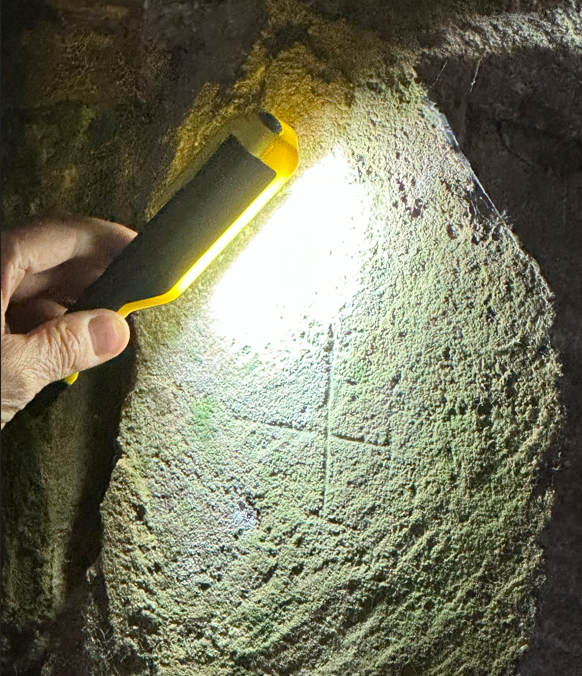
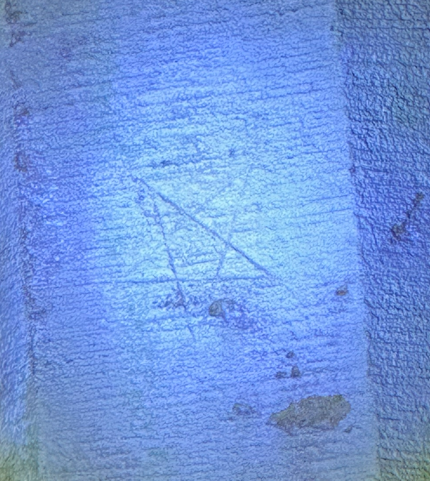
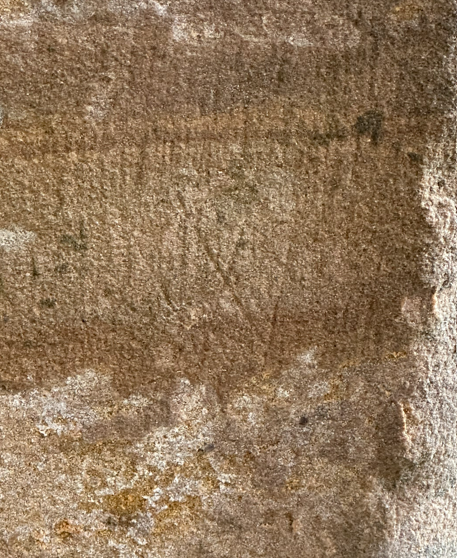
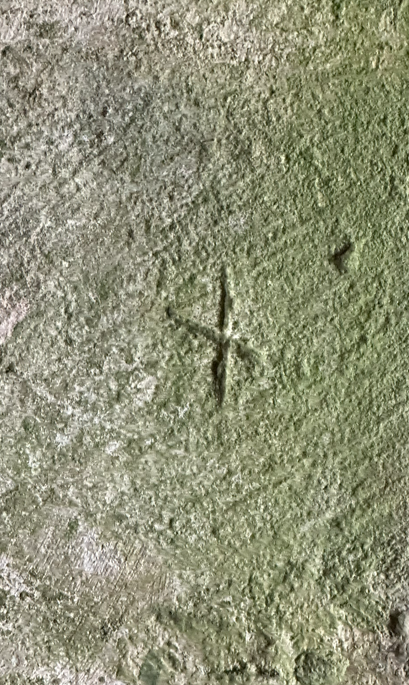
These marks are in the cellarium at Fountains Abbey – an immense, 300-foot-long vaulted medieval undercroft.
They include mason’s marks and apotropaic marks to protect against evil spirits.
Images © The Tudor Travel Guide.
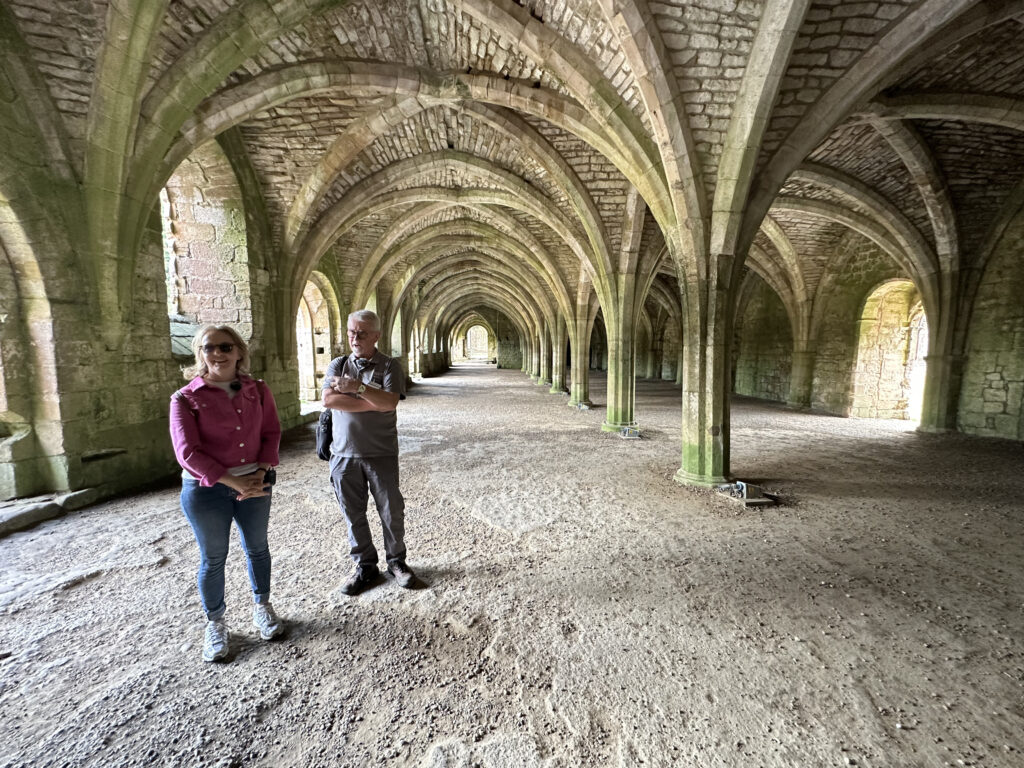
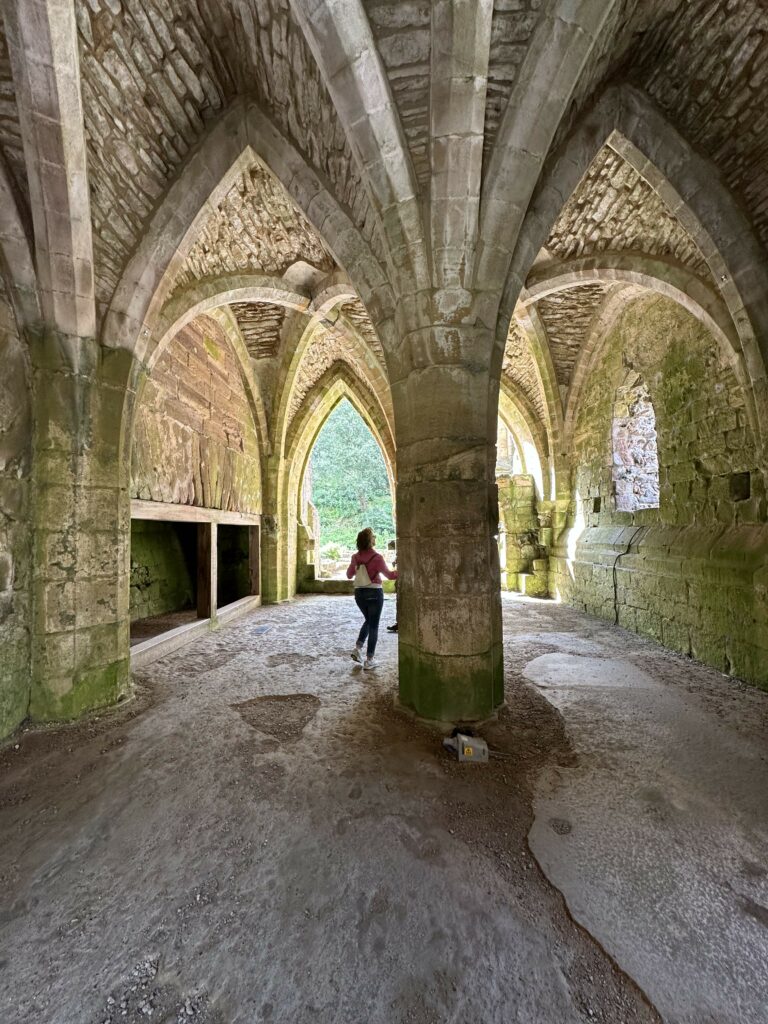
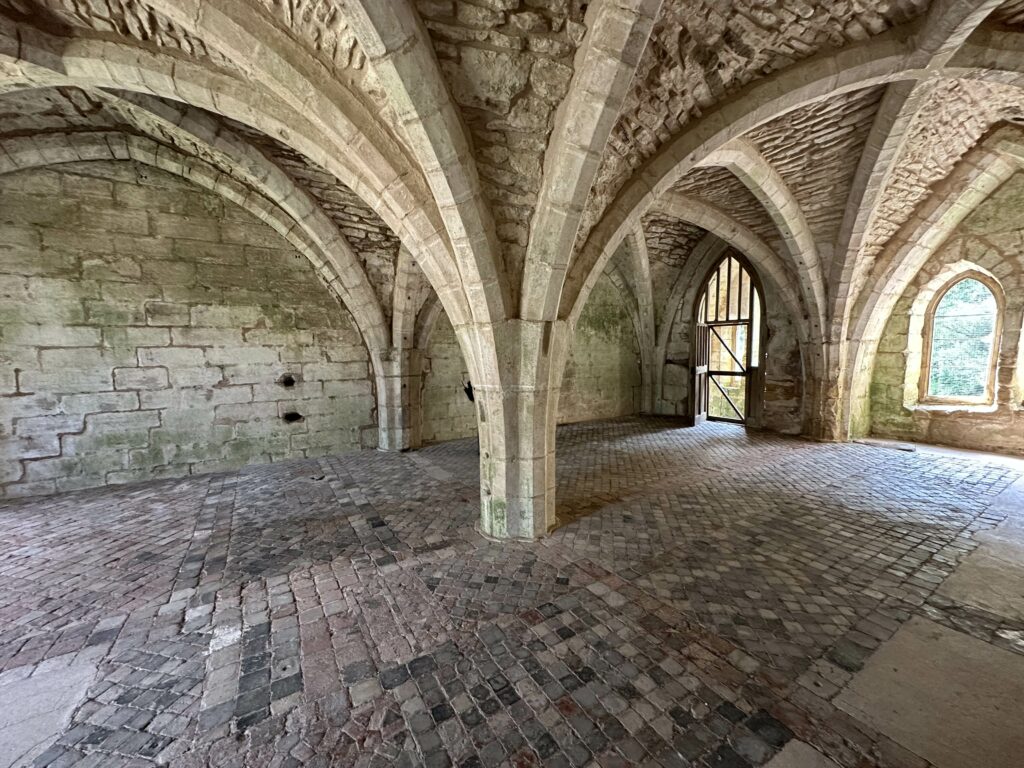
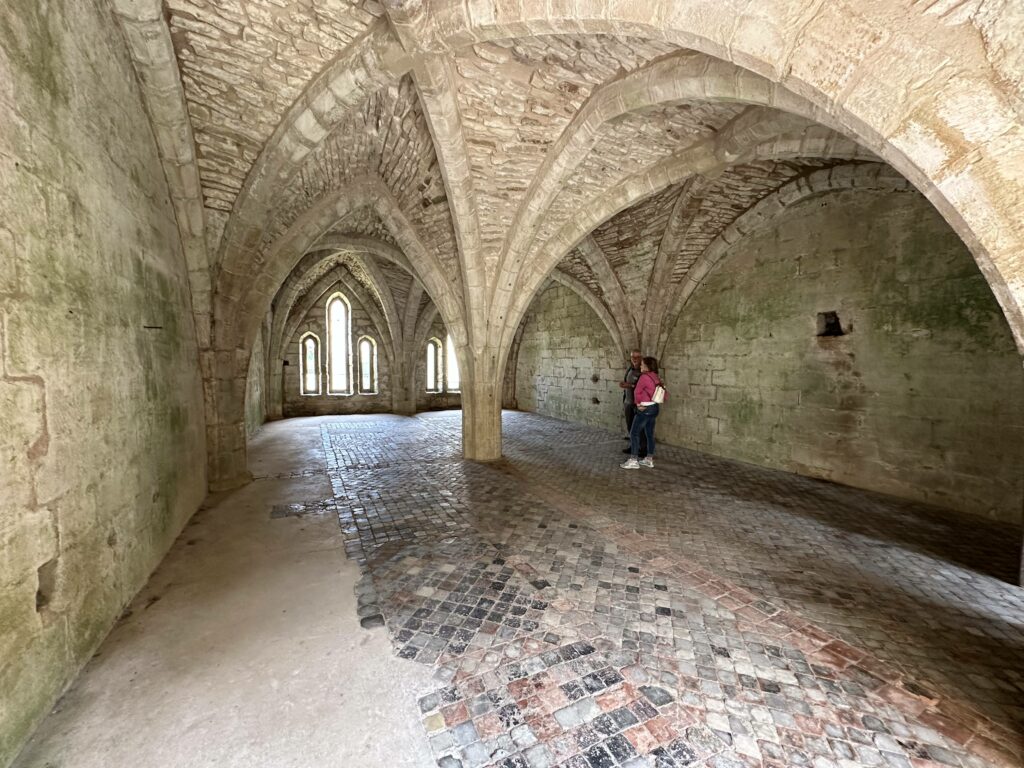
Top left: In the abbey’s cellarium. Top right: Inside the abbey’s ‘warming house’
Bottom: The muniments room at the abbey – a place for storing documents.
Images © The Tudor Travel Guide.
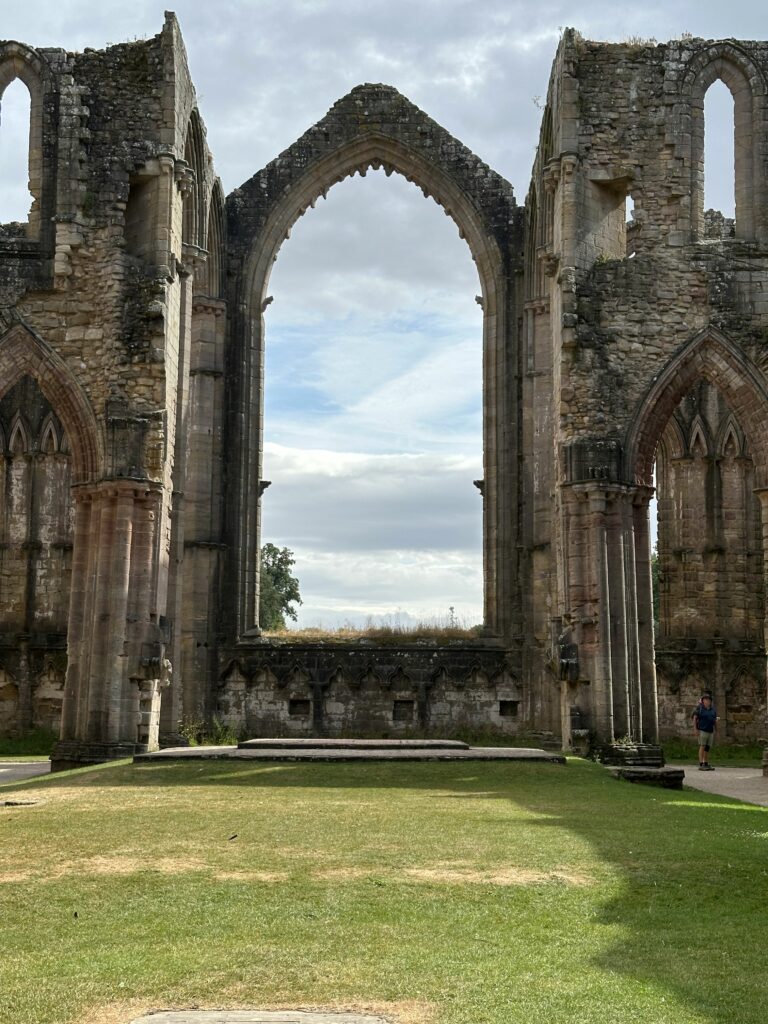
Left: The great window at the abbey’s east end (left) would have once been filled with stonework and stained glass.
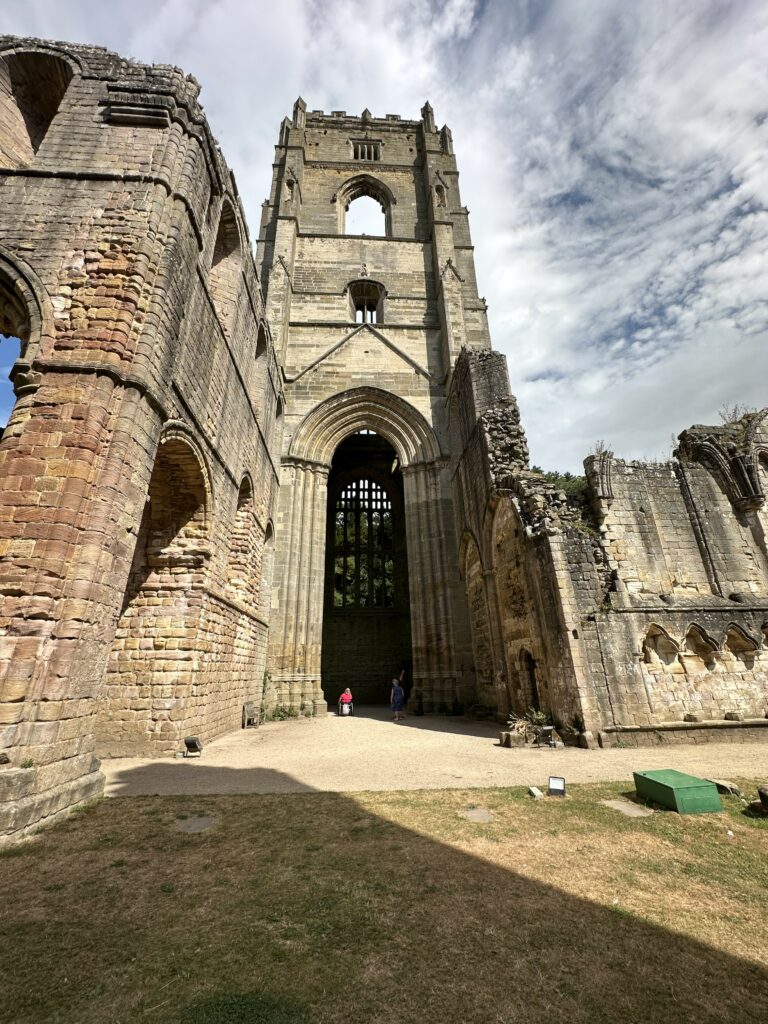
Right: Huby’s Tower, where we can see Norman architecture in the arch on the left of the picture, built with rounded arches, thick, heavy columns and small windows. The central arch displays later Gothic architecture, with taller, more pointed arches.
Images © The Tudor Travel Guide.
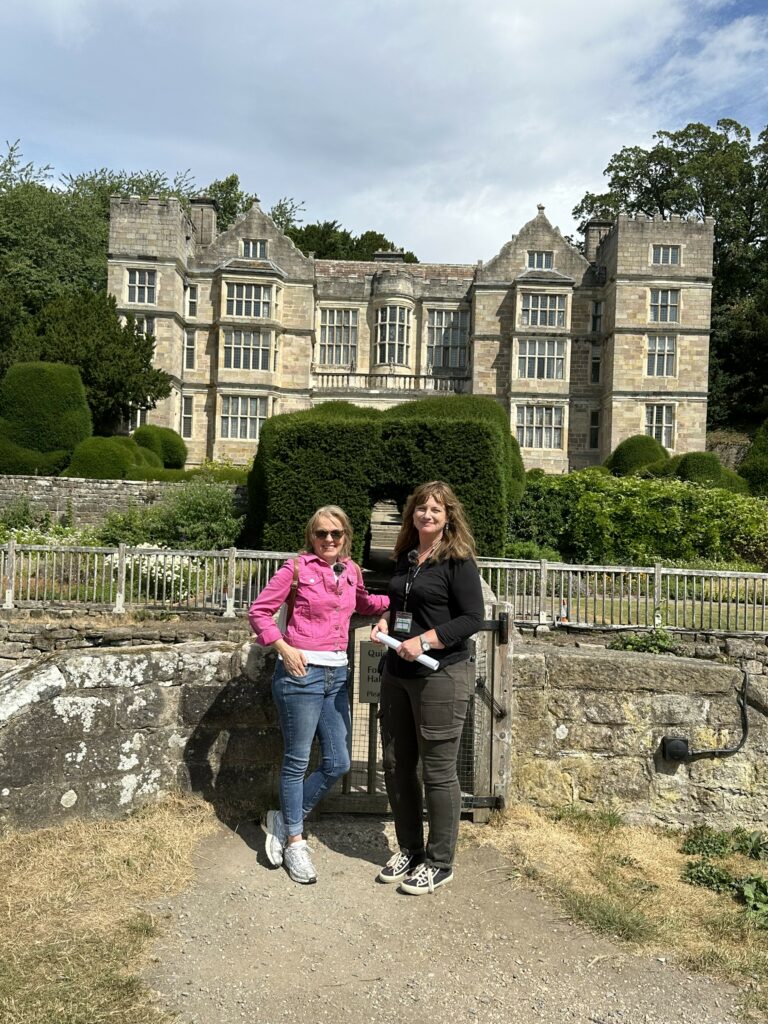
Image © The Tudor Travel Guide.
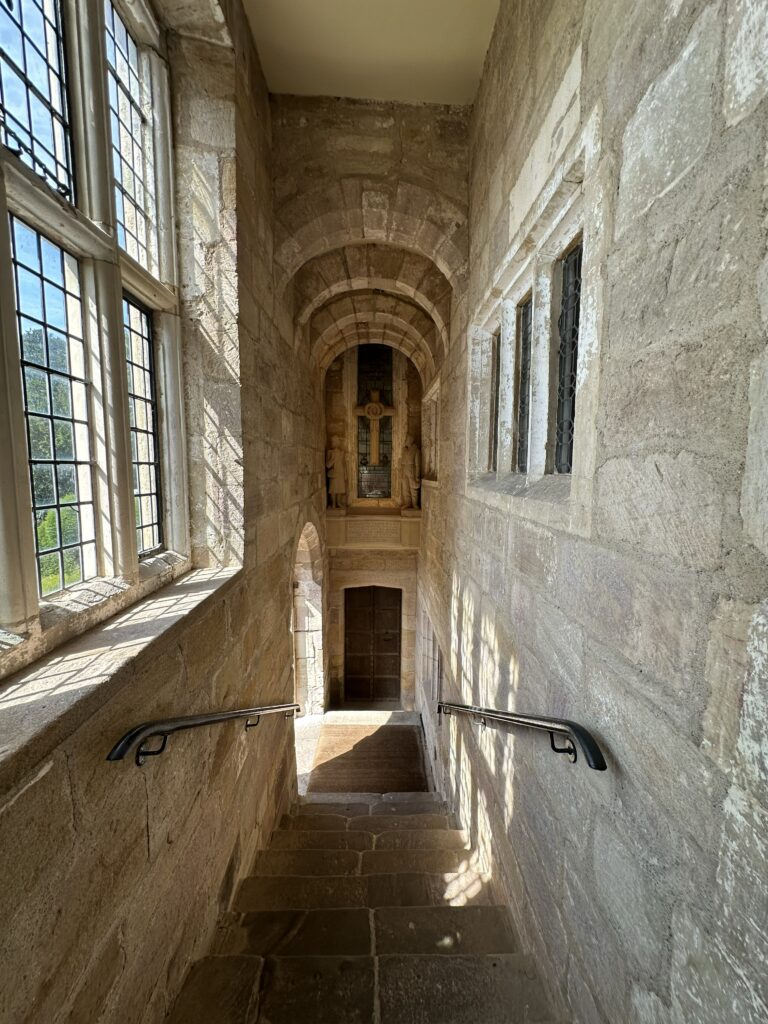
Image © The Tudor Travel Guide.
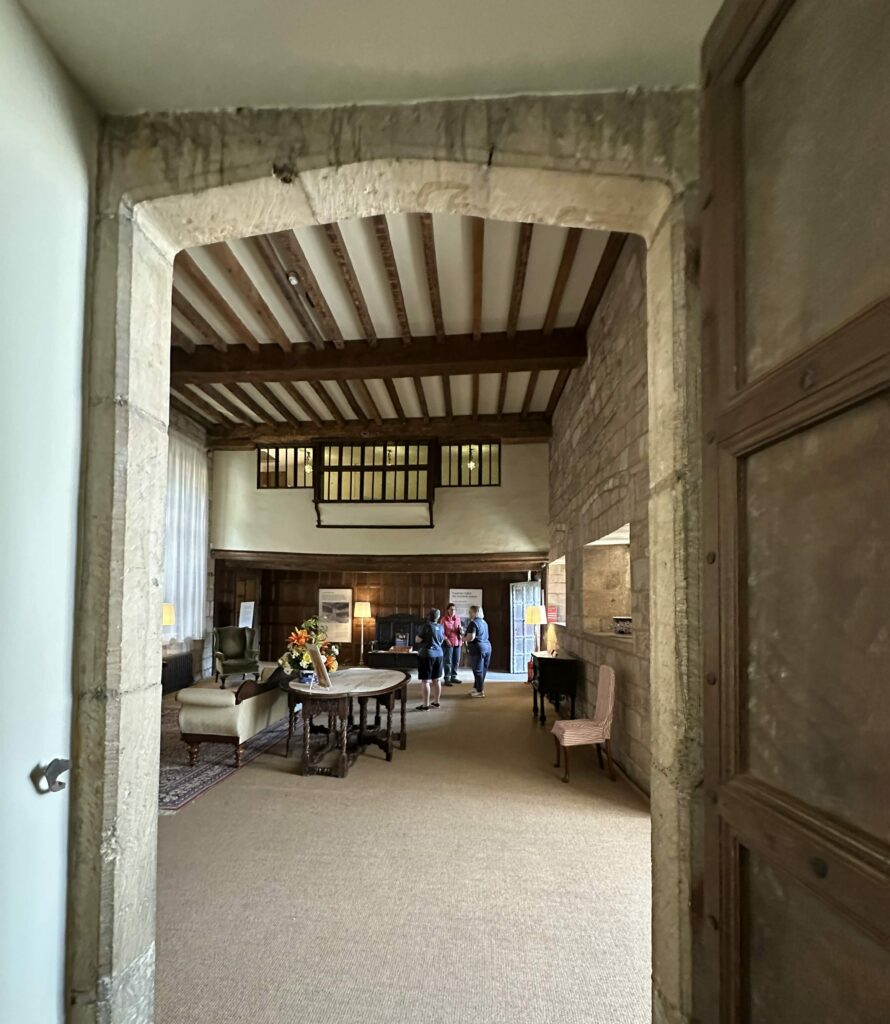
Image © The Tudor Travel Guide.
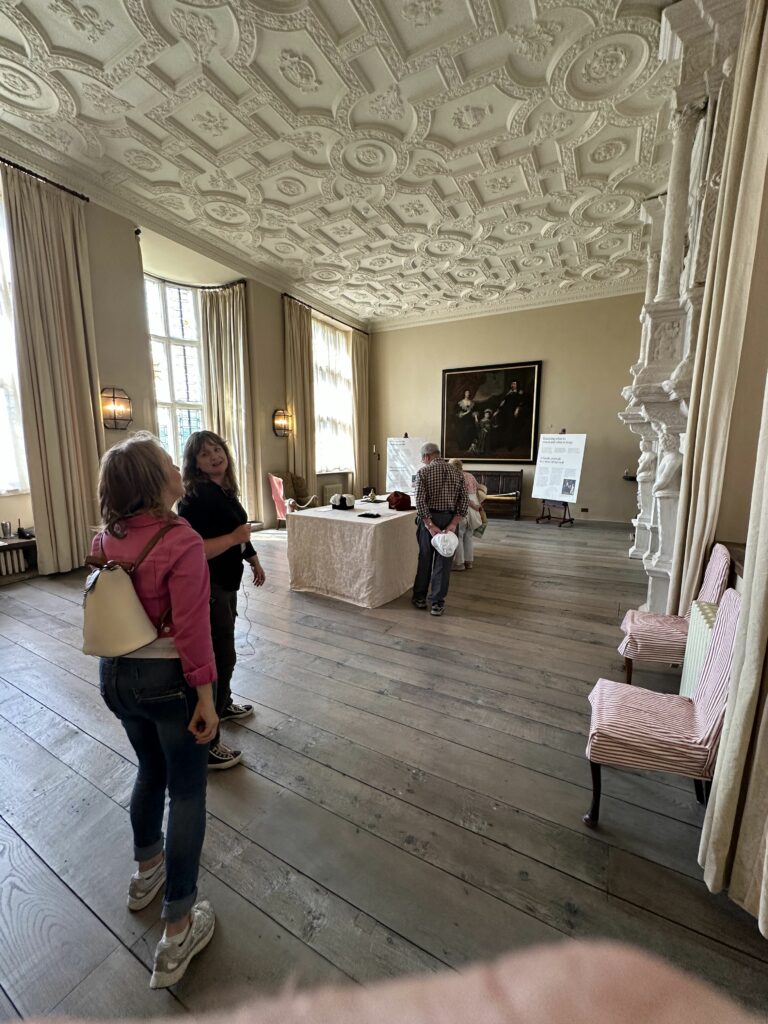
Image © The Tudor Travel Guide.
Useful Links
Visiting information for Fountains Abbey and Fountains Hall is here.
A few years ago, I recorded a video featuring Fountains Abbey – you can watch it here.
If you have time in the area, you may be interested in my 6-day itinerary for a tour of North Yorkshire here.
In this episode, we talk about mason’s marks, Marian marks and apotropaic marks, and our guide, Paul’s project documenting these marks. If you’re interested in this area, you may also enjoy the podcast episode I recorded at Hoghton Tower, where we discover some similar marks. You can listen to the episode and see a gallery of accompanying images here.