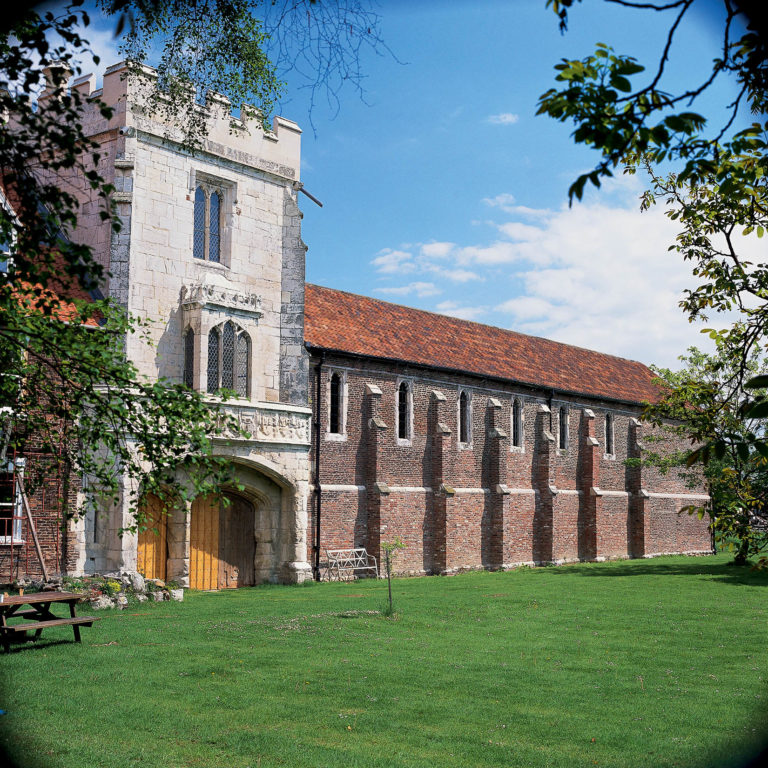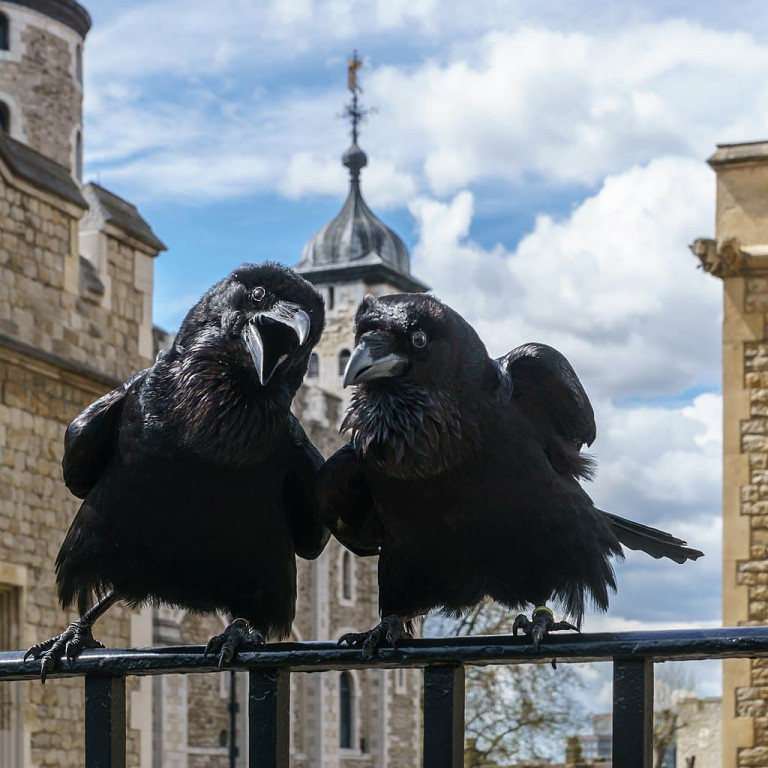
Lychgate Cottages, Coventry
A Brief Introduction To Coventry
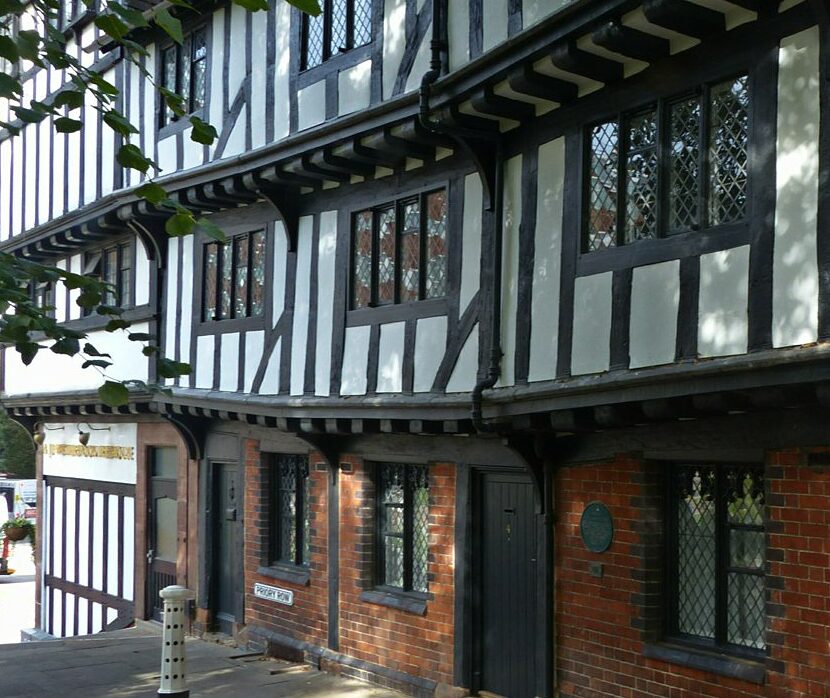
Cover image: Priory Row Cottages, with kind permission from Historic Coventry Trust.
In Tudor times, Coventry was one of the largest and wealthiest cities in England. Coventry’s prosperity came from the cloth and textile trade, especially weaving and dyeing. That economic strength gave the city political weight too – it wasn’t just rich, it was influential.
Coventry gives us a glimpse of what Tudor England was like outside the royal court. Unlike the palaces and politics of kings and queens, this city was shaped by its wealthy merchants and powerful guilds. Its thriving cloth trade made it rich, its churches and mystery plays brought the community together, and its city council gave ordinary people a surprising amount of influence over daily life. Walking these streets, you can imagine a city full of energy, pride, and ambition, where ordinary – but important – people lived, worked and navigated the dramatic changes of the Tudor era.
Stay In Lychgate Cottages
Lychgate Cottages are a row of fifteenth-century timber-framed houses at 3–5 Priory Row, Coventry. Dating back to around 1414–1415, these cottages are timber-framed with close-set beams and jettied upper floors, a style typical of prestigious urban homes in early fifteenth-century England. Recognised by Historic England as Grade II listed for their outstanding architectural and historic significance, dendrochronology has confirmed their construction just before the Dissolution of the Monasteries, when they were probably used for lay or service purposes connected to the nearby priory precinct.
Following centuries of varied residential use and an 1855 renovation by the Blue Coat School, the cottages gradually fell into disrepair until the Historic Coventry Trust took ownership in 2020. With support from the Architectural Heritage Fund and local partners, the Trust transformed the row into four luxury holiday cottages. Operated as short-stay heritage accommodation since 2021, they are among the city’s oldest surviving domestic buildings and a rare remnant of medieval St Mary’s Priory. Their restoration preserves both historic character and modern comfort.
The interiors blend historic features, such as exposed timber beams and medieval fireplaces, with modern comforts including well-equipped kitchens, central heating and contemporary bathrooms. Each cottage offers self-contained accommodation (ranging from studios to three-bed units) set beside Holy Trinity Church and Coventry Cathedral.
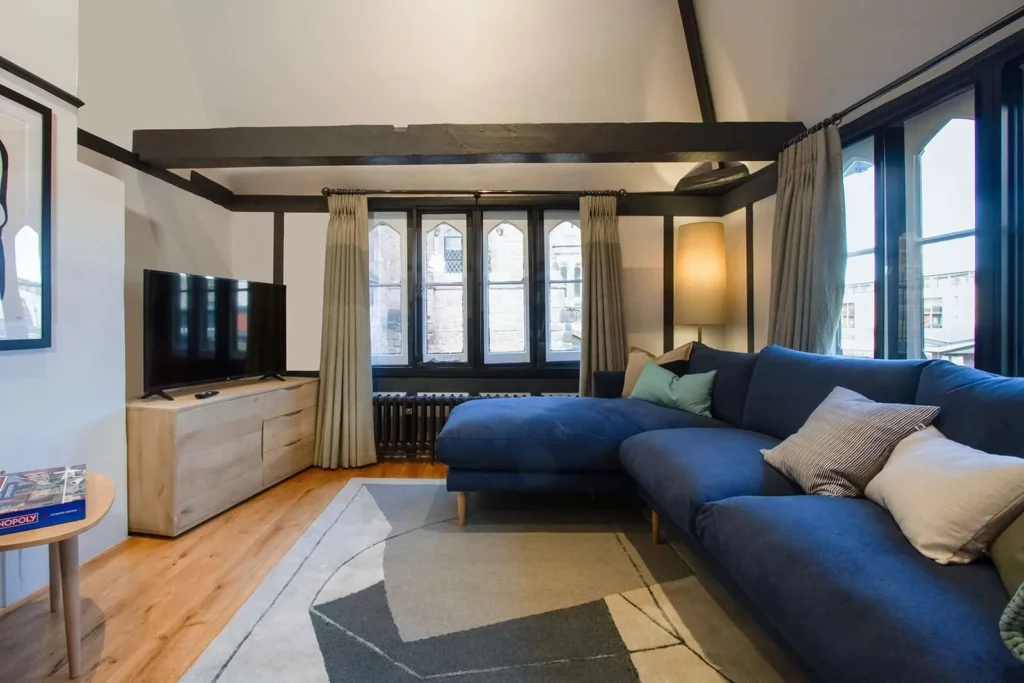
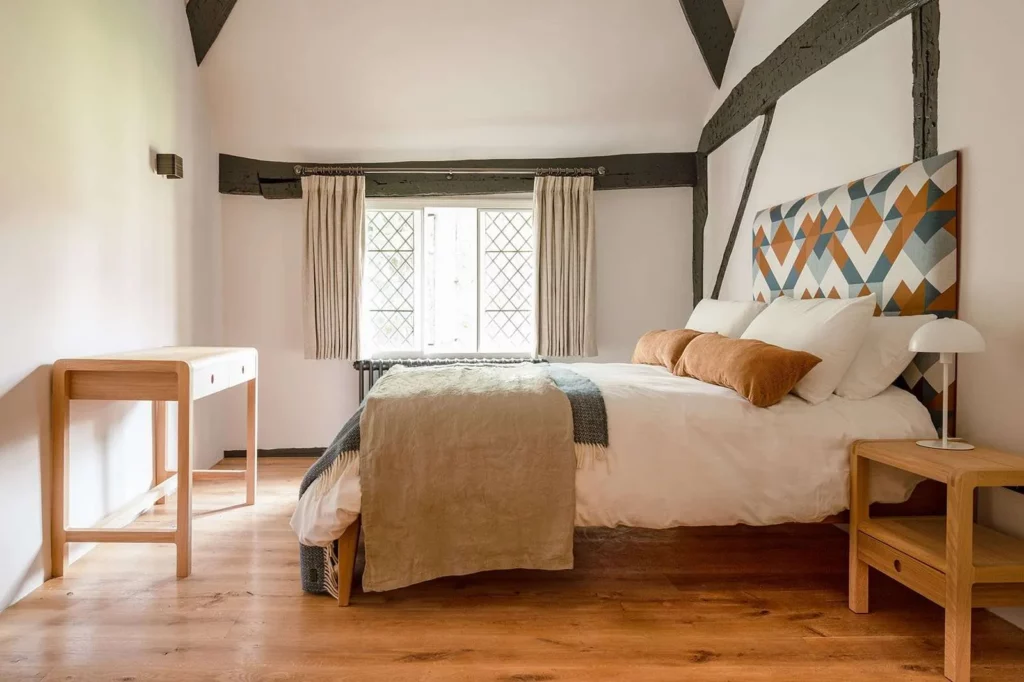
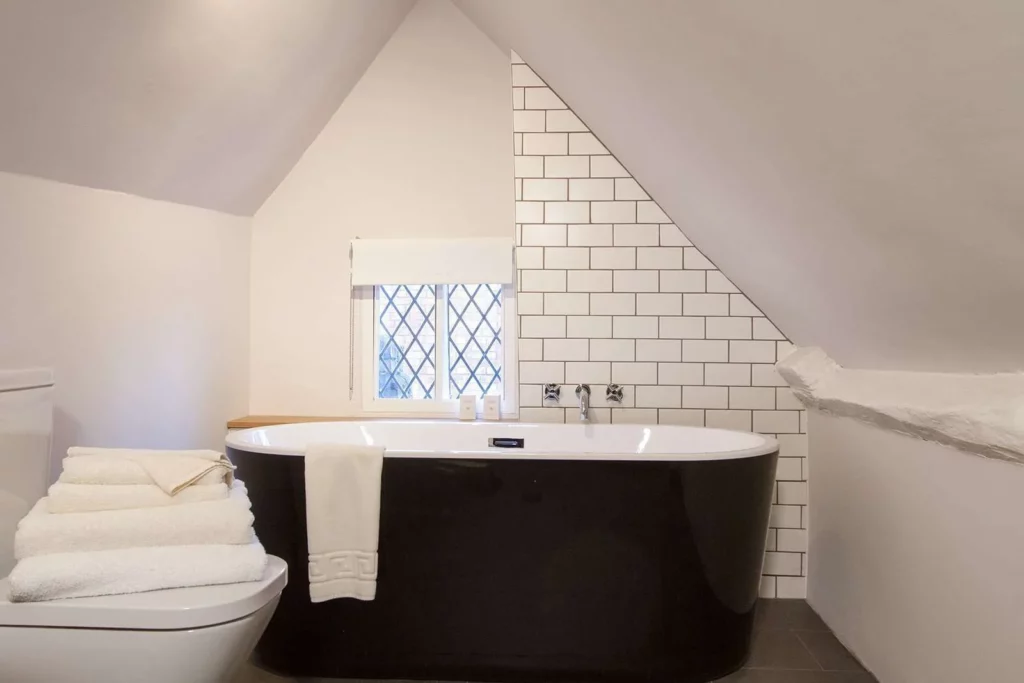
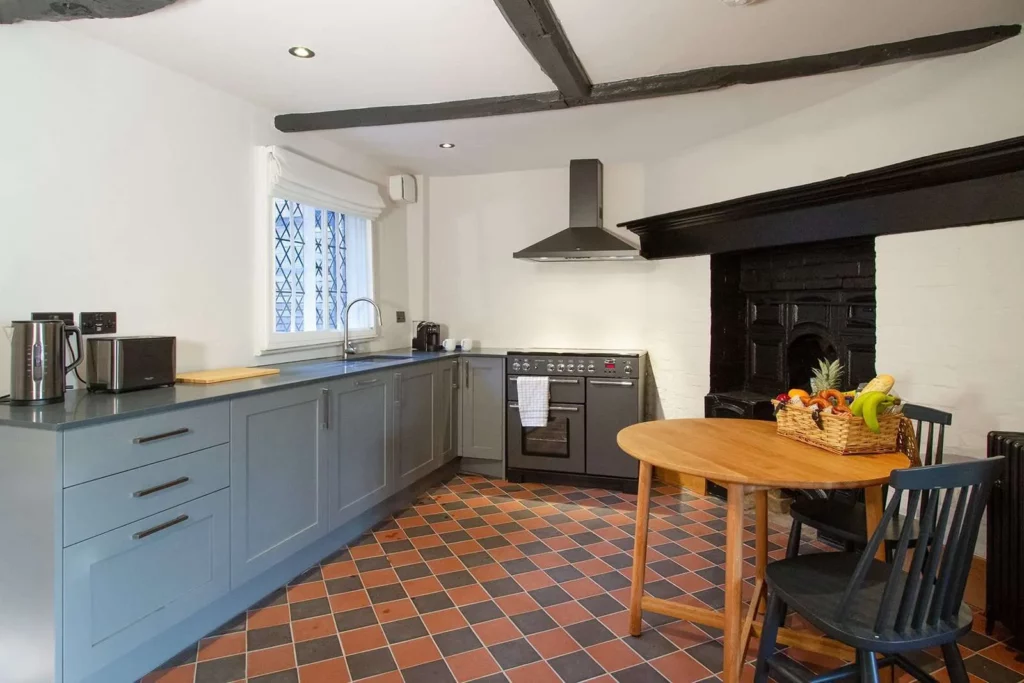
Images from 3-6 Priory Row, with kind permission from Historic Coventry Trust.
Historic Properties Nearby
If you would like to explore in the city centre, you may find the following places interesting:
- Coventry Charterhouse
- St Mary’s Guildhall, Coventry
- Holy Trinity Church, Coventry
- The Herbert Art Gallery & Museum, Coventry
- Spon Street – surviving historic street with timber-framed buildings and some rare examples of fourteenth-century architecture, including Number 169, known as one of England’s earliest semi-detached pairs of houses.
If you can travel a little further afield, I recommend visiting the following places:
- Kenilworth Castle (6 miles)
- The Lord Leycester (10 miles)
- Baddesley Clinton (14 miles)
- Bradgate Park (25 miles)
Visitor Information
For more details on the accommodation, visit Historic Coventry Trust’s website here.
Contact Details: View the range of accommodation and book here or email admin@historiccoventrytrust.org.uk.
Address: 3-6 Priory Row, Coventry, CV1 5EX.